Revolutions in form, space and materiality
An Introduction to Modernist and Post-Modernist thinking
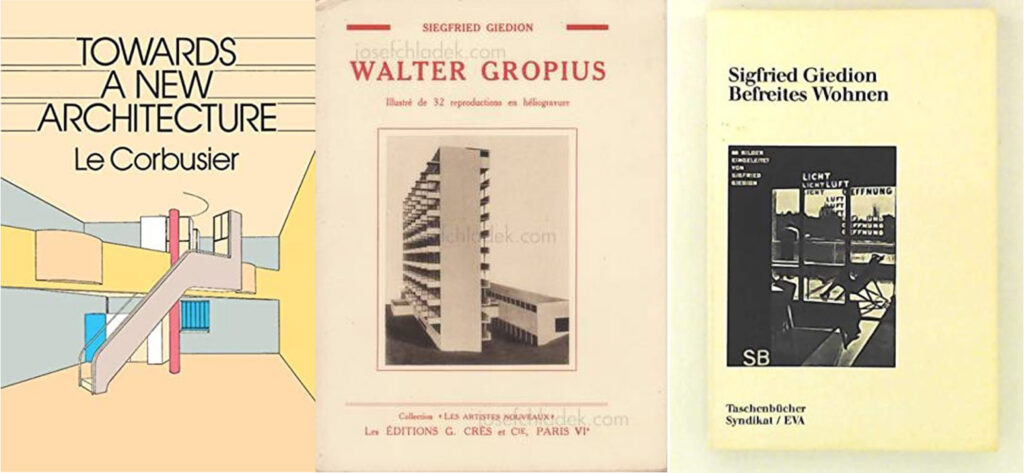
19th and 20th centuries publications on Modernism and the Modern Movement – Le Corbusier, Sigfried Gidieon, Walter Gropius
The Modern Movement defined a transformation within the disciplines of philosophy, literature, architecture and the arts in Western society during the 19th and 20th centuries. It emerged as a reactionary phenomenon in the wake of the industrial revolution and post-war context encapsulating a deviation from established principles based on the societal needs and dynamics of a past.
The Movement concentrated on developing a focused agenda, one that established a definite architectural vocabulary – or system of design and construction specific to the period. The movement was spearheaded by Le Corbusier, Walter Gropius and Siegfried Gideon that and founded within a context defined through large scale destruction and densification as a consequence of war. The architectural style initially emerged from an industrial vocabulary incorporating forms and effects that resembled factory-like images, monolithic elements and grainy textures. Le Corbusier’s affinity toward grain elevators and steamships, in addition to linear, orthogonal compositions illustrated by buildings such as the Bauhaus in Dessau, and design principles developed by Mies van der Rohe based on American steel factories, exemplified some of the formal features and manifestations of the time period. Based on the rejection of ideas of aesthetic beauty , Modernism strived to redefine it through the incorporation of new materials and technology including concrete and steel.
Founded on the notion that function would serve as the driving force behind the conception of form, architects such as Le Corbusier, Mies van der Rohe and Adolf Loos contributed to a conceptual development of a spatial practice where “the Meaning lay in the Use.” This elevated the position of the use, the function or the programmatic definition as central to architectural practice which differed from the interpretation of Post-modernists and Classicists who advocated for the union and co-existence of Function and Form with regards to the conception of the architectural object. In addition, they regarded ornamentation and the decorative arts inherent to the creation of an architecture, and therefore consider function as “one” of the influential factors in its production.
The Aristotelian understanding of function assumed a multilayered definition that indicated usefulness and efficiency inherent to the architectural object in addition to unique and shared powers that influenced its evolution. Stemming from this notion of “Function”, the English Free School developed its own purpose, influenced partly by Gothic practice, to deviate from an established Classical tradition and create an architecture that sowed the seeds of a revolution worldwide. The School has been known to contribute to an expansion in typologies, patterns of use, technical advancement and complexity in context during the nineteenth century. Influenced by the Gothic tradition of “significant irregularity”, Butterfield, one of the key figures in the development of the English Free School, adopted certain principles of articulating form and space that was equipped with the agency of maneuvering shifts and contradictions that could translate the complexity of a programme, as opposed to enforcing this task on a pre-existing Classical order. Therefore, the Modern Movement didn’t exclusively emerge from a need to break away from tradition. It was formed as a necessity in the midst of specific functional and programmatic requirements that demanded an architecture which could not be achieved by a formerly established set of rules.
The Modernists prioritized the conception of a new architectural vocabulary alongside the proliferation of an ideology and practice worldwide. Adopted by architects including H.H.Richardson and Frank Lloyd Wright in America, the stylistic influences of Modernism returned to Europe as an organic approach that defined more precisely the founding principles of the Modern Movement. This process of idea and response holistically developed the multivariant notions of function essential to the style. In this way, the Modern Movement demonstrated an originality that arose amidst the need to break away from a pre-determined format, and by Alberti’s definition, was initiated through influences external to the architectural discipline. This further leads to the understanding of architecture as a “Practical Art” that looked outward, serving a variety of purposes that was possible to be translated into space. On the other hand, “Fine Art” was perceived to look within, not created for the purpose of replication or mimicry.
CIAM or the (International Congresses of Modern Architecture) was an organization comprising architects who pioneered the Modern Movement, including Le Corbusier, Sigfried Gideon, Helene de Mandrot and, among others. The organization met over eleven architecture and urban planning congresses between 1928 and 1959, influencing architecture and urban planning strategies worldwide.
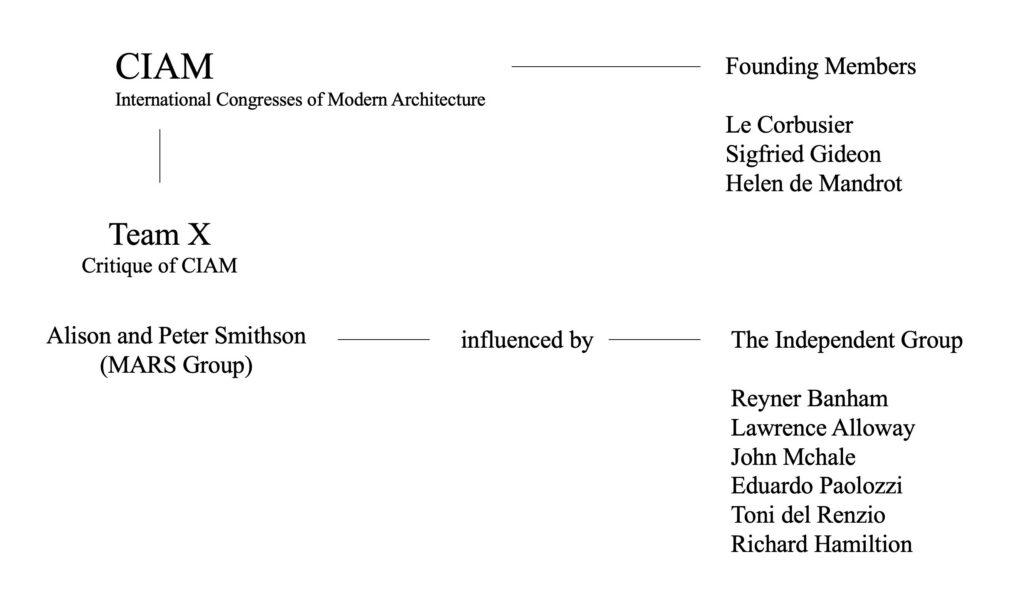
In the early 1950s, the architects of CIAM deliberated over drafting a “Charter of Habitat”, which would aim to revise previous strategies based on the “four functions” of the Athens Charter. Succeeding the ninth congress at Aix-en-Provence titled “Human Habitat”, which failed to address these needs adequately, the MARS group members Allison and Peter Smithson initiated the founding of Team X. The group aimed to deviate from an increasingly institutionalized collective at risk of losing its avant-garde character. Furthermore, the Independent Group, including Reyner Banham, Lawrence Alloway, John Mchale, Eduardo Paolozzi, Toni del Renzio, and Richard Hamilton influenced the Smithsons’ critique of CIAM. Team X was committed to studying the “Problems of Habitat”, which would inform the creation of a more responsive built environment incorporating the needs of its users.
A post-modernist architectural language centered around aesthetic sensibility shifted the focus from a rational functionalism that had eliminated its relevance in the production of architectural space. The contradictions and overlap between the two architectural periods is therefore evident in their attitudes towards beauty and utility, and the sinews of one from which the other was conceived.
The International Style and Post-Modernism were exercises in developing stylistic traditions that succeeded the period in which architecture acquired the acronym of a “Practical Art”.
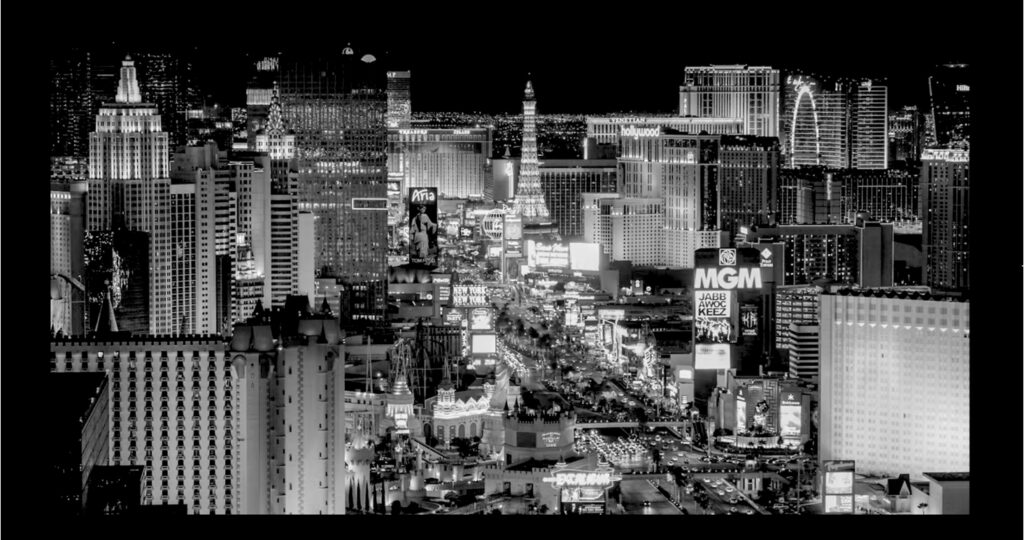
Las Vegas : Semiotic significance through forms, textures and city images
Postmodernism represented an expression of creativity and colour, creating an emotive response that bridged Classicism and Modernism, and juxtaposed elements such as steel with glass. The style aimed to respond to a specific context and culture demonstrating aspects of individualism , non-conformity and complexity. It assembled elements and stylistic traditions from previous architectural movements to create a narrative of the evolution of type. The movement considered the popularity of architecture as an influential factor in its conception and redefined an approach that incorporated the needs of the user. Distinct from the Modern Movement’s emphasis on the simplicity of form and rejection of ornamentation, Post-Modernism aimed to define a spatial practice rooted in place and tradition.
As spatial production in an International Style progressed, architects sought to develop a style that resonated with a revolutionary form of practice based on chronology and continuity in stylistic traditions as opposed to the Functionalist dogma. Consequently, what emerged was a Post-Modernist culture and building tradition that forged Classicism with Modernism and Popular Art in addition to reversing several Functionalists ideologies.
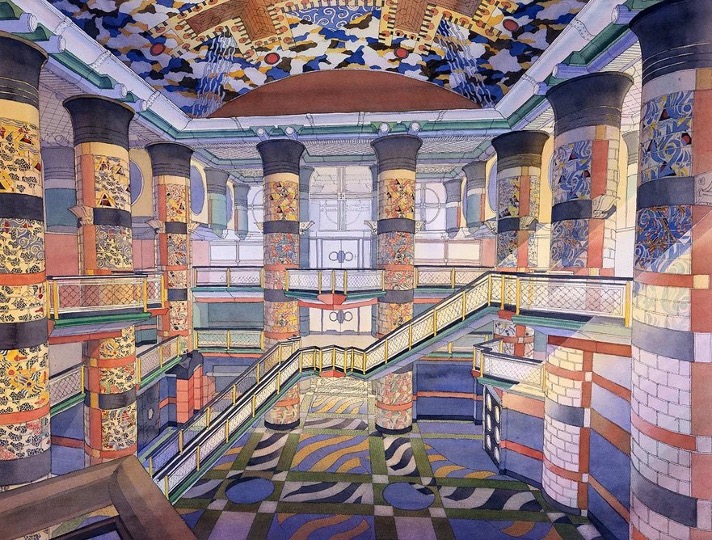
Post Modernist principles and artistic expressions
For instance, Post-Modernists believed in architecture as a medium for expressing creativity with the use of colour, ornamentation and symbolism. Post-modernist architecture was emotional, complex and vibrant concentrating on the individual distinctness and freedom of expression. The buildings were responsive to the immediate context, as opposed to the International Style which aimed to crystallize certain fundamental principles for architectural production to be adopted worldwide. Post-modernists were essentially bored with the simplicity of monolithic elements and restrictive building principles characteristic of Modernism, and employed architectural means of design and construction as a form of an emotional response to universal conformity. This is especially evident in Venturi’s reaction stating, “Less is a bore” to Mies van Der Rohe’s claim “Less is More.”
19th century eclecticism and the integrated symbol
Nineteenth century architecture and its eclecticism evident in the combination of elements in Gothic churches, Renaissance banks and Jacobean Manors, represented a palimpsest of cultural and historical associations serving to function as the canvas that construed collective meaning through architectural form and space. Inscription on Roman architraves, hierarchies represented by means of classical columns and frescoes in a Venetian villa, were all examples of symbolic integration where structural form embraced the ornament.
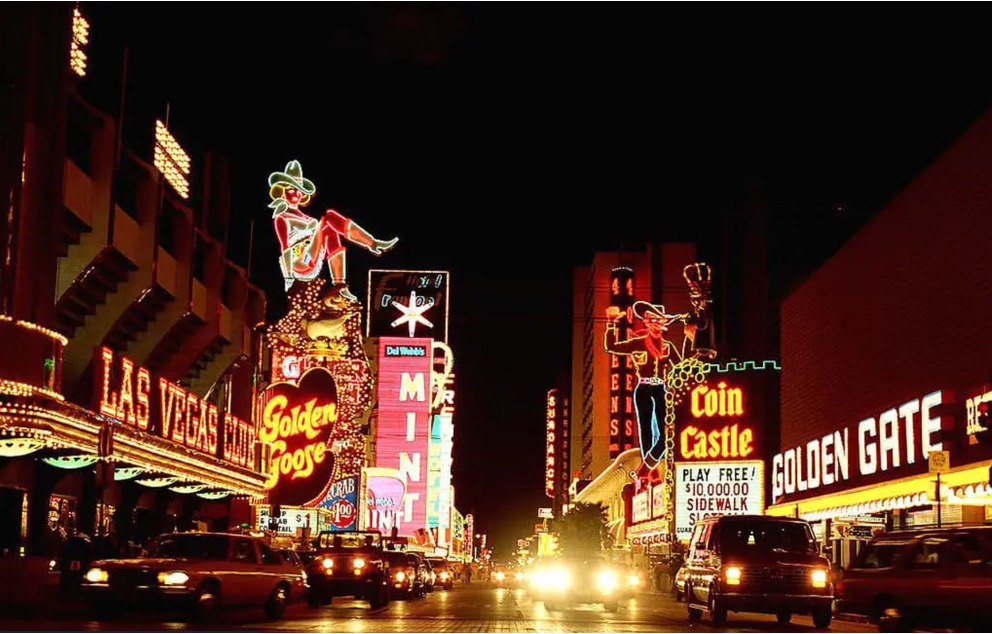
The Strip, Las Vegas
A similar combination and layering is evident in the Strip in Las Vegas where distinct elements are employed in combination to convey messages – visual, spatial and functional in nature.
Modernism – a pronounced separation of architectural form and symbol
By contrast, Modern architecture as evident in the architectural language derived by Mies clearly defined the distinction between architectural space and sculptural form negating symbolism and reinforcing content. The incorporation of sculptural elements alongside Mies’ designs served to accentuate and complement architectural space, and not produce integrated meaning. Orthodox modern architects advocated for communication by redefining communicative tools, notation systems and established semiotics, to configure new systems of communication. “The creation of architectural form was to be a logical process, free from images of past experience, determined solely by program and structure, with an occasional twist(…)”
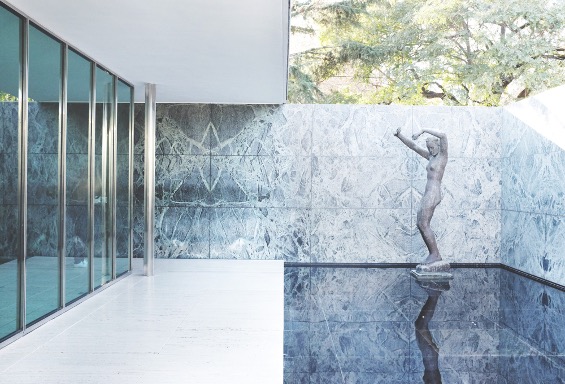
Barcelona Pavilion, 1929
Founded on the notion that function would serve as the driving force behind the conception of form, architects such as Adolf Loos and Ludwig Wittgenstein contributed to a conceptual development of a spatial practice where “the Meaning (lay) in the Use.” This elevated the position of the use, the function or the programmatic definition as central to architectural practice which differed from the interpretation of post-modernists who regarded ornamentation and the decorative arts inherent to the creation of an architecture, and therefore consider function as “one” of the influential factors in its production.
Adolf Loos’ perceived the ornament as a decorative element that had been constructed through artistic processes founded on an ideology that he wished to deviate from. The intricacy, symbolic value delicacy and sophistication of the ornament, alongside its visual appeal served as a distraction to more essential and urgent architectural problems of the time. The ornament however, is reinstated in the future through Post-Modern experiments that resonate with the architectural vocabulary of the Las Vegas Strip. In addition, commercial architecture on highways has been known to influence the conception of Pop Art.
A difference in approach towards context distinguished the Modern movement from Post Modernism.
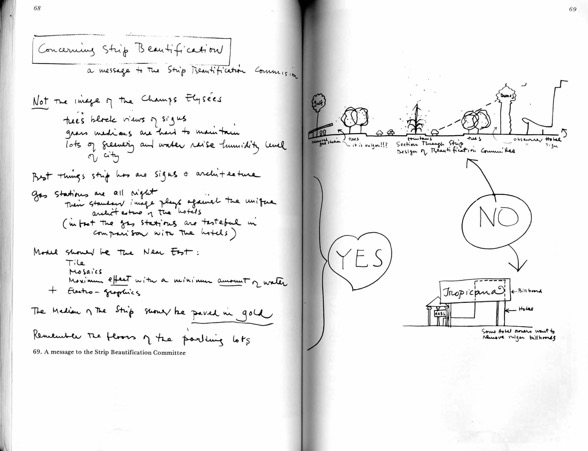
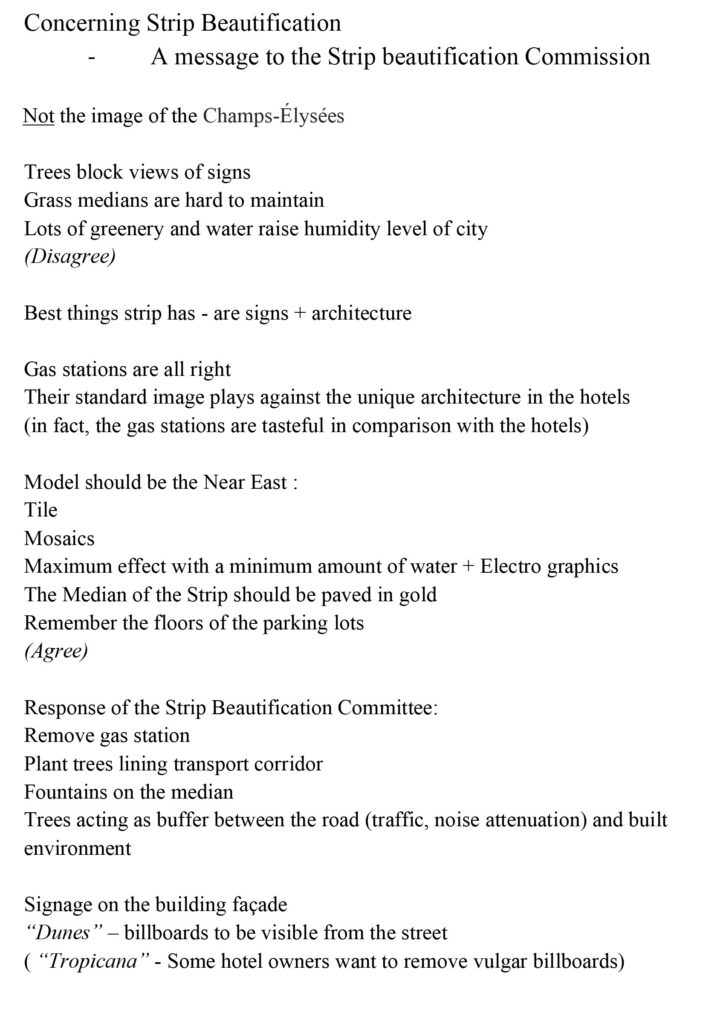
A message to the Strip Beautification Committee and corresponding design response
In this regard, Robert Venturi’s emphasis on the significance of the existing landscape in the planning and articulation of the architectural object is significant. This is evident in the commercial Strip in Las Vegas, where the built fabric was not construed on a previously torn down urban environment, but where the existing cityscape provided clues for its future expansion. Venturi contrasts the Modernist approach to city planning that is not inclusive and tolerant, with one that critically examines existing networks and aims to propose solutions, that on one hand enhance positive outcomes and on the other, realistically address failures.
The images contain two documents that discuss a proposal to the Strip beautification Committee and their response. The exchange illustrates the significance of the context that was central to the design response of the Committee.
The Bill-board and the Building
The Las Vegas Strip invites an examination of architectural production where the built form and the billboard are combined in a creative semiotic language determining the relationship between the architecture and the symbol, the inside and the outside. Venturi objectively analyses the architectural object on the island without employing a subjective reading that incorporates a moral and qualitative societal influence. This analytical technique of isolating architectural variables has been regarded as a viable scientific and humanistic approach that returns the object of investigation ( – building under study) to its subjective context (perceived in relation with other entities in its immediate environment.). Furthermore, the author aims to test the use of a commercially progressive environment on the architectural, civic and cultural enhancement in an effort to redefine the paradox and existing prejudices in the architectural discipline.
“All cities communicate messages – functional, symbolic, and persuasive – to people as they move about.” The signs of Las Vegas function as attractors and communicative tools engaging the observer right from the California border, before one enters the airport.
“The (interrelated) message systems” have defined the nature of the built environment of The Strip. They exist in the form of “the heraldic”, “the physiognomic” and “the locational” each operating in a specific manner in a wider network of identifiers.
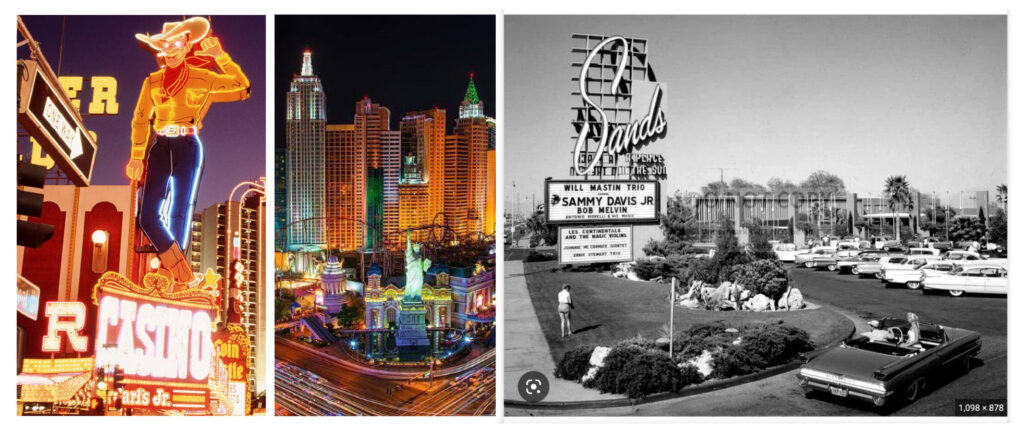
“The heraldic” exemplifies the type of urban condition where the sign dominates. “The physiognomic” are messages conveyed by the building faces articulated through continuous balconies and regularly spaced picture windows and adaptative and eclectic signs composed through combination of elements such as the suburban bungalow transformed into the chapel through the addition of the steeple. The third type of sign or the “locational” sign exists in the form of service stations on corner lots. The sequential layering of the “locational sign” is exemplified by the casinos positioned as the prelude to the hotel, and preceded by the ceremonial valet parking.
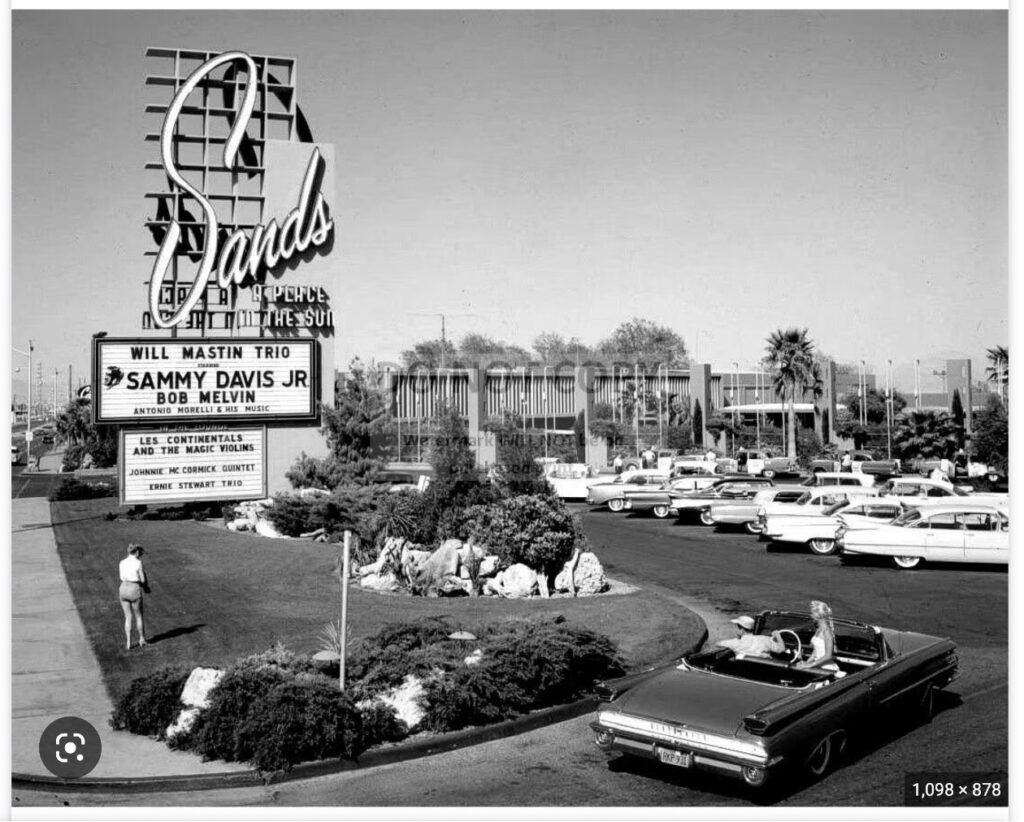
These systems of communicative symbols create a network on The Strip existing independently and at times in combination – for example when the signage covers the façade completely, or the façade functions as a sign itself. The fluidity in definition, form, role and function between the built form and the signage is particularly evident on The Strip when the sign becomes the building reflecting the shape, and the building takes the shape of the sign.
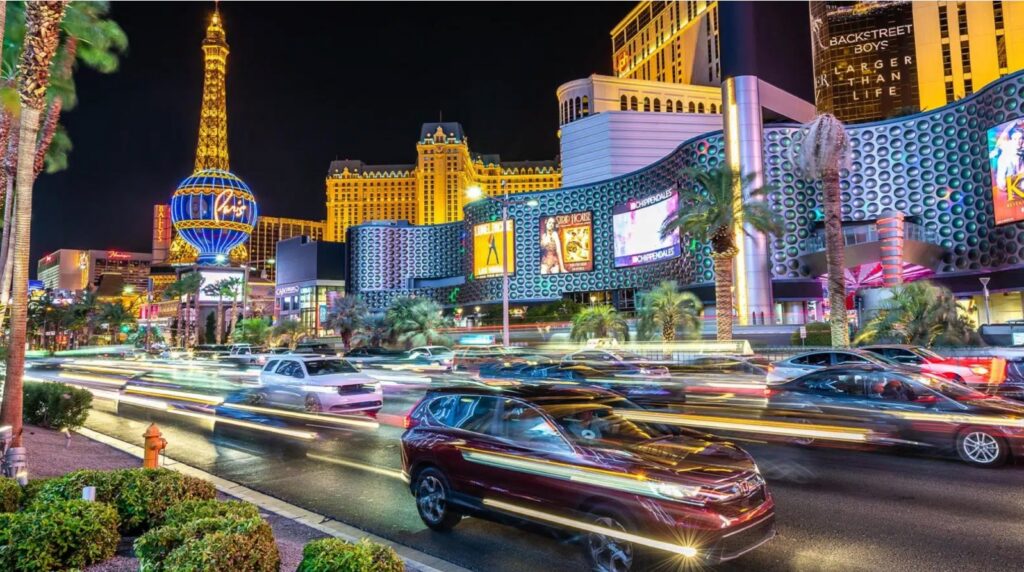
The facade as a sign – The Strip, Las Vegas
The ornament and the sign – Eclecticism then and now?
While some were repelled by the eclecticism of nineteenth century architecture, its ornamental quality and lack of purity in form, others embraced the richness of imagery and symbolism. Functionalists and groups including Archigram were increasingly leaning toward incorporating the industrial vernacular, Pop Art and space architecture. While critiques denounced the symbolic value of eclectic forms in the nineteenth century architectural expressions, they failed to recognize similar inclinations and system of signs in the Bill-board culture on the highways. To others who did associate one system with another, the allusion to the eclecticism of the nineteenth century architectural language – a reference to the past was regarded as a cliché. Additionally, the contrast between the two forms of landscape further reinforces this distinction. As Venturi states, the old eclecticism represented philosophical associations, with layered and complex meanings that contributed to the subtlety and traditional landscapes. By contrast, the prominence of the bill-boards set against the high-speed highway imparted a bolder, commercially inclined eclecticism that produced a set of signs distinct from the old tradition, and in a newly articulated commercial landscape.
Interrelated system of signs
The Strip exhibits a sequence where the bill-board on the highway is visible before the motel itself. Venturi describes this relationship as an architecture of styles and signs, which is anti-spatial. “; it is an architecture of communication over space;” (where) “communication dominates space as an element in the architecture and in the landscape” . The type of sign here is therefore “heraldic” where the communicative expression takes precedence, and “locational” indicating a sequential significance in visibility to the observer as well as positioning relative to the building.
Directional space as illustrated by the Street Section in this context provides an illustration of distinct urban conditions and the configuration of signs. While the “Middle Eastern Bazaar” as shown in the abstracted section here contains no signage which is to say, that it incorporates no bill-boards. It is however composed of a complex system of signs familiar to locals and vendors, communicated through proximity. “Commercial persuasion” manifests in the form of vendors calls’, sights and smells of the produce and merchandise. Additionally, window displays of shops function as signs for pedestrians at the level of the pedestrian and motorist.
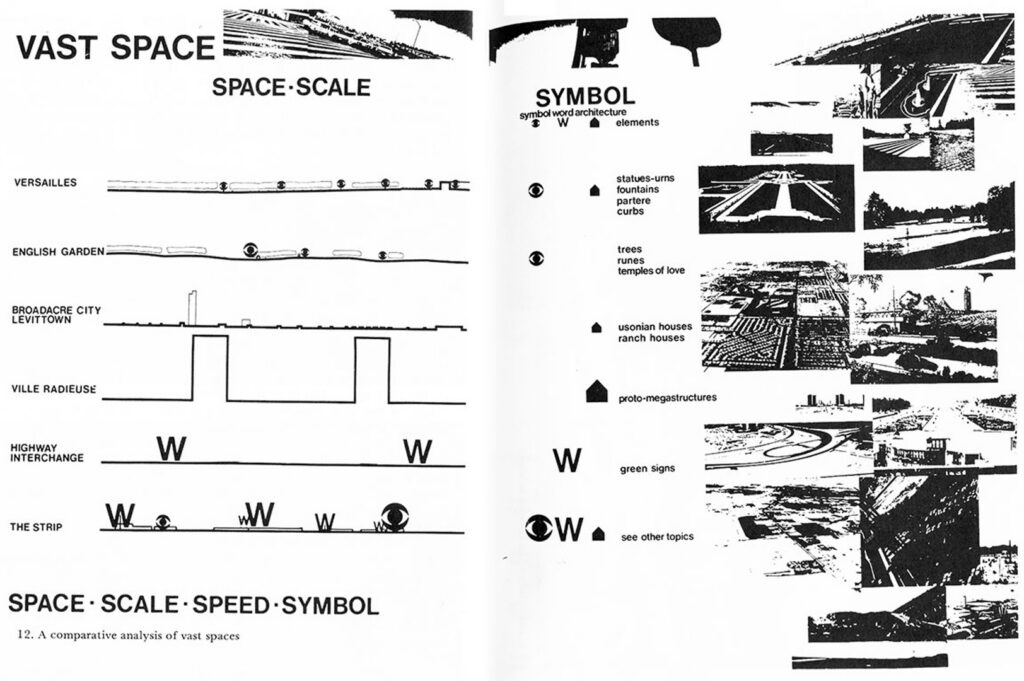
By contrast, the semiotic network – the system of communicative signs on the Las Vegas Strip as evident in the street section, is abundant and concentrated communicating from a distance. The windows on the supermarkets here do not display merchandize, and the signs displaying bargains are visible from the parking lot. The built environment is set back from the street and is hidden by rows of parked cars. The parking lot at the front of the building functions as a symbol and as a space for cars. The low height of the building can be attributed to the needs for air-conditioned spaces and merchandising techniques. The architectural expression ranges from mild to neutral and exist as spatial enclosures disconnected from the highway, not being visible from the street. The author emphasizes this sequential setback and its form that functions as a distinct set of symbols in a specific urban landscape. The large, prominent signs act as the first visual markers that communicate to the viewer.
In this context, the sign manifests as the architectural integration of space and graphic that is reflected within the market as a scaled down version of itself. In this way, new forms of communication and sets of symbols such as graphic packaging and pedestrian malls translate the message conveyed by highway shopping centers to the scale and complexity of the medieval market street. Venturi states, “spatial relations are made by symbols more than forms” and in this regard, the landscape is transformed into a “symbol in space rather than form in space.”
To conclude, certain fundamental differences between the movements have defined the course of architectural practice over the course of history.
Modernism represented a celebration of Modern Society through the arts in the 19th and 20th centuries fueled by a necessity to reconfigure existing traditions of artistic production in a post-industrial, post-war context. It emphasized individual experience and sovereignty, championing ideals such as Functionalism, Corbusian design principles and the rejection of the ornament. It presented a deviation for traditional aesthetic conventions to employ new materials and technology towards the conception of a new architectural vocabulary.
Post-Modernism developed as a mid-20th century phenomenon identified with self-referentiality, relativism, pluralism and irony. The movement was a reactionary form of practice that sought to reverse Modernist design principles of Functionalism, opposing singularity of form and expression. Instead, it reinstated the ornament, incorporated the use of colour, and exalted Eclecticism. The Post-Modernists integrated architectural form and symbol to create a system of communication that contributed towards the creation of a distinct style and practice.
Though the production of different stylistic elements and building traditions that emerged from distinct ideological frameworks, the Modern and Post-modern movements have demonstrated the significance of external forces in the conception of an architectural practice that sought to revolutionize building tradition and subsequently revert to established practices as the new style failed to sustain itself. Collectively, they have influenced formal conception and articulation to the present day.
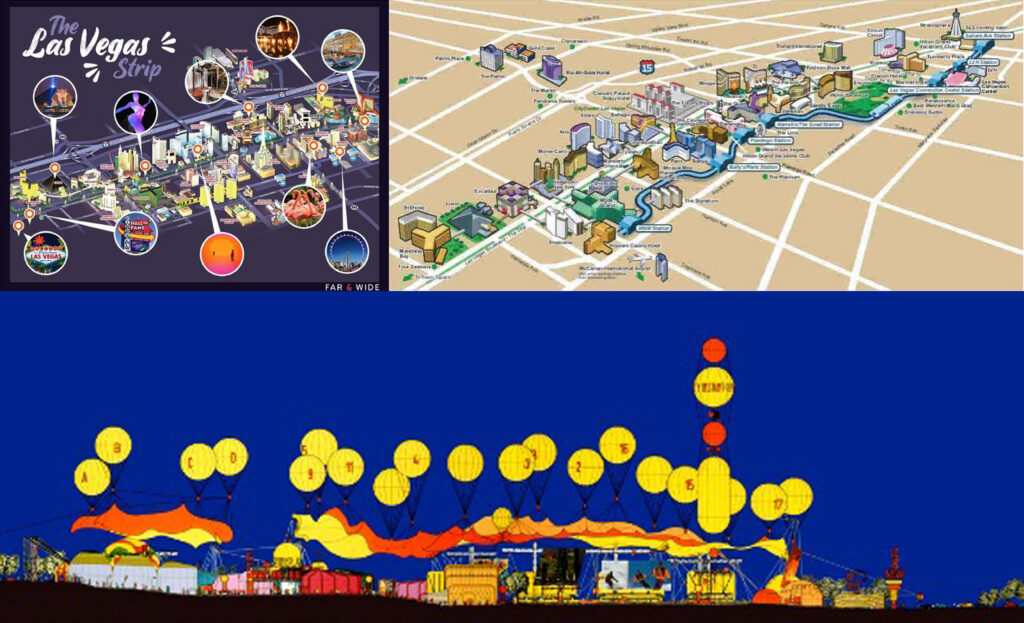
Streets and signage, Billboard and the building, Archigram and Las Vegas