Scratching the Surface
Reframing colonial heritage as a place-based spatial practice in contemporary global societies
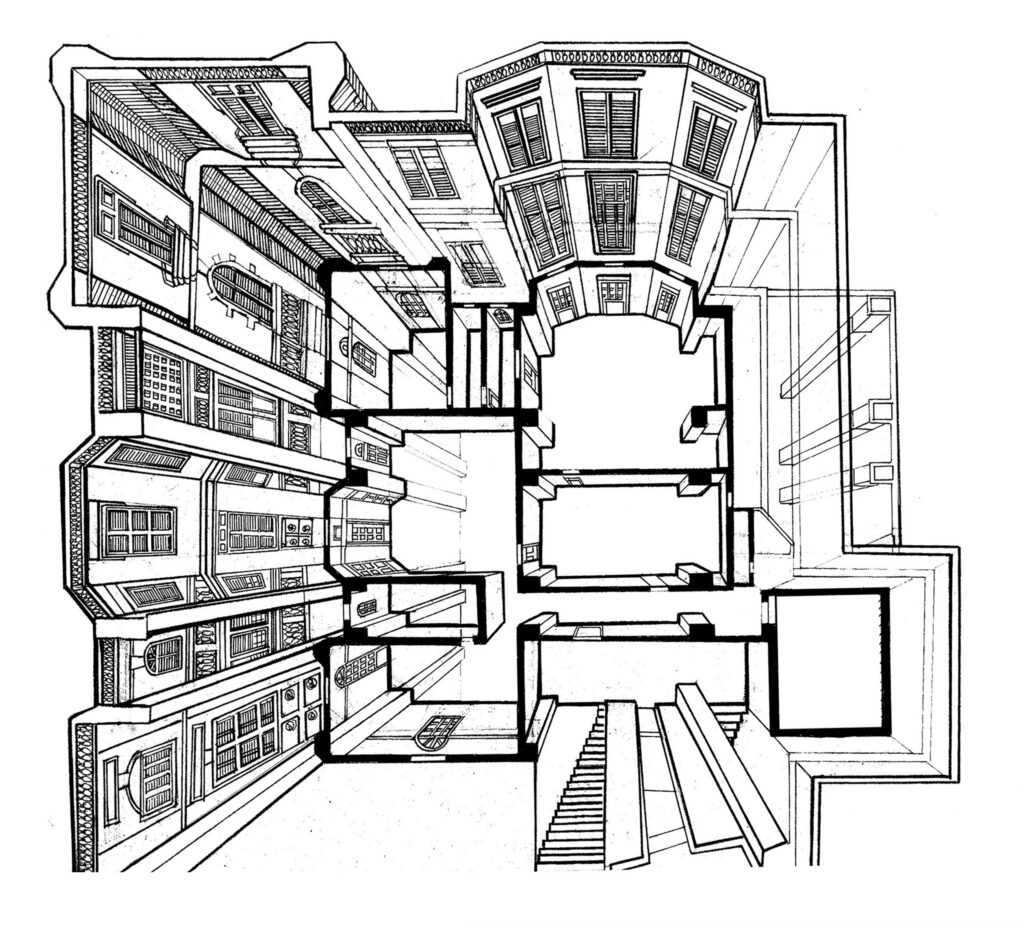
In his 1985 publication, Culture and Society (1780-1950), Raymond Williams’ discussion on the conception of culture in relation to heritage sheds light on subaltern contexts to frame the complexity and pluralistic understanding of a ‘World Heritage’ that resists homogenization. The argument emphasises the distinction between ‘global’ and ‘universal’ definitions of heritage, which contribute towards a diversified conception of the practice. The research seeks to contextualise this argument within the realm of colonial heritage in the city of Calcutta, and in accordance with Swati Chattopadhyay’s assertions, founded on a layered premise of formal integration between a colonial Neoclassical template and indigenous spatial practices. Furthermore, the narrative presents a historical reading of the natural and cultural built environment as a conjoined process of conception and existence, which could more appropriately be framed as a landscape-based approach to city planning.
The study is situated within a layer defining the built fabric of colonial Calcutta that filters social and ecological contact and interchange as an interstitial realm formed through a complex choreography of spatial elements and identities, integrating the architectural with reference to the ‘colonnade’, the ‘carriage porch’ and the ‘south-facing verandah’ to urban features including tanks, waterbodies and the urban commons. This layer of transition between conceived and lived realities serves to function as a mode of communication between built fabric and its resident community, inclusive of both settler and settled societies. Interpreting the act of surfacing as an investigative endeavour in tandem with formal and informal techniques which have determined the articulation of the colonial envelope in the city, the paper contextualises arguments grounded in Adolf Loos’ perception of surface treatment, seeking to unmask real transcendence beyond the ornament and its role within this discursive paradigm of colonial memory and materiality.
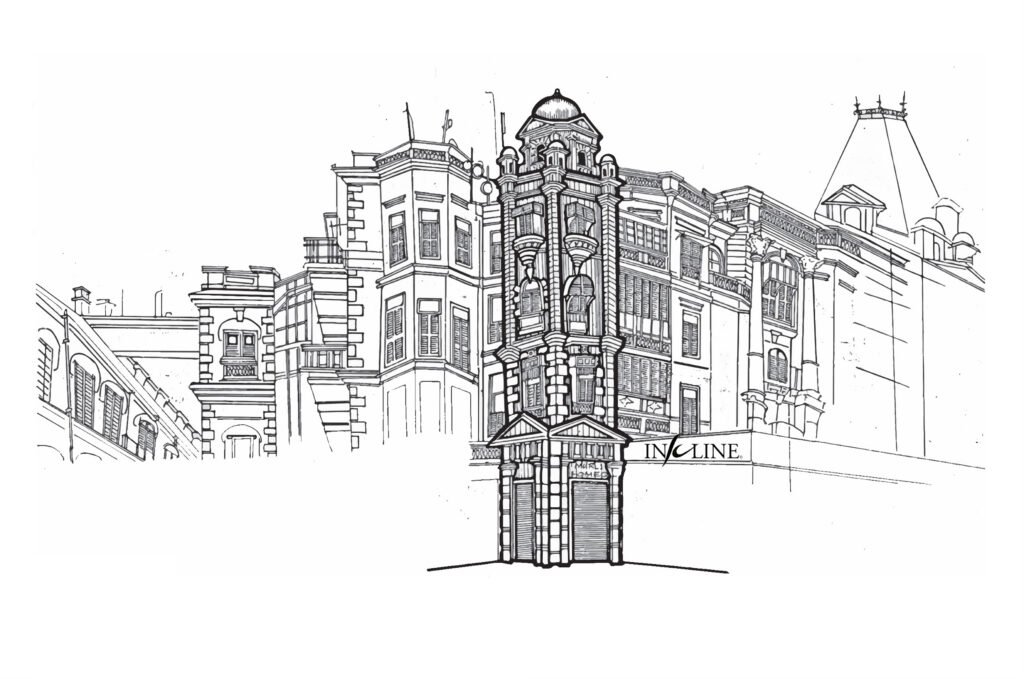
Global Cultural Torrents
The globalisation of culture as a historical and contemporary evolutionary phenomenon has reconfigured global positions for nation-states through the creation of dominant national narratives and classifications that have sought to define national cultural interests and identity, ascertaining the impact of societal restructuring on cultural property and practice. In the late-modern phase of the evolution of World Heritage, ‘culture’ was defined as an amalgamation of capital, technology, labour and corporation as a consequence of enhanced global trade relations and mass migration. This process transformed national identities and influenced global politics, including the contemporary role of culture, which ceased to consolidate and assert singular, monocultural state power. In this context, Raymond Williams’ discussion on the conception of culture in relation to the conception of heritage is pertinent, shedding light on subaltern contexts to frame the complexity and pluralistic understanding of a ‘World Heritage’ that resists homogenization. The argument emphasises the distinction between ‘global’ and ‘universal’ definitions of heritage and the idea of a World Heritage that is inclusive of indigenous cultural forms in addition to globalised models, which contribute towards a diversified conception of the practice. These critical positions are further elucidated through cultural narratives that represent officiated and place-based conceptions of culture as object, environment and practice.
Globalisation has been regarded as an instrument that promotes homogeneity in architectural expression by means of ‘universal’ classifications and practices. On the other hand, it is associated with diversity, multicultural representation and hybridisation. During the late nineteenth century, the process was contested through a consciousness that emerged as a result of a resurgence in nationalist sentiments fuelled by colonial regimes. The period created distinctions between the civilised and primitive forms of cultural heritage. In contemporary global societies, post-colonialism and post-nationalist tendencies have governed geopolitics with a renewed sense of a globalised identity. Both modernity and the process of globalisation were spearheaded by an international public that identified with a multicultural and professionally diverse landscape, created through transnational institutions, corporations and inter-state organisations. Collectively, these societies contributed to the operational skeletal framework of global, urban centres of cultural discourse and proficiency.
Twentieth-century globalisation mirrored industrial and post-industrial attitudes of deviating from the norm and questioning established systems through altered methods of production and consumption that affect economics and the ‘politics of culture’. Culture, within this context, has emerged from a revolution in production, and conversely, influenced means of communication. In a rapidly globalising world, ‘culture’ has ceased to exist in isolation, being inextricably linked with economic and political processes on a transnational scale. The post-war global wave witnessed the formation of institutions aimed at promoting a global, political, economic integration and socio-cultural exchange as a preventive measure for future potential military conflict and economic crisis.
In the twenty-first century, Globalism has found new meaning translated through institutional dynamics and inter-state policies in response to environmental crises and economic necessity. Globalising forces have defined the canon of heritage practice with a significant impact on the preservation and multifaceted representation of local tradition and architectural values. As a phenomenon with diverse implications, acts of globalisation locate the architectural professional at its helm, leading the discourse on past and present identity enshrined within spatial forms. Evidenced through historical accounts in architecture with movements opposing the diverse cultural representation, architects have regarded globalisation as a manifestation of modernity, ephemeral in nature, while theorists contend a perpetuity inherent in the concept and practice formalised through the cyclic process of homogenization and multicultural representation. The oppositional forces that contest credibility seek to establish “place identity” and advocate for historical continuity and cultural diversity, and on the other hand, reflect societal progress through advancement in materiality, technique, spatial and programmatic configurations inherent within contemporary built forms. The term ‘place identity’ encapsulates multiple aspects of localised forms of heritage, including physical size, materiality and tangibility as opposed to intangible abstractness, and familiarity of context. The identity of place takes form as a holistic expression linking residence and occupant, and is composed of the individual identities and meanings assigned by these occupants through socio-cultural processes. Alternatively, it defines the identity of the self, determined through the perception of the locale. “ Place identity is sometimes described as an implicit psychological structure; it is also considered a cognitive structure that contributes to global self-categorisation and social-identity processes.”
Place identity has been defined by Hummon as “ an interpretation of the self that uses the place – a significant, symbolic locale – as a sign or locus of identity.” 1 Rapoport and Hardie reflect on the understanding of the vernacular and indigenous heritage disseminated through a relational model that illustrates the interdependency between the environment, human and non-human components. In addition, the concept of the ‘culture-core’ attempts to drive key features of tradition, such as ethnicity, which influence and sustain this conceptual framework. The application of this understanding assumes that identity is a result of multiple cultural resources and representations, inclusive of the ‘traditional’ and the ‘modern.’ The specificity of local identity in the vernacular built form is substantiated through the argument of place identity that links the architectural material and elements with their cultural associations and physical context. It implies that place is identified through its natural and cultural characteristics, which render the vernacular built form as ‘locally appropriate’.
Globalisation, in tandem with concurrent architectural movements including postmodernism, contextualism, relativism and regionalism, has defined the nature of the built environment. These critical practices emerged as a response to the modern notion of universality, offering alternatives driven by the globalisation of capital. Most significant of these, ‘Critical Regionalism’ was intended to promote the regionalist schools and professionals who celebrated architectural expressions representative of cultural tradition and local building knowledge. In a regionalist context, the local, relative to the global, was ambiguous in its definition, ranging from “place-based and intranational regional to the national and supranational regional.”2
The co-existence of ‘globalism’, universality and regionalism demonstrates an inherent correlation and the emergence of one as a consequence of the other. While the concept of universalism is complicit in the othering of vernacular and regional architectural forms, globalisation has, as a conceptual framework and practice, presented a paradox in relation to regionalist approaches, while the notion of globality itself is reinforced through the local.
In parallel, globalisation and nationalism both comprise a universal component, which, in the case of the former, manifests in transnational contexts and remains limited within state bounds for the latter. Arif Dirlik states that these contradictions between ‘globalisation’ and ‘nationalism’, or ‘globalisation’ and ‘critical regionalism’, are a result of co-production and coincidental generation. As this paper argues, each global phenomenon was defined and strengthened through the other. The argument finds resonance in the process through which colonialism generated nationalism in opposition, but was instrumental in its proliferation globally.
Aim of the research
The paper seeks to interrogate and contextualise global theories of custodianship and care in relation to the cultural revolution that emerged during the colonial period in 19th-century India. The period marked a new era of global cultural exchange, and in particular between the United Kingdom and its colonies, through architectural production and urban regeneration in the aftermath of the Enlightenment, Romanticism and the Picturesque tradition. The research is situated in colonial Calcutta (Kolkata), the former administrative centre of the East India Company and the British Empire. The study encompasses the central historic precinct of ‘Esplanade, Maidan and Chowringhee’, including residential and institutional typologies within the context to investigate strategies of urban and architectural intervention and adaptive frameworks of building that facilitated the emergence of the Neoclassical Baroque stylistic template typical to the Indian city. The research seeks to unravel and polemicise the act of ‘surface making’ that ranges from landscape textures to building envelopes, articulating a layered and multiscalar approach towards colonial expansion through material culture. It aims to disseminate colonial influence and indigenous resilience by means of environmental, socio-political and material existence and responses that have collectively shaped the built environment and continue to inform architectural production in the post-colonial era.
The study employs ontological and epistemological means of analysis and inquiry that seek to unearth inherent relationships, methods and frameworks of production and strategies of renewal with reference to assets of cultural built heritage in the context of colonial Calcutta. As Emmanuel Kant states, objects exist in correlation with other objects and can therefore be assessed, weighed and measured through relational frameworks of assessment. Conversely, Object Oriented Ontology asserts the independence, individual freedom and existence of the cultural object with its own ‘ontological weight’ by means of an ‘autonomy’ that emphasises the independence of the object, unrestrained or influenced through human perception, interpretation or use.
Secondly, the concept of ‘Withdrawal’ seeks to investigate the layered historical context of the object – historical events, materiality, potential future functions and aesthetic qualities.3 The research seeks to unravel these complexities and ‘withdraw’ from the immediate human experience of the cultural object to ascertain its independent existence within the urban landscape without disregarding its relational position. This contributes towards its existence as a built form embedded within cultural networks that comprise the historic urban built environment.
The study seeks to transcend the correlations and direct associations constructed through a comparative reading of cultural objects to emphasise the collective value of the building that is greater than the sum of its parts. To facilitate such a reading, the cultural asset is studied through the lens of ‘Autonomy’, ‘Withdrawal’ and the ‘Rejection of Literalism’ by means of an objective and subjective reading. 4 These processes have contributed towards new narratives within the realm of colonial heritage to discern processes of cultural cohesion and reframe the remnants of colonial material culture, forging a way through dissonance to enable interpretation, reuse and regeneration.
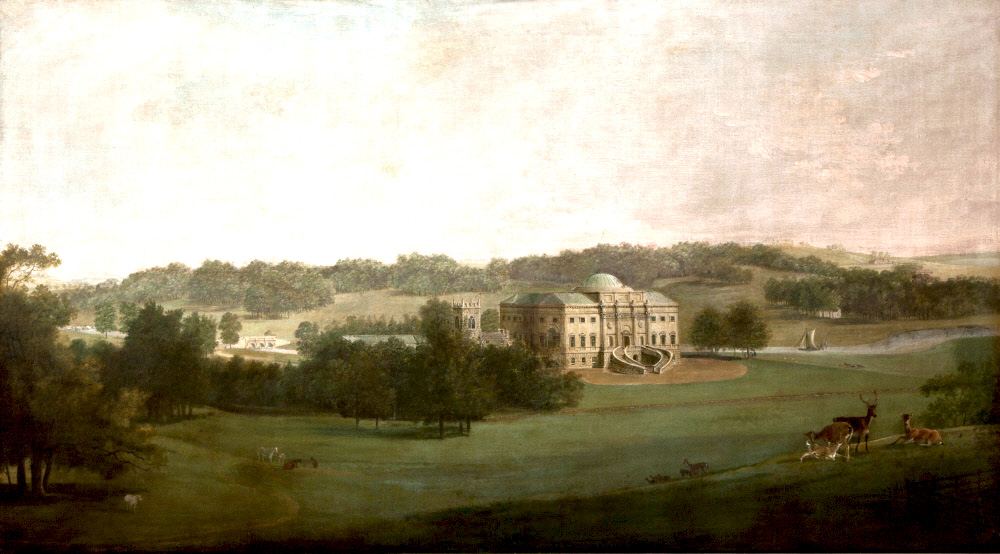
Oil painting on canvas, Kedleston Hall from the South by George Cuitt the elder (Moulton 1743, Richmond, Yorks. 1818). Distant view of Kedleston Hall right of centre. Small sailing boat on lake to right and group of deer lower right.
Intersections with the Picturesque Tradition
The late modern period and the altered approach towards inculcating multiculturalism into heritage management introduced a global perspective that led to the conscious acceptance and adoption of various regional policies. This intention to expand the scope of enlistment and historic preservation introduced a layer of categorisation into the ordering and structuring of heritage assets, a technique initially adopted in the post-Enlightenment era to address a potentially uncertain future for the discipline and practice. These strategies were further supported by local claims of misrepresentation on a global platform and their impact on the perception of indigenous narratives, which promulgated the development of a more inclusive model of heritage and historic preservation. Indigenous heritage emphasised the representation of a more consolidated image of the discipline that has superseded Cartesian dualisms of nature-culture and mind-matter, known to simplify the classification and management of heritage assets. The introduction of concepts and classifications such as ‘Cultural Landscapes’ and ‘Intangible Heritage’ has aimed to develop a democratic and equitable approach within contemporary frameworks and strategies of heritage management. The process reiterates notions of national identity and assists in creating a holistic image through the diversification of representational forms and techniques. Furthermore, the picturesque tradition marked a period in British colonial history that facilitated the representation of English architecture and landscape both at home and abroad through painting and photography. As Jeffrey Auerbach observes, “ the picturesque, the literary and visual aesthetic which developed during the second half of the 18th century helped to unite and homogenise the many regions of the British empire.” 5
Romanticism served as a theoretical and artistic realm that bridged the connection between British and Indian architecture during the nineteenth century, through which colonial powers sought to gain an understanding of the native territory. The discipline paved the way for introducing Islamic and Hindu formal elements into the Classical template, entertaining the possibility of a cohesive expression in form and style. Indigenous elements were revered for their Romantic qualities, and a sublime and picturesque perception of the native style and template was established. Traditional motifs and ornaments featured extensively within this stylistic vocabulary, with the intricacies and ruggedness accounting for the sublimity, ‘picturesqueness’ and Romanticism associated. In the following years, traditions were strengthened through the introduction of spatial features that rendered the Indian cityscape and rural hinterland inhabitable for foreign settlers, transformed through designs that upheld the Romantic spirit and ‘Picturesque’ tone and sought to contextualise British architectural tradition and building practices in the Indian subcontinent. Colonial architectural investigations, however, reveal a dissipating influence of Romanticism with the advent of processes of scientific inquiry, following which colonial rule in India acquired an Imperialist character. 6
As Lynne Withey observes, the Romantic spirit was expressed through architectural forms and ruins that embodied a melancholic disposition, often through monumental proportions, age value, cultural symbolism and artistic expression as opposed to the ‘picturesque’ associated primarily with landscapes that combined a variety of formal and natural elements including for instance, castles and palatial mansions, meadows, cultivated farmlands, grazing fields, still and moving waterscapes such as ponds and rivers, with wildlife and livestock. The image constructed by means of a relational perception of built and natural features draws on concepts presented through Bruno Latour’s Actor-Network theory, considering aquatic and terrestrial wildlife as active participants in the process of place-making. Withey identifies characteristics such as “romantic disorder, variety, intricacy and singular shapes ” as essential components of this linguistic order, which contributed towards the framing and perception of the Indian landscape, aiding the integration of the colonial and local, indigenous style in the subcontinent. 7 The apparent disorder in the landscape was organised by means of the compositional order in the painting employing the use of architectural capricci – actual buildings put together by an artist in an imaginary arrangement – and sharing the same basic structure and features: ruins on the left, trees on the right, a river winding through the centre towards a distant mountain that is rounded rather than steep and craggy, and several figures in the foreground. 8 The sublime differed from the picturesque in terms of the valued characteristics, while the notion of beauty became associated with both, especially with reference to Edmund Burke’s arguments, which placed beauty and sublimity at par in the context of artistic aestheticism. Alternatively, the notion of picturesque expanded to include features and elements which were associated with conventional standards of beauty. As a result, both categories transformed into aesthetic ideals revered for singular and collective traits in framing both architecture and landscape. Supported through the conceptual framework that emerged as a result of the Enlightenment of the Public Sphere in the 18th century, a conjoined definition of natural and cultural elements emerged to collectively present a definition of heritage and cultural property, and by extension, national identity. With origins in Europe, North America, Britain and some of their colonies, including the Indian subcontinent, the proliferation of the concept and practice paved the way for new forms and identities within the cultural milieu of colonialism.
Colonial cultural landscapes were a subject for British artists who travelled to different colonies, representing the built and natural environments in order to establish a familiarity in foreign cultural contexts and serve as a means of communication, representing British culture and crystallising its colonial influence. As Auerbach observes, the works of George French Angas, artist, geologist and explorer and the director of the Government Museum in Sydney, presented “regions of the empire as safe and familiar for potential European settlers.” 9 The expansion of the British Empire during this period was underscored by these artistic practices, which determined the character and influence on material culture. While landscape designers such as Capability Brown, who were critically acclaimed for developing a style through similarity in their linguistic vocabulary, the picturesque tradition often misrepresented urban and rural contexts within the British territory and colonial settlements as interchangeable spatial identities. 10 Alternatively, the English countryside inspired urban regeneration in Indian cities through architectural proposals that consciously sought to eradicate the difference, generating a similarity across cultural contexts to emphasise colonial influence and establish familiarity. The Raj (Lok) Bhavan or Government House exemplifies such a gesture, which can be perceived as instrumental in establishing a connection between Britain and its colonies that was context-specific with regard to the existing Maidan or urban commons. In this case, the differences between rural influence and urban intervention seem irrelevant, and the picturesque tradition of reading and representation strived to create a cohesive strategy of cultural and artistic exchange. Architectural and artistic production were instrumental in translating the sublime and the picturesque from materiality to representation. Alternatively, the sublime was transformed into the picturesque through landscaping, as in the case of dry, barren, lacklustre landscapes known for their sublime ruggedness, to fertile greenery dotted with water bodies that contributed towards the picturesque aesthetic. These approaches were instrumental in reviving lost and derelict landscapes cleared of forest cover and vegetation, with reference to the Maidan and the riverbanks reclaimed to establish Fort William in the city of Calcutta following the Battle of Plassey.
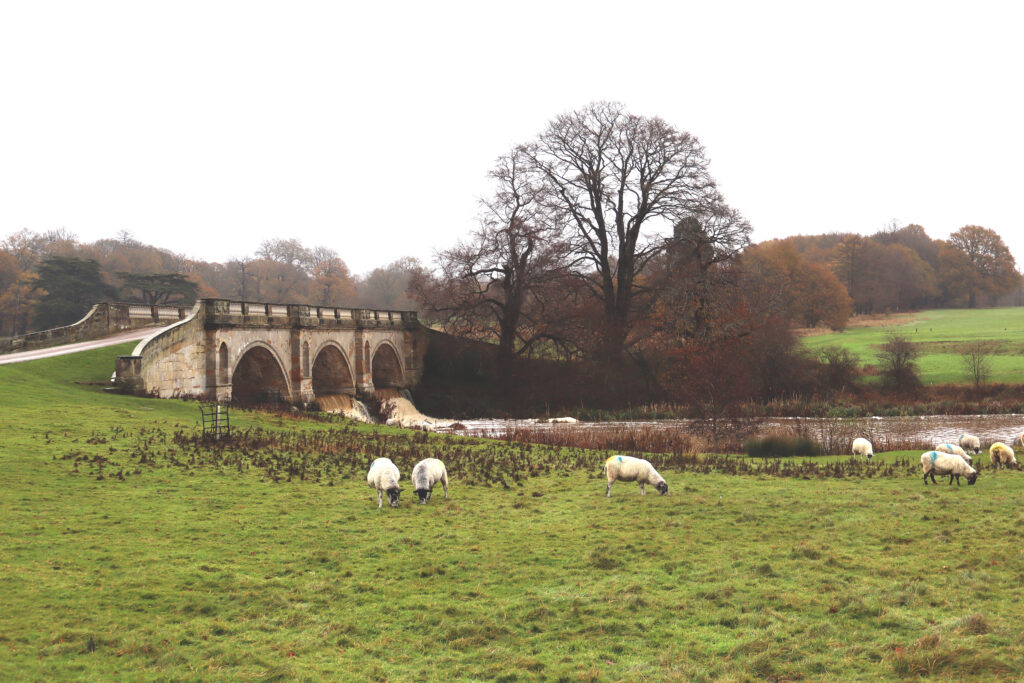
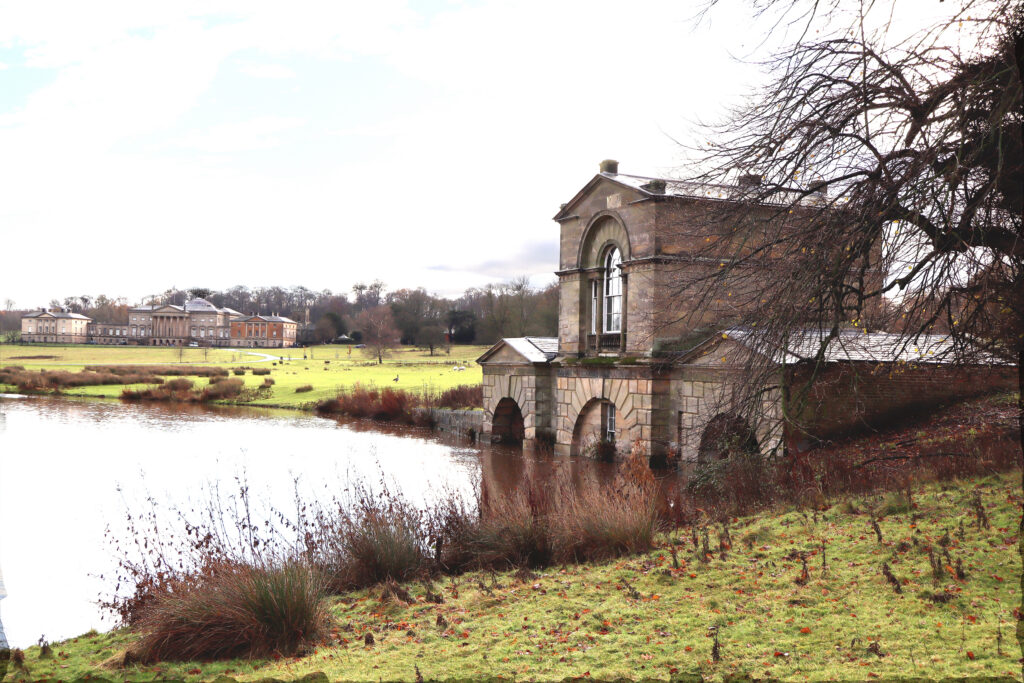
Picturesque elements and Romantic qualities in the landscapes at Kedleston Hall,
Derbyshire, Images of author
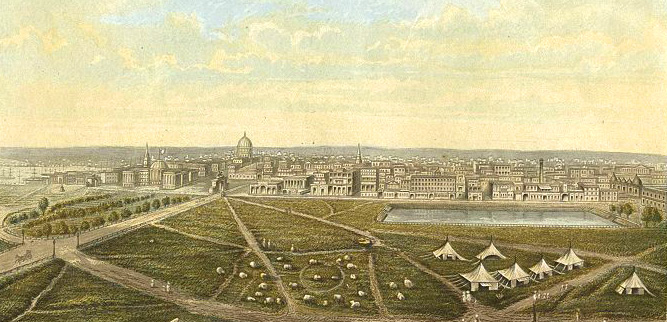
Rediscovering Romanticism : The Maidan, Esplanade and Government House, Kolkata
Source : https://puronokolkata.com/2018/02/25/calcutta-maidan-in-18th-and-19th-centuries/
The city of Calcutta served as the first capital of the British Empire in India and was created out of a collection of ‘river-side places’. The three original clusters that united to form the city were those of ‘Sutanuttee’, ‘Govindpore’ and ‘Kolikata’ situated on the Eastern banks of the River Hooghly. A historical reading of the landscape and its evolution provides evidence for the introduction of several urban features and elements that characterise the nature of urban settlement, growth and renewal over the course of history. Furthermore, these processes led to the perception of the landscape as an inhabitable terrain which could be read and interpreted in relation to the British mainland. According to geologists and scientists, there is a possibility of Calcutta and lower Bengal having been hill stations. An oyster bed was discovered at the heart of the modern city. During 1835-1840, scientists conducted a series of borehole operations in the vicinity of Calcutta. Beds traversed from top to bottom of the borehole were found to have been deposited either by fresh water or in the presence of an estuary. Beds of peat with wood were found at 30ft below the surface, or at 10ft. below mean tide level and at 382 ft. In both cases, deposits proved the existence of ancient land surfaces.
Furthermore, a peaty layer was noticed at some depth beneath the present mean tide level. Canning town (on the Mutlah) lay about 35 miles to the South-East, and Khulna in Jessore was situated 80 miles east by north. While digging for tanks in the Chowringhee area, the central residential district occupied by British settlers beyond the immediate context of Fort William, stumps of ‘Sundri’ trees were found at a depth of 4 to 5ft. The ‘Sundri’ tree is known to grow a little above the ordinary high-water mark in ground that is liable to flooding. Pebbles or coarse gravel are rarely found deposited in water eighty fathoms deep. Large fragments could not have been brought either by streams presently flowing across the country’s terrain if they formerly had a greater fall. Therefore, it has been concluded that rocky hills existed, which have been partly removed over a period of time and covered up by alluvial deposits. This also confirms the occurrence of depression in the terrain. It is therefore probable that when they were formed, the present site of Calcutta was near the margin of the alluvial plain.
In the lower Bengal region, including Calcutta and its neighbouring territory, tidal swamps were gradually raised by alluvial deposits around the 7th century A.D. Gneiss hills stood out from the sea at the present site of Calcutta. These hills were later depressed, and a tidal swamp extended up to the foot of the Rajmahal hills. The terrain around Calcutta was raised and subsequently depressed. Pieces of land were enclosed, and the local inhabitants excavated tanks and built houses. The site around the tanks storing excess rainwater from the monsoons was filled up to raise the ground level to prevent flooding. The tanks excavated within and beyond the central residential district were used for the provision of drinking water, daily cleansing chores and religious purposes while their premises functioned as collective gathering and recreational spaces.
Environmental Texturing
Water has been considered an important element in landscape design, evidenced by numerous urban strategies and environmental approaches over the course of history. With their incorporation in early settlements, waterbodies were considered integral to socio-cultural and economic processes, bridging the transition from a primitive to a civilised lifestyle. Symbolic in this regard, water is celebrated and commemorated through artwork and inscription, from hunters and gatherers to courtly scribes. The tombs of royal Egyptians were painted with water ponds with fish, ducks and lotus flowers. In addition, lotus ponds were a significant feature of the Roman villas in Pompeii and in many later designs of gardens. 11
The presence of a water body is one of the most influential factors in determining the nature and effects on the built environment. A waterbody is used and therefore treated as the central focus around which a neighbourhood, community or group of buildings generate. In the past, small water bodies or ponds formed or excavated in low-lying areas were used for fishing, bathing, washing utensils and clothes, and other household activities that brought the community together. It encouraged people to perform daily chores collectively, which strengthened the community. The waterbody premises would often serve as a meeting place for functions which would involve a large gathering of people. A clear line of sight to the water from within the built forms situated around through the means of ‘verandahs’, porticos and other semi-open stretches offered a visual connection between the private and public realms within residential and institutional environments.
In a modern and post-modern urban context, waterbodies have been restored and transformed into public spaces by incorporating them in plazas and public gardens. The intention of creating a garden arises from the need to utilise a zone to bring a landscape to life, which enhances the beauty of the existing elements, such as waterbodies, while taking advantage of the texture and variety of the green space. This links the zone with the city, supported through the development of small areas including waterbodies or unused patches of greenery into gardens enclosed by boundary walls, trees and foliage to create translucent screens that separate these enclosures from the streets and the neighbouring context.
Within the larger urban framework of blue and green spaces, public gardens have arisen as a necessity to provide a peaceful ambience for recreation amidst congestion, traffic, pollution and an incessantly mobile and dynamic urban environment. Life in the city is one governed by office timings and lunch hours, business meetings and social obligations placed on urban inhabitants, enroute from one destination to another. Public gardens, in that respect, create moments and opportunities of pause in the dense urban fabric for people to reflect spiritually, collect their thoughts and compose themselves to start afresh. This in turn foregrounds and promotes a sense of place, familiarity and belonging between the user and locale, the earth and the cosmos, converging natural and cultural processes towards a consolidated, streamlined approach towards ensuring social stability.
From a more scientific perspective, the significance of a waterbody has been emphasised through microclimatic studies that strenuously advocate for their sustenance. A waterbody in an urban environment reduces the heat island effect, improving the air quality by positively affecting pollution levels generated in the city and, in the process, altering biodiversity. As a result, these urban spaces are made more liveable, lively and attractive for their users.
“The distribution for the effect of UHI (is) positively correlated with density, dimensions and city signs.” (Arnfield, 2003; Oke, 1992)
The temperature of a waterbody is usually lower than that of the surrounding environment by about 2-6 °C. The reduction in temperature of the urban environment is facilitated through evaporative cooling, an efficient method of passive cooling for urban spaces and built forms. As a result, the Urban Heat Island Effect or the UHI is created as a result of the difference in temperatures between the urban and the neighbouring non-urban spatial entity. In tropical countries characterised by a hot and humid climate, seasonal winds and intermittent breezes pick up moisture with the cooling effect from the ocean, river and the waterbodies in the vicinity, travelling through the built environment with tangible effects on the atmospheric conditions and standards of living.
A modelling study carried out by Robitu et al in 2006 suggested that small ponds had a cooling influence on their surroundings. 12 Another study concentrated on the cooling influence of water-holding pavements, which displayed a temperature decrease of several degrees. Saaroni and Ziv in 2003 observed that a 100m wide pond inside an urban park in Tel Aviv, Israel, displayed high rates of humidity and low amounts of heat stress over the day. 13 Later in the day, the temperature over the green area was recorded to be lower than the surface of the lake; it was evident that evaporative cooling was the fundamental cause for the decrease in temperature.
Therefore, it can be inferred that the evapotranspiration in cities is primarily due to the presence of a waterbody and the surrounding vegetation, and the changes in daytime and night-time temperatures in these environments. Additionally, waterbodies are known to absorb excessive amounts of radiation but provide a low thermal response. In the contemporary urban context, a persisting design challenge has primarily concerned the transformation of dense urban spaces through concentrated efforts directed at decreasing temperatures and altering microclimatic conditions with the help of old and existing approaches, and alternatively, through new interventions that support and enhance existing strategies of climate resilience.
Formal features within buildings have contributed to the process of transition between the built and the open. For instance, buildings characterised by large floor heights and stretches of semi-open spaces would allow the passage of air while keeping the interiors cool. Spatial elements, including colonnades and porticos, would form an envelope around a courtyard within the building, supporting the transition between the enclosed interiors and the exterior. In several contexts, the courtyard has been revered as the most significant collective space within a building, serving to function as an open, relatively private and purpose-built enclosure distinct from the exterior. The transition from the focus created by the waterbody outside, to the focus created by the courtyard inside would involve a series of experiences in terms of nature and hierarchy of public space. It led one from an open public gathering space to an open private gathering space. This was further determined by the role and function of the building. The borders formed in between are the adhesives that hold together the public realm and define enclosures. These envelopes facilitate spatial interaction, thereby increasing accessibility.
The conception of border or boundary as a spatial determinant can be traced back to Ancient Greece, where a boundary line separated one household from another. This layer functioned as a threshold demarcating the end of one and the beginning of another entity, with itself being free of any built form. “ The notion of the law and the hedge were closely associated with each other for the Greeks, whose word of law, nomos, derived from nemein, which meant ‘to distribute’, to possess (what has been distributed) and to dwell.” 14
Edges or border conditions between defined enclosures vary in their nature of opaqueness or porosity that defines these surfaces between the built and the open. The degree of porosity alters with changes in accessibility and visibility of the space from the main street, defining the relative private or public nature of the enclosure. The porous layer is instrumental towards establishing exclusivity, restraining disruption which could potentially be introduced by vehicles, undesirables, street animals and vandals. Alternatively, the selective transparency offered by the building envelope increases the visibility of the public space situated beyond the boundary. Borders, edges and spatial envelopes punctured by multiple entrances and inlets increase the accessibility of an urban space, predominantly determined by the articulation of the border.
The series of experiences offered by borders, which originated in Calcutta’s colonial history, has been considerably transformed over time. An increase in population and urbanisation has made land invaluable, with every square meter being accounted for. Changes have risked the encroachment of buildings upon the premises of the waterbodies, leading to the physical shrinking of the waterbodies. The increase in F.S.I. and change in scale of the built environment have inadvertently caused a previously well-functioning open collective space to shrink formally and visually, and therefore in terms of significance and use. 15
A growth of outdoor markets and small businesses competing with malls and shopping complexes has manifested as informal outgrowths to formal, purpose-built structures, enclosed by a compound or party wall. These add another layer of transition to the hierarchy of public space. Furthermore, the movement and speed of activities and people have resulted in the focus created by the waterbody and the courtyard as a collective space to shift to another peripheral layer within the building envelope created by the plinth of buildings, compound walls and facades. These articulate the relationship between the built form and the street, both pedestrian and vehicular. The plinth and steps, as independent elements, have contributed towards the frontage of the built entity, facilitating the porosity of the surface. They have been incorporated within French and Portuguese colonial structures with porches and conceived extensions that project the built enclosure and interstitial space forward into the street, emphasising approach as a performative ritual and ceremonial practice. To this effect, these areas are often characterised by an overhang, either cantilevered or supported on pillars, enclosing an area with permanent seating. The space is inhabited as an area awaiting permission for entrance. In this manner, the element determines both the nature of porosity as well as the extent of exclusivity of built surfaces. The porch is often complemented at the higher levels by means of floor extensions in the form of balconies that aid visibility, limiting physical access. Porches, balconies verandahs and fenestrations are supported and held together by the façade that determines the architectural style, built character, aesthetic effect and symbolism encapsulated through elements such as pillars, pilasters, pediments and the entablature of Greco-Roman descent infused with indigenous forms such as ‘chhatris’ or independent domed enclosures which represent ‘the umbrella’ or a dynamic, mobile, impermanent and versatile instrument of shelter. The adoption of ornaments and embellishments has served to define and indicate a colonial influence, and their juxtaposition with indigenous forms and elements has further articulated the nuances of cultural cohesion in different contexts. These historical remnants have proved to be of significance in postcolonial territories, evidencing global shifts in cultural and artistic discourse and practice.
Style and Stigma
Adolf Loos’ seminal work, Ornament and Crime, published in 1908, critically examines ornamentation as a practice, its benefits and shortcomings, which have necessitated its proliferation or termination in different cultural contexts and with the evolution of artistic tradition. For instance, Modernism in the 19th century advocated for a redirected focus on formalism and functionalism, which sought to eliminate the built form of ornaments and embellishments, signalling a departure from the Classical period and its stylistic overtures. Alternatively, Classicism and in particular, the Neo-Classical Baroque with climatic adaptations was celebrated as the quintessential Calcutta Neoclassic style.
Loos’ critique perceived the ornament as plastic and superfluous, a product of eroticism. He elucidates, ‘Ornamentation’ as a practice represented an economic impracticality which involved a surplus of human labour, money and material that could be conserved if the ornament itself were eradicated from (architectural) practice. In his opinion, those still driven by ornamentation, the need for surface treatment, embellishments, and artistic and cultural symbolism, were guilty of regressive attitudes in a modern era of artistic production. He supports this assertion, however, with an acknowledgement of the maker’s euphoria, fulfilment, and sense of achievement. The adoption of the ornament has therefore produced a multiscalar impact, fuelling socio-cultural and political contestation that has trickled down to drawing room disagreements and debates with regard to their symbolism and cultural relevance in modern, post-modern and post-colonial periods. In addition, the preservation and restoration of ornamental facades have required the expertise of qualified professionals, familiar with the origins, symbolism and embedded value of the ornament and carefully crafted façade. While determining the nature of the border condition and built envelope, the ornamental façade has been instrumental in delimiting the abstract and sterile reductions envisaged through modernist interpretations of this dynamic architectural element. In contemporary fabrications within the British context, for instance, the Georgian façade conceals a complexity characterised through transformations in floor heights and interior spatial configurations which have shaped the environment within. Loos advocates for the adaptive reuse of existing ornaments and, by extension, ornamental facades to ensure sustainability with regards to artistic production. While the replacement of the ornament aligns with the demands of the market, the process inadvertently contributes to the devaluation of the ornament. In contrast, adaptive cultural environments frame cultural practice as a prospective endeavour, contextualising the past with the present and ensuring its sustenance in the future. Loos celebrates the maker’s skill and expertise, evidenced by the ornament, recognising its superiority in the age of mechanical reproduction. In his opinion, modern man would be ill-equipped in the process of conceiving an ornament or elements that would match the standards of artistic production in the past. The industrial age has therefore reconfigured both perception and use of the ornament.
To a craftsman, a weaver, a seamstress, a tailor, a potter or a shoemaker, the hours of work, the intricacy of their product and the skill and care to assure a quality workmanship embody their sense of achievement and refuge. For these people, ornamentation, both process and practice, is a source of joy, inspiration, and artistic fulfilment. The author gives these professionals their due respect. They have no other means of survival, and the sense of fulfilment offered through labour, and in particular creative labour, exists as the only source of remuneration, assuring spiritual and economic sustenance. Loos states that the only exception he makes for appreciating ornaments is if the process of artistic production and the object of creative endeavour is a source of joy and fulfilment to its creator, unlike a modern man who celebrates functionalism and socio-political logistics as mechanisms that contribute towards spatial and artistic production. This sentiment resonates with Oscar Wilde’s proclamation in ‘The Picture of Dorian Grey.’ The author states that “ We can forgive a man for making a useful thing as long as he does not admire it. The only excuse for making a useless thing is that one admires it intensely. All art is quite useless.”
“All art is at once surface and symbol.
Those who go beneath the surface do so at their peril. Those who read the symbol do so at their peril.
It is the spectator, and not life, that art really mirrors.”
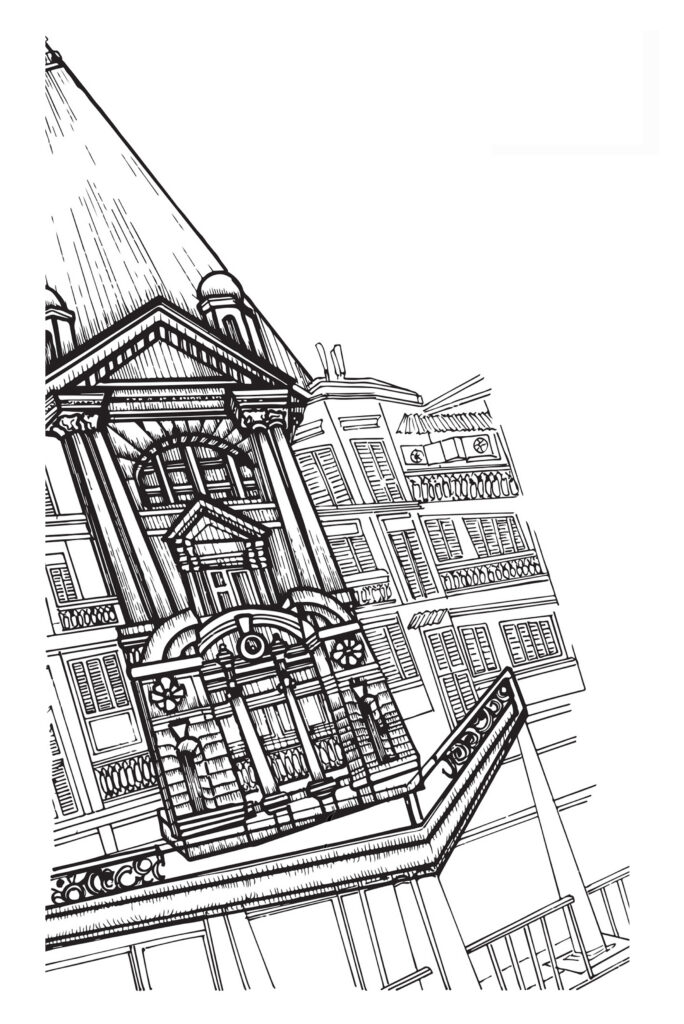
Territory and Enclosure
Stylistic Origins and Adaptations in Colonial Calcutta
The remnants of colonial architecture in eastern India are representative of a historic and cultural revolution in style, materiality, formal vocabulary and aestheticism, evidenced by means of influences that underscored architectural conception and production between the 15th and the 19th centuries. The eclecticism inherent to building traditions which emerged during this period, materialised and gained prominence through the integration of Indo-Islamic, Bengal Temple and the European Neoclassical forms in the most significant and monumental public buildings in the city of Calcutta. Centrally dispersed within Calcutta’s historic precinct comprising the Chowringhee and Espalande areas, these colonial mansions have been morphed considerably over time through reconfigured socio-cultural associations informing their means of occupation and use in a post-colonial period. These objects embody the essence of colonial life that emanate and resonate through the built fabric through echoes, resounding within red-brick walls, through courts, beneath domes and along colonnades. Collectively, they recall an era of cultural exchange evidenced by means of an eclectic montage which, in recent history, has enabled their classification, preservation and interpretation as architectural forms realised in the Neoclassical Baroque, Victorian-Gothic, Art Nouveau and Art Deco traditions.
The Calcutta Neoclassic Baroque was characterised by gabled roofs, heavy entablatures and supporting framework, constituting the most prominent elements of the Classical vocabulary that transformed the Indian landscape. Within the structural composition of the column, components comprising the vertical support, including the base, fluted or non-fluted pillar, and a crowning capital, collectively represent the tectonic language of the classical support system that transferred load vertically from the roof to the ground. Additionally, elements such as courtyards, balconies, porches, porticos, overhangs and layered fenestrations exemplify some of the additions to the original designs that accounted for climatic and habitational changes in the Indian context. Terms such as ‘verandah’ and ‘bungalow’ were coined during this period and indicated the evolution of Anglo-Indian concepts of architecture in the city.
In addition, certain systemic, structural and compositional alterations were evident. The ‘three cube division’ present in several Neo-Classical public and monumental buildings, including museums and memorials and the Palladian Temple order, and in particular, the Palladian loggia, functionally comparable to a semi-open Mughal arcaded entrance with a wind chamber, was significant. A central temple or hall, a piano nobile, large opening or casement windows with Venetian, louvred double shutters, fanlights with window openings, and the distinct and revered south-facing verandah, collectively transformed established stylistic templates to suit the Indian climate and cultural context. In early formal experiments, a distinction between the entablature and the column is evident and typical of the Neoclassical style in Calcutta. The pronounced verticality of the Classical column, coupled with raised plinths and monumental, ceremonial staircases, ascribed a distinct character to the tradition of building that was most exclusively associated with power and social status.
The new Government House in the city of Calcutta, built during the Baroque Neoclassical phase in architectural history, incorporates some of the most cost-effective construction techniques for a structure of its scale. “The Government House authenticated the idea of a functionally divided vertical arrangement of space by combining it with the traditional horizontal spatial spread: (perceived as a) significant step towards urbanisation of building style.’” The adjoining residential district of Chowringhee and Esplanade, defining the periphery of the Maidan, included several residential units ranging in scale from modest dwellings to palatial mansions built for residential and commercial purposes that were exemplary with regard to establishing a British colonial aesthetic adapted for the tropics. The research documents these adaptations through the formal architectural vocabulary in some of the buildings within this historic precinct that seek to establish a building tradition that developed in the colonial period and has largely been preserved, restored and adapted with contemporary urban needs.
A whimsical city fabric
The Victoria Memorial is one of the most prominent buildings in Kolkata, situated on the southern end of the Maidan and mirroring the position of Government House to the north. The collective spaces inside the building are segregated into six halls on the north and south sides, with the circular Queen’s Hall in the centre crowned with a dome. It is connected to two central rectangular halls on the north and south. The central hall forms the focal point in the building, which directs pedestrian traffic through the building. The central hall, in addition to the other rooms, operates as an exhibition gallery with art, photography, engravings, alongside archaeological and sculptural exhibits. The hall leads to two quadrangles or courtyards on the eastern and western ends. These courtyards are enclosed by colonnades on the external periphery that connect the corner towers. The courtyards or quadrangles are used to host discussions and public events, including the annual Kolkata Literary Festival. The colonnades that enclose these courtyards are arranged radially, and the entire museum is raised on a massive plinth. This assists in offering a panoramic view of the gardens. Like other museums in the city, the Victoria Memorial Hall, at any given moment, holds a gathering of people circulating the building at a moderate speed, at times regulated by guards. The Victoria Memorial Hall, along with the Indian Museum, forms two of the largest nodes of public gathering in the Chowringhee and Esplanade districts of central Kolkata.
The Indian Museum is located along the edge of Chowringhee Road along the Maidan with a substantial footprint relative to other public and institutional buildings in the immediate context. The building is accessed through the ticket office, leading to the portico that precedes the enclosed private space. A series of steps leads into the entrance foyer of the building from which two stairways originate, leading to the first floor. On the principal floor level, the foyer leads directly into the central courtyard that functions as a public gathering space for families and visitors to the museum. Following the stairways onto the first floor, the internal periphery of the building is defined through a layer composed of verandahs that offset the interiors to the centre of the building. Furthermore, the verandahs aid visibility onto the courtyard, complementing the gesture on the ground floor.
The Oberoi Grand Hotel, located north of the museum, is a prominent cultural and leisure facility on Chowringhee Road with its stark white exteriors and extensive verandahs culminating in a colonnade at the ground level. The party wall of the hotel is articulated as a dynamic border that ebbs and flows with the nature of commercial occupation on the street side, constituting the Dharamtala Bazaar. A small opening in the dense commercial façade of the Bazaar serves as the driveway and pedestrian entrance for the renowned hotel. The small, covered entrance leads into a courtyard that faces the front porch of the Grand Hotel.
Further northwards, the Municipal Corporation building is located to the north-east of the settlement. Two arcaded entrances lead into the office building through the courtyard that exists and operates as an enclosure, easing access to the building. Four arcades lead into the courtyard, two from the north block and two from the south block, respectively, contributing to the layered approach and edge conditions that distinguish the built enclosure from others in its vicinity. The Kolkata Municipal Corporation, the Indian Museum and the Hogg Market (New Market) create a triad of public and institutional buildings with a significant footprint in the context. Their prominence is underscored by means of arcaded approaches and colonnades characterising the street frontage that establishes a public presence and stature of monumental proportions.
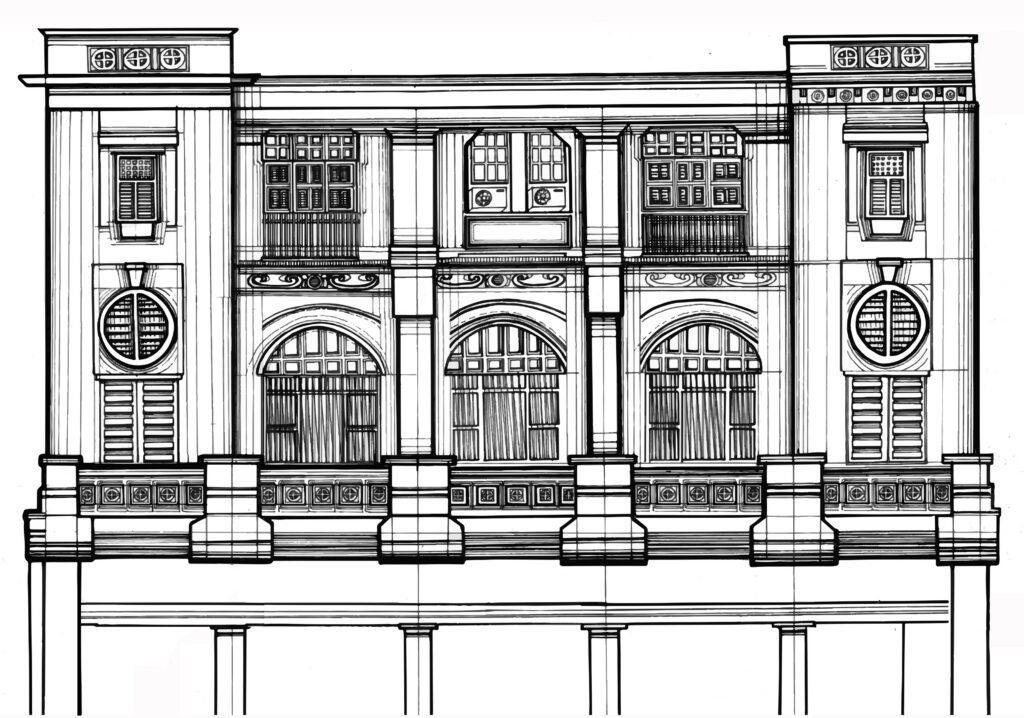
The Kolkata Municipal Corporation, south-east façade
The Chowringhee and Queen’s Mansions exemplify two types of residential enclosures in the area characterised by long, extensive verandahs on the first floor, creating covered market streets enclosed by colonnades on the ground. Fenestrations are articulated similarly to other public buildings in the area, with timber louvred shutters juxtaposed with panelled glass windows, floor-to-ceiling extensions at strategic junctions to aid accessibility and enhance porosity within this layer of transition. For the Queen’s Mansions, the courtyard contributes towards the spatial layering, increasing the complexity in design through interlocking elements. These spatial features have been adopted extensively in varying proportions across the urban fabric and in particular with references to palatial mansions, courtly residences and more modest residential units within Chowringhee, Dhee Birjee and Esplanade. Swati Chattopadhyay provides a detailed account of some of the houses within this area through her account, supported by documentation and spatial studies conducted that demonstrate a temporal rendering of the built environment and the impact of post-colonial expansion in the city.
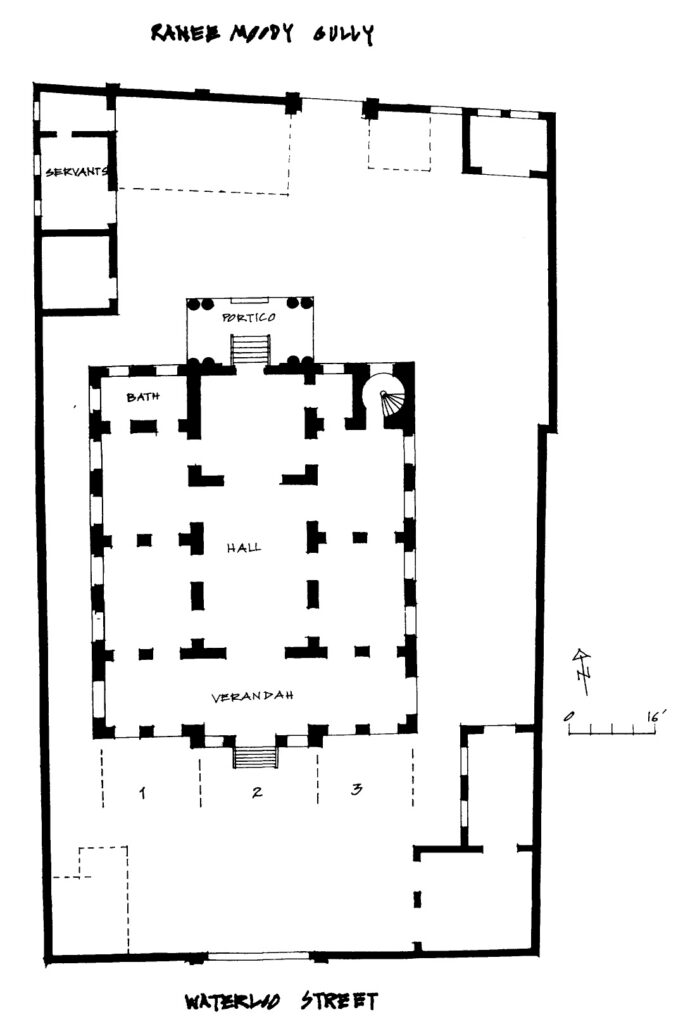
Transformations at the ground level within residential typologies
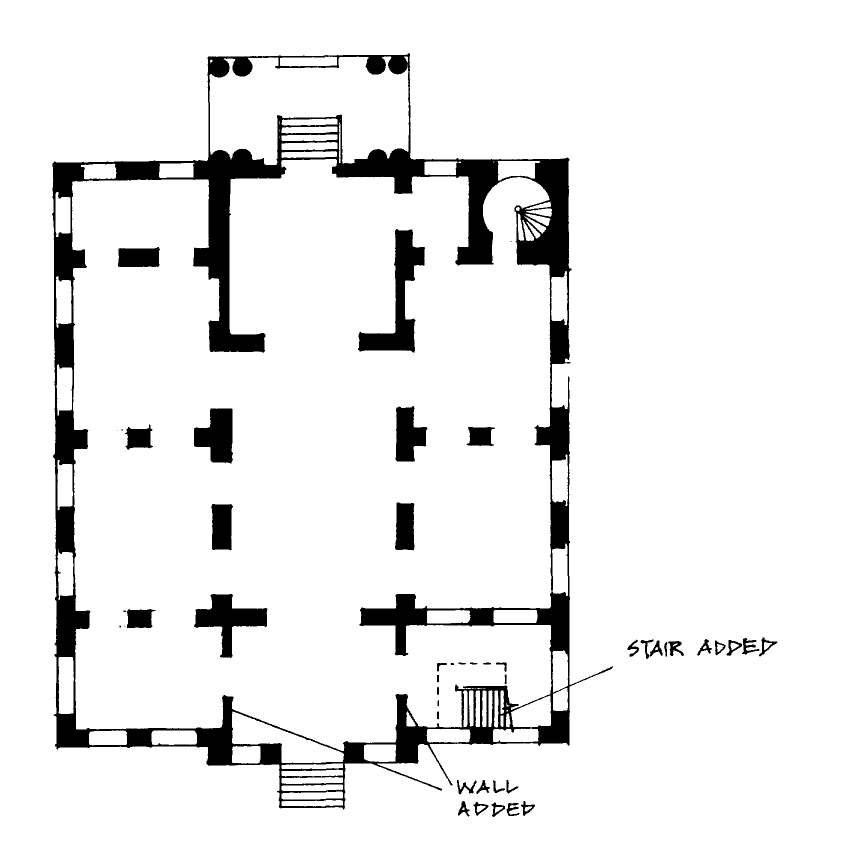
19th century alterations within the residential quarter of Chowringhee included a change of use from predominantly residential to Residential (top floor) and Office (GF and FF) Industrial (with reference to the go-downs and industrial storage space on the inner periphery of the plot) and Commercial (accounting for the shops on the ground floor along Waterloo Street, at the rear of the house, which also provided a secondary entrance to the dwelling and residential enclosure by means of a narrow alleyway. Alterations included the addition of a third floor, services including bathrooms on the south-east and south-west corners of the second floor were accessed through narrow balconies. The additions of staircases enabled access from the ground to the second and third floors and reoriented the entrance and access on the ground floor. In subsequent years, the house was primarily accessed from this edge with the elimination of the portico on its northern side which facilitated ease of access to the industrial sections which had been established on the north-east sections of the plot. In addition, the reconceptualization of the southern edge as a public collective enclosure accommodated service spaces which reoriented the house with its front facing Waterloo Street, from the British-Indian Street on its north. Encroachment and a reconfigured functional layering became the norm, with the introduction of additional iron columns, further segregating the initially conceived spatial layout, providing the possibility for growth and expansion, albeit incrementally. Most prominently, the entrance to the typical house form within this area, conspicuously transformed from one being flanked by servants’ accommodation and stables or the carriage portico, adopting a commercial front, that eased access to the street.
These transformations could be witnessed in the context of more prominent mansions and dwellings situated closer or along the main north-east thoroughfare of Chowringhee Road, including, for instance, Chowringhee Mansion. The building, or several floors within the mansion, can be accessed from a narrow alleyway and entrance situated among shops that receive the commercial traffic off the streets, directing pedestrian movement through the interiors of the urban fabric and away from the Maidan. Access to the second and third floors via a lift shaft leads one to the main entrance of the twin apartments within each floor, which takes one through the vestibule, dining or living spaces of the apartment culminating in the verandah that looks onto A.J.C Bose Road. The configuration articulates a spatial enclosure that is neither strictly public or private, essentially, a private open-air space on the first or second floors above shops on the ground that is visually connected to both private sections of the dwelling and the public street. Additionally, the layout of the rooms illustrates a spatial hierarchy in terms of privacy as an aspect identified within examples included within James Gibbs’s Book of Architecture (1739).
Based on Chattopadhyay’s studies, it can be concluded that the changes encountered with respect to the built fabric of the residential units in Chowringhee were aimed to transform the public character of the residential enclave, increasing levels of porosity with the advent of industrialisation, mechanisation, changes in modes of transport and a surge in population. 16 At the first and second floor levels, conceptions of private space transformed radically, with the more private, south-facing verandahs, often used by the members of the family for informal gathering, rest and repose, being visible from the main entrance of the house, which now opens out onto the south.
The tangible material and spatial implications within the residential typology in particular and the urban character previously established, transformed the built environment, intervening at multiple scales from small individual bungalows occupied as single-family dwellings, to mansions with multiple families, or those purposed as boarding houses to more expansive colonial mansions and institutional building that lined the Chowringhee Road. These forms of built heritage contributed to the characterisation of the area as a set of buildings that formed a ‘ring of palisades’, appropriately complementing the limitless expanse of the Maidan. 17 The hybrid character introduced and advanced during the nineteenth and twentieth centuries continues to define urban form and spatial growth in the context till the present day.
While the author highlights the fallacies in the conception of the theoretical premise that underscored the definition of an architectural language and character in the area, suggesting that the similarities between the mansions existing in the Chowringhee and Esplanade areas reflected the spatial configurations and societal structuring of the indigenous population, as opposed to the notion that these reflected the influence of colonial templates, the introduction of palatial mansions and more significant forms of dwelling including the monumental buildings within the immediate vicinity of the Maidan and Fort William resonated with the overall understanding of urban character that relied heavily on spatial and formal definition established by means of the classical or Neoclassical orders prevalent at the time. The translations that exist today are remnants of the past, adapting, evolving and flowing with the tides, bearing witness to countless interventions, changing political regimes and socio-economic requirements. However, having initially incorporated a linguistic order, hierarchies, configurations, spatial and formal elements were not entirely dissimilar to their European counterparts. Incongruencies between the axial structuring of more private residential dwellings in the ‘White Town’ and the Neoclassical template, reflecting English country and town houses, and Palladian mansions pronounced a difference in style, scale and prominence. The route of access within the built form intersected the spatial layering of domestic enclosures, with the most private rooms being situated further from the central collective spaces including the hall or circulation shafts, an aspect that was not replicated within the design of the mansions in the ‘White Town’. The general spatial ordering with the portico and verandah defining the north and south entrances and a pronounced longitudinal axis articulating space for movement within the house, reflected a continuity between templates, serving to function as the skeletal framework upon which the functional capacity of the dwelling became contingent. Furthermore, plans of residential dwellings in the Indian cityscape and the Neoclassical template that prevailed abroad demonstrated an ensuing dialogue between conception and adaptation with respect to the climate and terrain, social structuring and need for specific functions. In this context, service spaces, located at the periphery and or corners, would need to include wet areas which would receive direct sunlight and be well ventilated, distinct from the plans of Palladian villas or the conventional classical and neoclassical spatial layouts. In addition, as Chattopadhyay observes, a clear distinction between the precedents of the palatial mansions or the residential units within colonial Calcutta was articulated by means of the service and served spaces, a well-conceived and articulated strategy prevalent in English country houses and estates and included only as an afterthought in Calcutta, despite their indispensable association and conjoined existence with the main spatial order. The service spaces, both residential and in terms of circulation in the Calcutta town house emerged as a necessity with the realisation that self-sufficiency in the Indian state would be near impossible and therefore the class of servants and their spatial requirements were included within the plan of the speculative villa, only to be relegated to a secondary position, dissimilar to the English country house that generously accommodated service spaces as an operational necessity, constituting an order that underscored domestic spatial planning and an aspect of heritage and inheritance in the traditional sense. Chattopadhyay identifies these differences in an effort to establish a rationale for the perception of an integrated but strained existence that defined the urban residential character of the ‘White Town’ concentrated within the Chowringhee and Esplanade quarters of central Calcutta. These differences, however, did not establish a significant dissociation between precedent and product, with little to no nuanced formal expressions being lost in translation.
Government House (Lok Bhavan) Kolkata
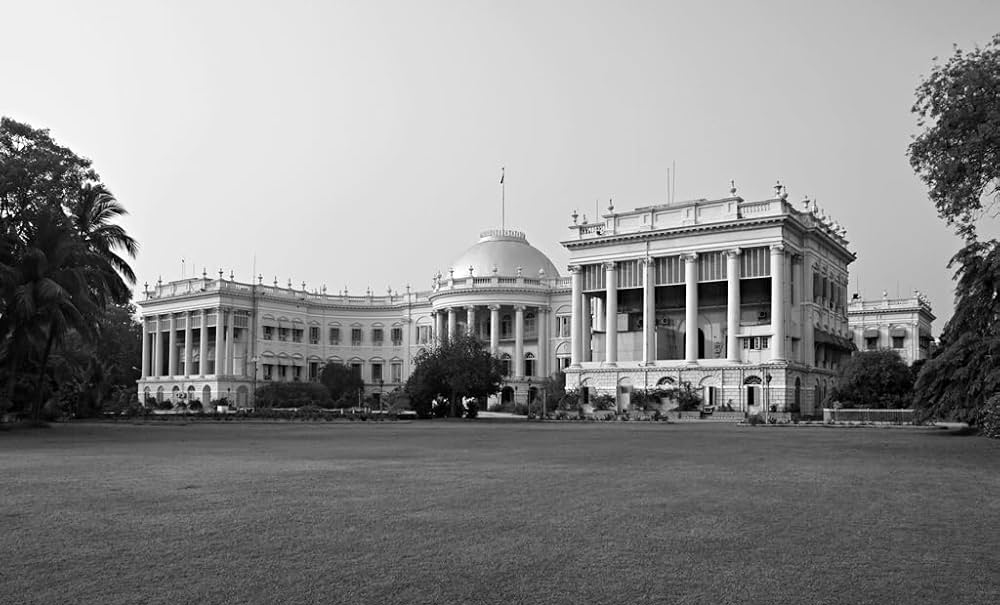
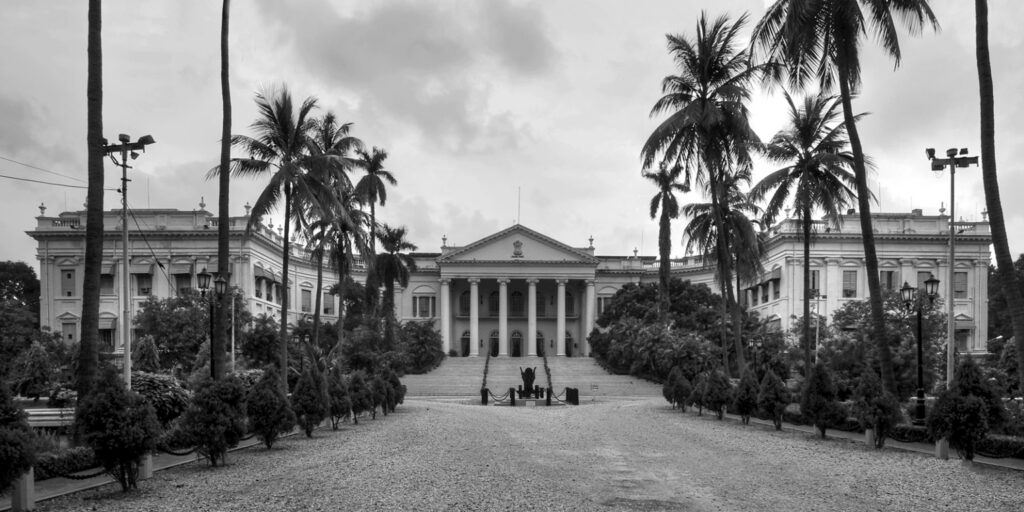
Social and Environmental Filters: Porches, Verandahs, Screens and Stairs,
Government House, Kolkata
Photographer : Anirban Mitra, https://www.amazon.in/ECHOES-GRANDEUR-Government-Houses-Estates/dp/9334122374 https://www.commonwealthheritage.org/december-newsletter-2/
Government House has been vividly described by Maria Graham (later Lady Calcott) in Journal of a Residence in India, 1810.
“ The lower storey forms a rustic basement, with arcades to the building, which is Ionic. On the north side, there is a handsome portico, with a flight of steps, under which carriages drive to the entrance; and on the south, there is a circular colonnade with a dome. The four wings, one at each corner of the building, are connected with it by circular passages, so long as to secure their enjoying the air all around, from whatever quarter the wind blows. These wings contain all the private apartments, and in the north-east angle is the council room, decorated, like the family breakfast and dinner rooms, with portraits. The centre of the house is given up to two rooms, the finest I have seen. The lowest is paved with dark grey marble and supported by Doric columns of Chunam, which one would take for Parian marble. Above the hall is the bathroom, floored with dark polished wood and supported by Ionic columns of white Chunam. Both these fine rooms are lighted by a profusion of cut-glass lustres suspended from the painted ceiling, where an excellent taste is displayed in the decorations.”
The building was commissioned by the 1st Marquis of Wellesley, the Governor-General of Calcutta, in 1799 during the colonial regime, and built by Lieutenant Charles Wyatt based with reference to Robert Adam’s designs of Kedleston Hall in Derbyshire. The commission replaced the earlier residence of the Governor in Buckingham House on the same site, and Amherst House within the premises of the Old Fort William, adjacent to Tank Square. 18 Buckingham House, the property occupied by the British following the Battle of Plassey, served as the residence of the Governor-Generals Warren Hastings, Sir John Macpherson, Lord Cornwallis and Sir John Shore, who occupied the site rented from Nawab Dilwar Jung. 19
An account of a French officer, M. Grandpe, in “ Voyage in the Indian Ocean and to Bengal,” describes the Governor’s residence at Calcutta as a house on Esplanade, “handsome, but by no means equal to what it ought to be for a personage of so much importance.” This house has been shown in engravings to have stood at the intersection of Government Place East and the Esplanade. The house was two-storeyed, with an arched portico on the ground floor and a closed verandah above on the first floor. On the terrace, there was a wooden structure constituting a single room with a pitched roof. Office quarters were included in wings on either side of the house, which formed an enclosure including a courtyard towards which the house faced. From the courtyard, two square pillared gateways, connected by a low compound wall, opened out onto the Esplanade. The house was not sufficient to accommodate public affairs and social gatherings, which were therefore held at the courthouse. This prompted Lord Cornwallis, in 1793, to rent a house in Old Court House Street for staff use. The property of Mr Richard Court was purchased and used as a Council Room. This property was used until 1764, after which the Board of the Company decided to move the premises to Esplanade, which was open, windy and more climatically favourable for a house for the Governor. The properties of Government House, along with those of Council House to its west, occupy the width of the present Government House complex. This was in use until 1799, when Marquis Wellesley, an Anglo-Irish aristocrat who arrived in Kolkata as the Governor-General in 1798, built the present Government House.
The palatial mansion, revered for presenting a suitable alternative to a country house, was ironically inspired by one designed for the English countryside, and remained occupied until 1911 by officials of the East India Company as the residence of the Viceroy. Following the transfer of the seat of Imperial power from Calcutta to New Delhi, the building ceased to remain operational and was only reoccupied after Independence in 1947 as Raj Bhavan, or ‘Rajyapal Bhavan’, the residence of the Governor of Bengal. The building has been renamed more recently, in 2025, as ‘Lok’ Bhavan, potentially a democratic gesture, acknowledging the public service of city administrators residing and operating from within the premises. 20
The building is situated on a sprawling estate of six acres, immediately south of Tank Square. 21 Eden Gardens stadium, the cricket grounds and park are located on the South-West end and along with the Netaji Indoor Stadium, comprising an auditorium and performance venue. The gardens are configured on an orthogonal grid aligned with iconic landmarks and urban anchors, including the Great Tank and Victoria Memorial, marking the northern and southern limits of administrative influence within the colonial settlement in central Kolkata. Most significantly, the landscape forms an extension to the Maidan or the expansive grassland that functioned as the commons for the residential and institutional quarter of Chowringhee, Esplanade and the city at large. The Maidan, punctuated by several waterbodies along its periphery, complements the continuous flow of River Hooghly on the western edge of the fort, as independent and self-contained water features facilitating the development of multiple public enclosures that add variety, texture and character to the diverse and interwoven urban fabric of the urban commons. Although conspicuously distinct from its English counterpart, the natural and cultural environment within which the Government House in Kolkata was established sought to reflect several crucial aspects of British Romanticism and the ‘picturesque’ through a combination of water features and pastoral landscape, as evidenced through several paintings, engravings and etchings dating back to the nineteenth and early twentieth centuries.
While the New Fort William may have been built by the Company following the Battle of Plassey in 1757 and the defeat of the Nawab of Bengal, Siraj-Ud-Daulah as he besieged the Old Fort, established adjacent to the Great Tank and on the banks of the River Hooghly, in an effort to curb British trade and expansion in central Calcutta, the construction of Government House based on the English country house template sought to revive familiarity with the British landscape, as a site to envisage the reinterpretation of the estate and its possible completion. 22 The reconstitution of Kedleston Hall as Government House effectively sought to incorporate the surrounding green space and the Maidan in its capacity as a natural and inhabitable resource, facilitating a transition from the English countryside to the Indian city, and exploring the potential of the Maidan beyond its initial perception as a defensive barrier for the fort against enemy fire. The area surrounding Lal Dighi has continued to exist and operate as the central business district in the city of Kolkata, defined by the Writers Buildings, the General Post Office, the West Bengal State Assembly House, the High Court and the Town Hall.
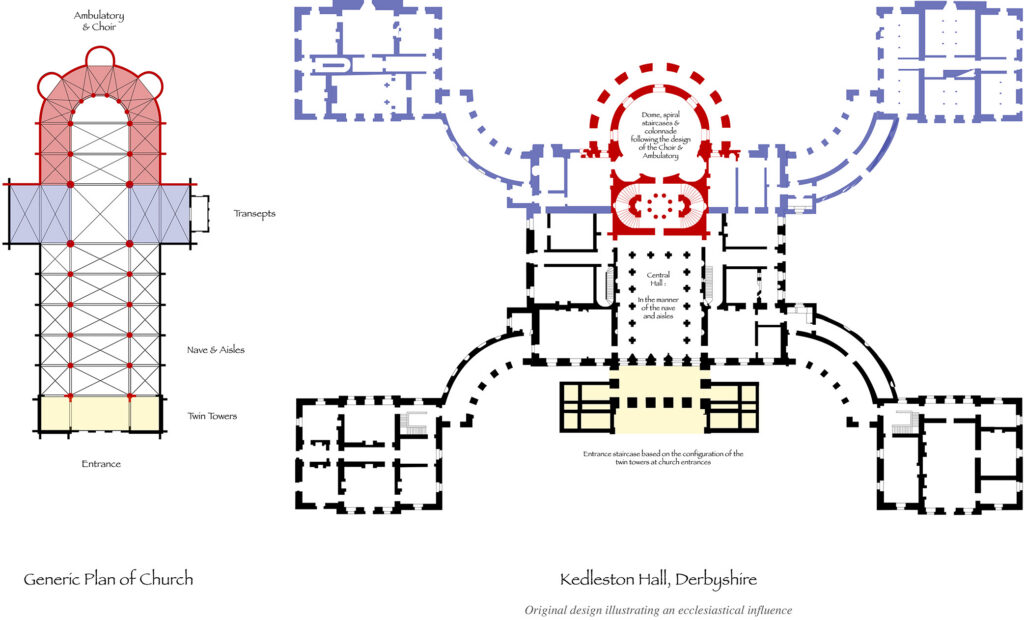
Early designs of the Kedleston Hall, Derbyshire
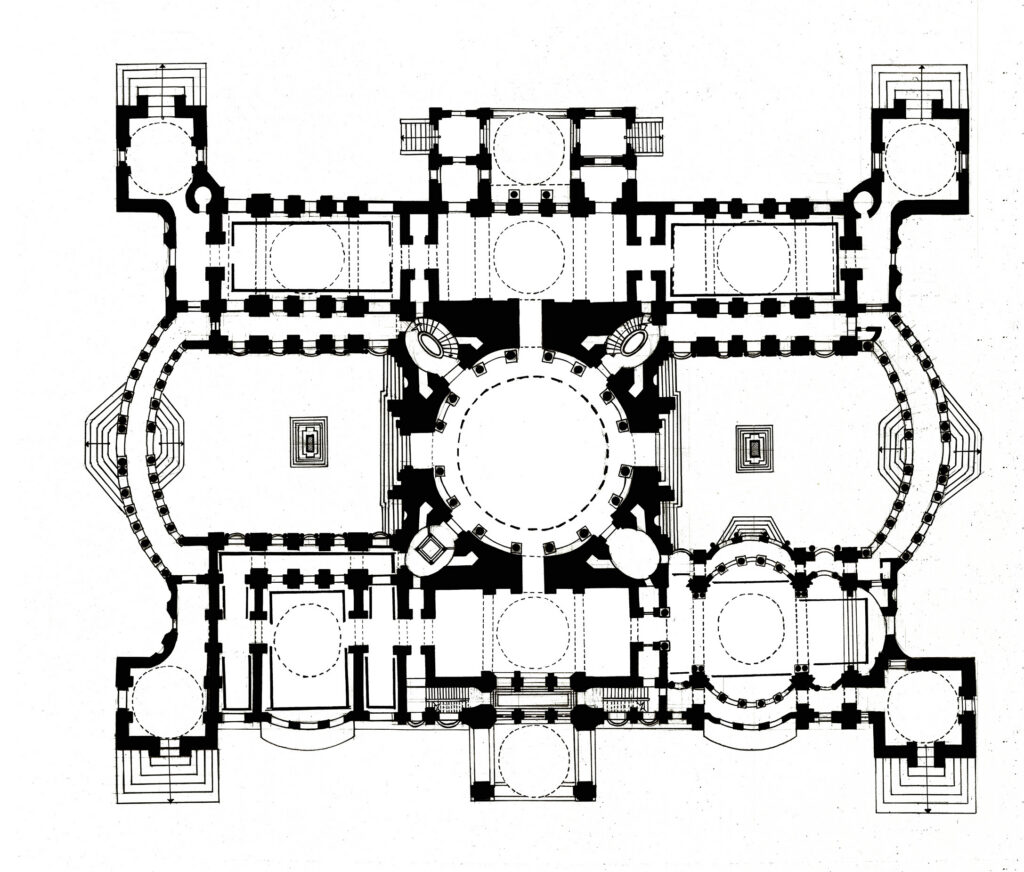
Kedleston Hall was envisioned as a ‘Temple of the Arts’ crowned with a dome built in the English Palladian Style, inspired by the dome of the Pantheon in Rome that served to encapsulate a spiritual experience, forging an ethereal connection between the earth and cosmos. The initial designs of the mansion, courtesy the National Trust archives, reflect a persisting influence of church and cathedral designs, with the ambulatory progressing along the choir and circumventing the high altar in a semicircular trajectory, and finally culminating in the chapel by means of the transepts. The design of the palatial mansion interprets this gesture through the conception of the wings (two of which later remained unbuilt), leading to the conservatory and the chapel on the western side and the music room to the east. Furthermore, the interior spatial configuration displays a predominantly public occupation, anticipated, and designed for entertainment and social gathering, not entirely dissimilar to the design and conception of the Government House, a property that was known to host lavish parties and gatherings for British soldiers, aristocrats, local Indian leaders, businessmen and nobility. The two buildings are distinct with regard to their material composition, with Kedleston Hall having been built mainly of sandstone and partially with brick, while Government House was built entirely of brick. Alternatively, the buildings are similar in their designs with respect to the manipulation of form and space based on Palladian principles, with a central apparatus in continuum with four pavilions by means of curved corridors or transitional wings. The volumetric divisions articulate a hierarchy between the main structure defined through interlocking spatial enclosures of uninterrupted lengths designed to accommodate public functions, which contrast the privacy, exclusivity and secluded nature of the activities incorporated within the pavilions. Both palatial mansions are approached by means of ceremonial staircases, which lead to porches forming a spatial buffer and environmental envelope on the periphery of the main structure. For Kedleston Hall, the staircases approach the building from two ends, creating a distributed approach to the stately residence, representing the two towers preceding the aisles typically positioned at the entrance of church buildings. In contrast, the design of the Government House chose to emphasise a linear and directional ascension, appropriately reflecting its function and stature. In addition, the Government House has been based on a longitudinal configuration, distinct from the generous footprint of Kedleston Hall that accounts for an interwoven matrix with a pronounced ecclesiastical influence.
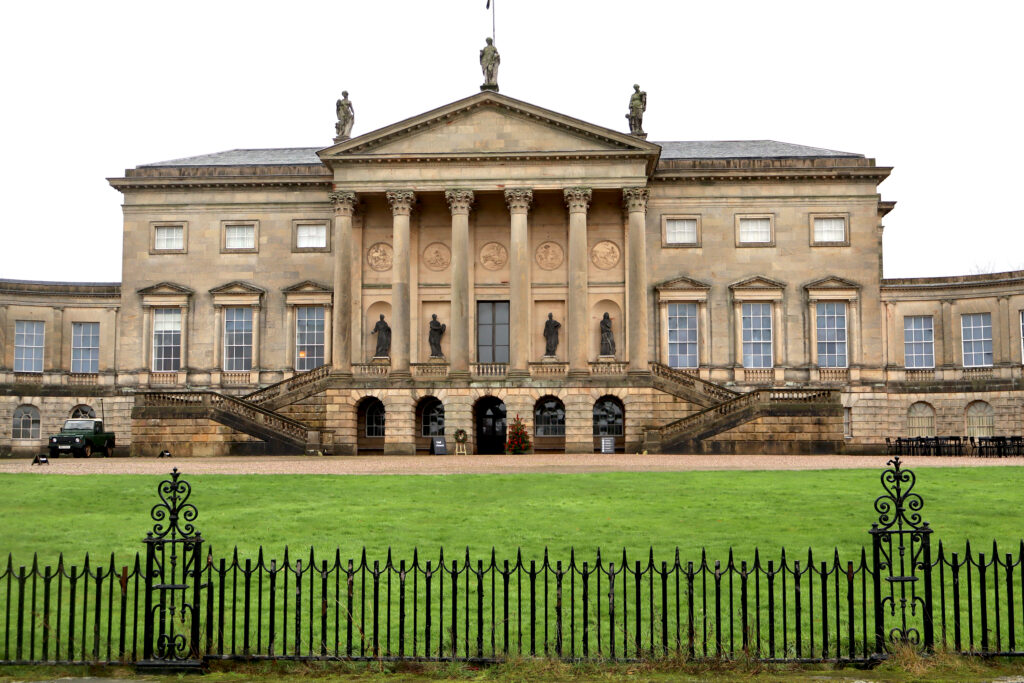
North façade and building envelope, Kedleston Hall, Derbyshire
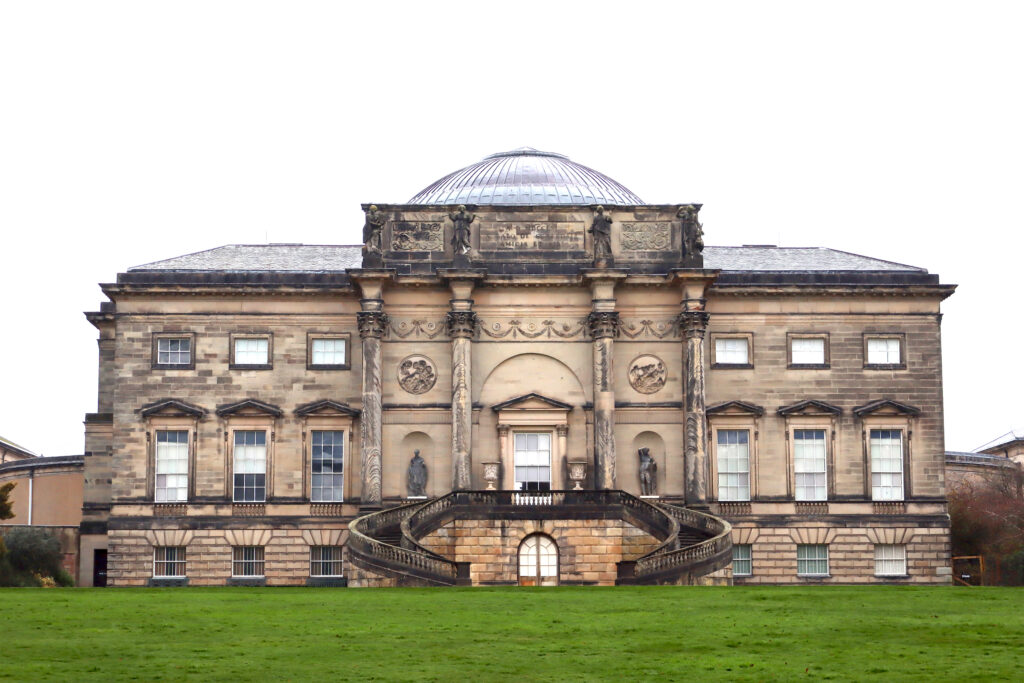
South façade and stair, Images of author
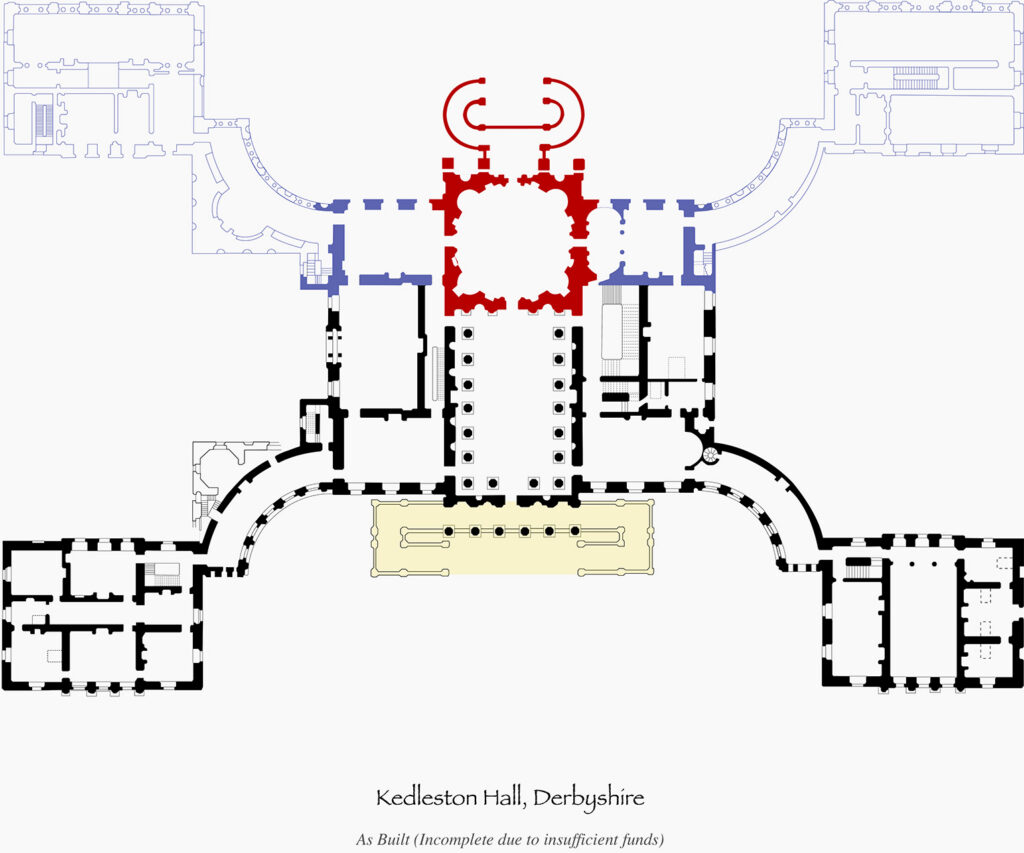
Plan and configurational diagram, Kedleston Hall, Derbyshire
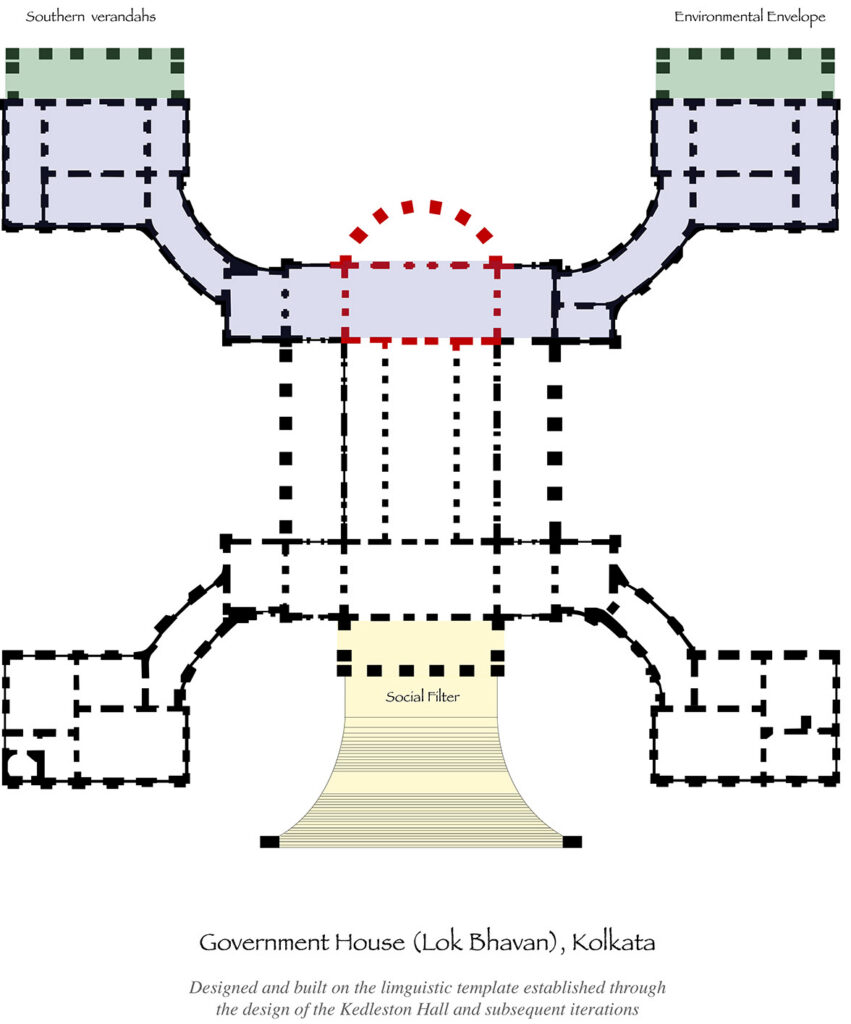
Plan and configurational diagram, Government House, Kolkata
Access to the building is articulated by means of a spatial layering defined through four social and environmental filters. 23 The first comprises the entrance gate is exclusive to pedestrians, followed by the manicured lawns with a pronounced tropical presence, emphasised by the palm trees that line avenues and define borders. Governor Generals who succeeded Wellesley would prefer to leave a trace of personal identity marking the stately residence. The gravel for the paths was imported from Bayswater by Lord Hastings. A Chinese cannon mounted on a dragon that adorned the front entrance was given by Lord Ellenborough. Gas and hot water supplies were installed by Lords Elgin and Northbrook, respectively. The gardens, including the trees screening the building, were designed and placed by Ladies Amherst, Bentinck and Mayo.
Thirdly, the ceremonial staircase comprises a secondary filter and layer of exclusivity, which is further strengthened through the porch and colonnade that literally manifests as a porous envelope in contrast to the opacity of the wall. Floor-to-ceiling fenestrations present an interesting paradox, juxtaposing timber louvred shutters with glass panels, designed to decrease glare and diffuse light, while enabling accessibility and permitting visual connection from the more private interiors, but restricting vision from the outside. In contrast, skylights were incorporated in the design of the Hall instead of hinged shutters. The balconies on the first-floor levels seek to reflect the effect created at the principal floor by providing access beyond the interiors by means of extensions enclosed by balustrades, which reflect the porosity created by the columns below. The South façade articulates a similar manner of spatial layering, emphasised by means of the porch and colonnades, which wrap around the cubic volume of the main hall in a semi-circular configuration, and alternatively offset the exterior walls in the context of the south-eastern and western pavilions that extend from the structure. These extensions are pronounced when the plan of the Government House is superimposed on the original plans of Kedleston Hall, as essential features that evidence the contextual response and environmental layering witnessed among colonial replicas within the Indian city.
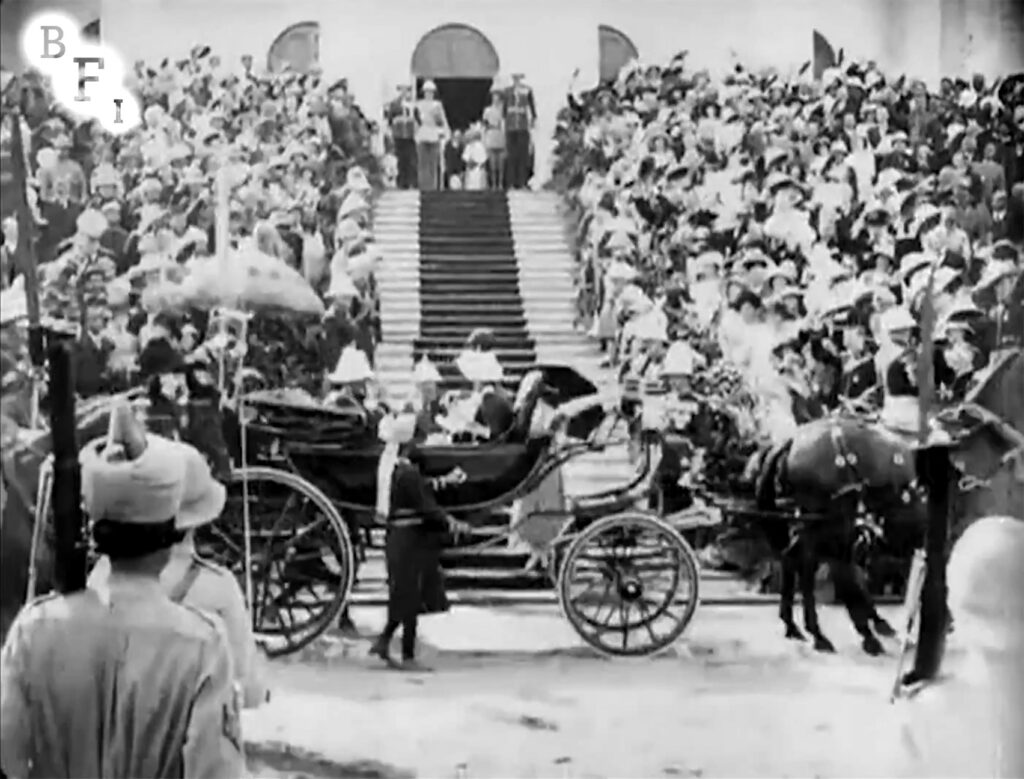
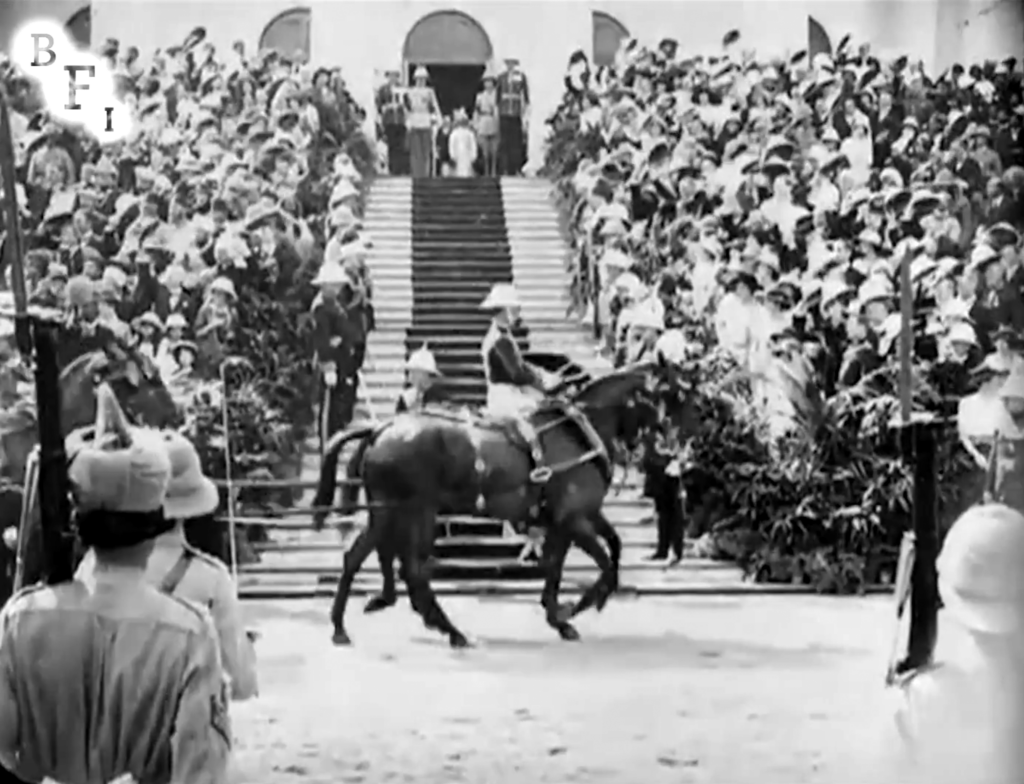
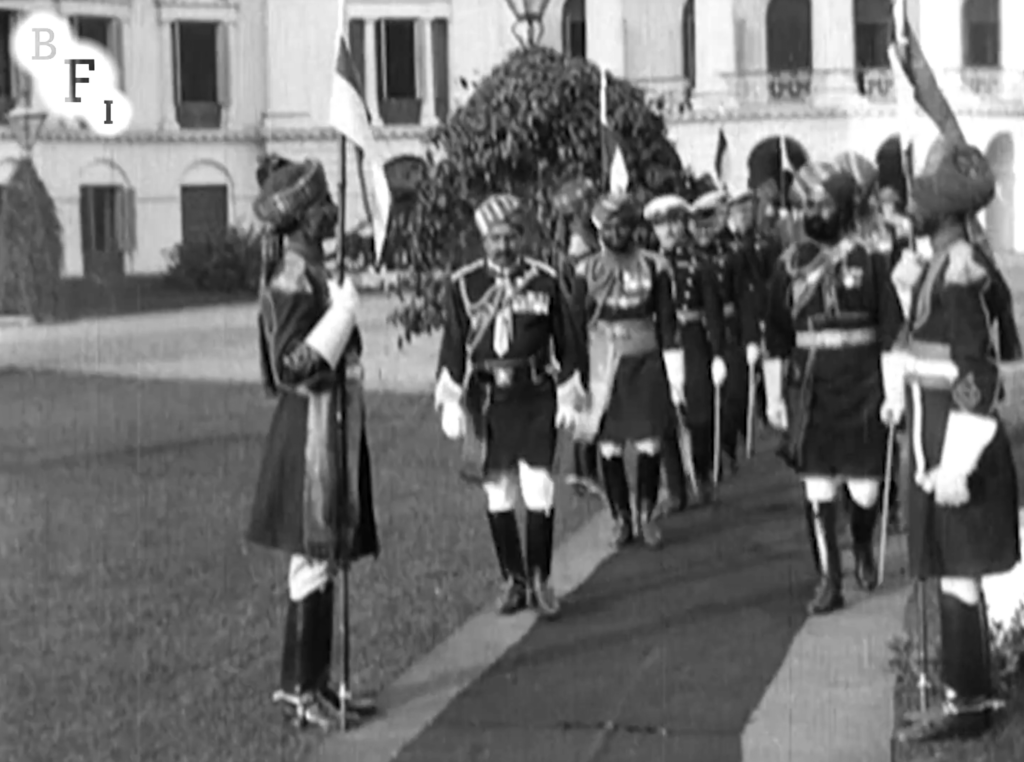
Access, Approach, Ascension : Government House, Kolkata
Source : India on Film, The British Film Institute
To summarise …
The research has aimed ascertain the nature and influence of the colonial regime in Kolkata through transformations and evolution in material culture as a process of cultural and artistic exchange that transcended notions of power and cultural dominance. The regionalist narrative and perception of colonial heritage has sought to reframe cultural production and practice in post-colonial cities, and the research seeks to emphasise a conscious, deliberate place-based identity that was inculcated within these cultural contexts, thereby contributing towards the expansion in representation and a diversified definition of ‘World Heritage’. As a consequence, globalisation has been instrumental as a process, inherently modern in intent and form, that has sought to reconfigure and resist a persisting homogeneity. The discussion in this paper has sought to emphasise the influence of singular, architectural and urban strategies, and means of artistic interpretation, which contributed towards this endeavour.
The impact of the ‘picturesque’ tradition and the incorporation of the Classical template in British art and architectural practice were instrumental towards initiating an artistic revolution, which only acquired coherence through processes of surface treatment that grounded approaches of colonial intervention in the Indian subcontinent. In this regard, the environmental and territorial history of the city of Kolkata contributed toward pre and post-colonial strategies of urban design, prioritising the excavation of tanks, which in turn anchored architectural production and supported living practices. The picturesque tradition in the context of colonial Calcutta, therefore, represented these alterations in the landscape, orchestrating a compositional order that integrated built form, water and pastoral greenery to represent and communicate a growing resonance between the British context and colonial territories, encouraging migration and advanced trade.
The clearing of the forest to conceive the urban commons (Maidan) that aided the relocation of Fort William constituted a secondary gesture in the overall strategy of place-making and landscape design in the central historic district. These approaches were complemented at the architectural scale through the introduction of ‘colonnades’, ‘south-facing verandahs’, ‘loggias’ and ‘carriage porches’ in monumental buildings such as Government House, St. Paul’s Cathedral, the Indian Museum, amongst other palatial mansions that demarcated the periphery of the Maidan, representing a ‘ring of palisades’. Façade elements eased the transition between public and private enclosures, between the premises of the waterbody and the internal courtyard, the street and the building, articulating both approach and ascension as essential stages of inhabitation and use. Surface making through the articulation of the built envelope was unanimous and extensive, informing the design and regeneration of singular residential types within the interiors of the residential fabric of the White Town, as well as through ornamentation and embellishment constituting symbolic representations and elements of iconography that transformed the indigenous formal and artistic vocabulary through their adoption. Collectively, these interventions and strategic approaches resonated across colonial built heritage, forming the cornerstone of cultural preservation and conservation, the adhesives that grounded global cultural and artistic exchange in the East Indian city of Kolkata.
Concluding remarks
As Clifford Geertz elucidates in The Interpretation of Cultures, “A cultural system of patterns serves as a model for relations among a set of symbols, entities and processes – in physical, organic, social or psychological systems.” 24
Etymological origins for the word ‘Culture’ can be traced to ‘cultura’, derived from ‘colere’, meaning – “to inhabit, cultivate, protect, honour with worship.” 25 Associations including ‘inhabit’, ‘colony’ and ‘cult’ branched off from the parent word and formed successive derivations. The primary derivation took the form of Cultura, meaning ‘cultivation’ or ‘tending’, including the medieval derivation of ‘cultura animi’ meaning ‘honour and worship’.26 Cultura developed in French into ‘couture’, and ‘culture’, which later passed into English. ‘Culture’ in English primarily referred to husbandry, and the raising of domestic animals and crops. The meaning progressed through a different linguistic route into the process of human development and the ‘manurance of minds’, which, alongside animal husbandry, served as the primary use of the word during the 18th and 19th centuries.27 The modern use of the independent word ‘culture’ or Cultur (French, 1C18) and Kultur (C19) charted its development into the general process of becoming ‘civilised’ or ‘cultivated’ and secondly, into an idea of civility or civilisation.28 “ Cultures ” in a plural sense became indicative of a transnational multiplicity representative of social collectives belonging to different periods and cultural contexts. In addition, the word manifested as an intranational derivative indicating the co-existence of variable cultures of social and economic groups within the nation.
Through a comparative historical perspective, Arnold J. Toynbee’s study of nations was facilitated by using “civilisation” as a unit for comparison , measured through the rate of societal progress and regress in the face of adversity, where civilisations were self-sufficient and influenced by other civilisations, as compared to nations that were not.29 Civilisations: masterworks of Beauty and Ingenuity illustrated the influence of civilisations on other civilisations, and the emergence of culture as a consequence. It explored the notion of artistic practice as the most appropriate representation of the human spirit, society, and civilisation and its contextual and temporal influence.30 Both series demonstrated the inherent links between culture and civilisation and the representation of civilisation as culture in the form of artistic achievements and expression as opposed to technological advancement. This resonated with the definition of culture as presented through the works of T.S. Eliot and Matthew Arnold. Alternatively, civilisation, as defined by Raymond Williams, referred to “an achieved state or condition of organised social life”.31 Williams established a link between culture and civilisation through their similarities as dynamic processes, opposing the notion of completeness represented through static or stagnant objects.
Within this epistemological framework, the Marxist interpretation of ‘Culture’ penetrated English society through the association of the arts with the cause of socialism. Represented by revolutionaries such as William Morris, the founder of the Society for the Protection of Ancient Buildings, Marxist socialism sought to reconfigure societal structures. The ideology opposed nineteenth-century liberalism and a laissez-faire societal structure.32 Ruskin’s three functional ‘orders of aristocracy’ comprised landowners as the first estate, merchants and manufacturers as the second estate, and scholars and artists as the third estate. These groups would preside over a guild identified through a variety of grades for each kind of work.
Ruskin and Morris’ views were responsive to the effects in England during the periods of the industrial revolution and imperial expansion. Their perception of connecting aesthetics, morality and social reform, and in particular their critical views on the problems of emerging liberal models, have contributed to a collective value that can be expressed through associative structures and artistic endeavours, that remain pertinent today. The discourse represents the trajectory of political and ideological constructs that define national legacy and cultural narratives, establishing a theoretical basis to disseminate aspects of economic globalisation and global governance.
The paper has sought to examine the extent and process by means of which British Heritage exercises a wider influence on a variety of other contexts. The discourse has pivoted on an impression of multiculturalism created as a result of accumulated cultural traits and historical narratives, transforming universality to represent disparate global identities. Culturally built form and artefacts signify an association with groups referring to the manner of their use in the past. Consequently, these sections of British society are represented through the architectural object, which contributes towards the creation of a national or cultural identity. As custodians of these forms and landscapes, institutions and agencies entrusted with statutory powers are instrumental in crafting national identity and cultural legacy.33 Alternatively, the architectural objects are representative of specific cultural groups and living processes which have evolved and proliferated to represent British identity in the United Kingdom and beyond.
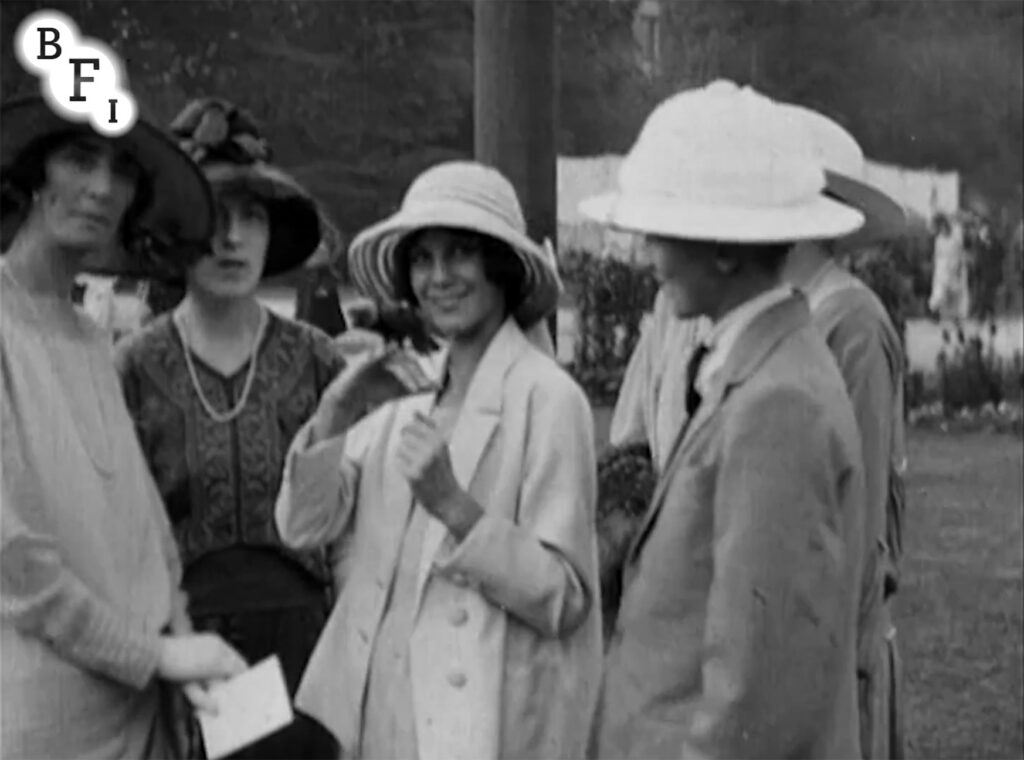
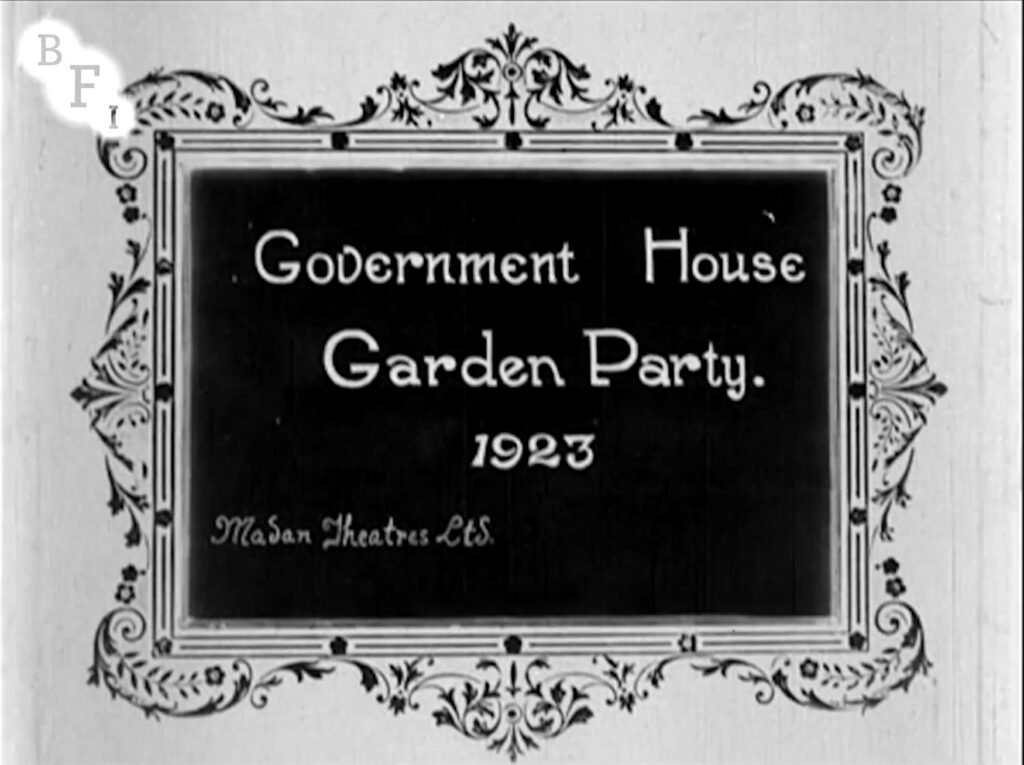
Garden Party, 1923 – Government House, Kolkata,
Source : India on Film, The British Film Institute
Notes
[1] David M. Hummon “City mouse, country mouse: The persistence of community identity.” Qualitative sociology 9, no. 1 (1986): 3-25.
[2] Arif Dirlik, “Globalism and the politics of place.” Globalisation and the Asia-Pacific, (Routledge, 2005), 37-54.
[3] GrahamHarman, Object-oriented ontology: A new theory of everything. ( UK : Penguin, Random House, 2018). pp.7
[4] The process involves two sequences or stages of analysis. Firstly through ‘Undermining’, the architectural object is reduced to its basic components and technical characteristics, through a study of its material history to assess casual and correlative relationships. Secondly, through ’Overmining’, the analysis seeks to identify ideological, political and economic interests that have collectively informed and aided its formation within the cultural landscape.
GrahamHarman, Object-oriented ontology: A new theory of everything. ( UK : Penguin, Random House, 2018). pp.16
[5] Jeffrey, Auerbach “The picturesque and the homogenisation of Empire.” British Art Journal 5, no. 1 (2004). pp. 1
[6] Jennifer L.B. Wood,From Romanticism To Empire: Changing British Perceptions Of Indian Architecture Throughout The Long Nineteenth Century, Thesis, Master of Arts in History, The Graduate School of the College of Charleston and Citadel, (2012) pp. 3
[7] Ibid.,pp.16
[8] Jeffrey, Auerbach “The picturesque and the homogenisation of Empire.” British Art Journal 5, no. 1 (2004). pp. 6
[9] Ibid., pp.49
[10] Jeffrey, Auerbach “The picturesque and the homogenisation of Empire.” British Art Journal 5, no. 1 (2004). pp. 2
[11] Marie Luise Schroeter Gothein, A history of garden art. Vol. 2. (Cambridge University Press, 2014), Julia S. Berrall, “The garden: an illustrated history.” (1966).
[12] Mirela Robitu, Marjorie Musy, Dominique Groleau, and Christian Inard. “Thermal radiative modelling of water pond and its influences on microclimate.” In Proceedings of 5th International Conference on Urban Climate, Lodz, Poland, pp. 289-292. 2003.
[13] Hadas Saaroni and Ziv Baruch. “The impact of a small lake on heat stress in a Mediterranean urban park: the case of Tel Aviv, Israel.” International journal of Biometeorology 47, no. 3 (2003): 156-165.
[14] Hannah Arendt, The human condition. University of Chicago press, (1958, reprinted 2022)
[15] Floor Space Index (FSI) or Floor Area Ratio (FAR) indicative of the total floor area permissible for a building relative tot eh size of the building plot has been instrumental as an urban planning tool to determine density and extent of gentrification and alternatively to control encroachment upon cultural built forms and historic precincts.
[16] For instance, as the author observes,” the shared occupancy of houses increased sharply from twenty to fifty-six between 1872 and 1892.”
Swati Chattopadhyay, ‘Blurring Boundaries: The Limits of “White Town” in Colonial Calcutta’, Journal of the Society of Architectural Historians 59, no. 2 (June 2000): 164, https://doi.org/10.2307/991588.
[17] “… most residences in the last decades of the nineteenth century in the Chowringhee area, rather than being single-family dwellings, were either shared by several families or used as boarding houses.” Swati Chattopadhyay, ‘Blurring Boundaries: The Limits of “White Town” in Colonial Calcutta’, Journal of the Society of Architectural Historians 59, no. 2 (June 2000): 164, https://doi.org/10.2307/991588.
[18] The new Government House encloses a domed double-volume as a collective space in contrast with the old structure that encloses a courtyard. The older structure comprised of load bearing walls and piers forming a colonnade around a courtyard enclosed within the structure. In addition, based on public records, the Government house that currently occupies the site of Buckingham House at Esplanade exceeds Amherst House in scale, proportion and building footprint.
[19] However, to the dissatisfaction of Company officials and in particular, Lord Wellesley, Buckingham House in addition to the surrounding land and sixteen other private mansions were bought and utilized for the construction of the present Government House between 1799 – 1803, based on the original plans for Kedleston Hall. It is worthy to note that Kedleston Hall, comprises of a section of the original design, which was realised in completion for the residence of the Governor, in accordance with the plans of building a palatial abode of ambitious proportions, that would surpass that of a country house estate, in this case, the previously existing Buckingham House and potentially with reference to the partially built Kedleston Hall.
[20] ‘Lok’ refers to ‘people’ while Raj is representative of ‘the King’ or ‘the British Raj’ and could be interpreted as a reference to the British monarchy. Alternatively, Raj is also an abbreviation of ‘Rajyapal’ with reference to the ‘Governor’. The renaming represents a democratic expression within a predominantly official and administrative context. This sentiment is advanced through notions of decolonization aimed at reclaiming colonial architectural icons as monuments which hold significance to the inhabitants of the city and are worthy of preservation as opposed to their demolition to address cultural dissonance.
[21] The area includes the Great Tank or Lal Dighi, an inland waterbody of substantial size predating the colonial period that served as an anchor for the British settlers. The original Fort William and Writers’ Buildings were constructed in the immediate vicinity of the waterbody, which also served as the exemplar for the excavation of tanks within and beyond the colonial settlement or‘White Town’.
[22] Inspired by existing icons such as Kedleston Hall, built by Robert Adam, Matthew Brettingham and James Paine for the Curzon family, (Sir Nathaniel Curzon, 1st Baron Scarsdale, between 1759 – 1765) who still reside in a private section of the mansion referred to as the family wing, the estate is owned and has been operated by the National Trust since 1987. The family wing is situated at the north-western section of the plan mirroring the kitchen wing on the north-east, that now functions as the café and shop for visitors. The estate was believed to have been conceived to contest the grandeur of Chatsworth House (1553, Regency period by Bess of Hardwick redesign commissioned by William Cavendish in the 18th century) built for the Cavendish family, the Dukes of Devonshire and owned by a private charity, the Chatsworth House Trust, established in 1981 by the 11th Duke and his wife, preserved and cared for by the 12th Duke, Peregrine Cavendish and his wife.
[23] Access to visitors is restricted and five of the six gates, two each on the east and west, and one each on the north and south, are usually kept closed for security, although a visitor’s permit may be obtained in advance through the governor’s secretariat nearby.
[24] Clifford Geertz, The Interpretation of Cultures : Selected Essays. (Basic Books. 1973). pp.93
[25] Raymond Williams, Keywords. A vocabulary of culture and society.( Oxford University Press. 1976, 1983). pp. 87
[26] Ibid. 87
[27] Ibid. 87
[28] Ibid. 89
[29] Arnold J. Toynbee in A Study of History describes the rise and fall of twenty or more civilizations, challenged by forces externally and internally through military, socio-political contestation and as a result of moral degradation of a dominant minority.
[30] Civilizations: masterworks of Beauty and Ingenuity, BBC, 2018
[31] Raymond Williams, Culture and Society 1780-1950.(Penguin, 1961).
Bibliography and References:
Arendt, Hannah. The Human Condition. University of Chicago Press. 1958
Bannerjea, Drubajyoti. (2005) “European Calcutta: images and recollections of a bygone era.”
Chattopadhyay, Swati. (2000) ‘Blurring Boundaries: The Limits of “White Town” in Colonial Calcutta’. Journal of the Society of Architectural Historians 59, no. 2 (June 2000):154–79. https://doi.org/10.2307/991588.
Chaudhuri, Sukanta. “Calcutta: the living city.” (1990).
Cotton, Evans. (1907) Calcutta, old and new: A historical & descriptive handbook to the city. W. Newman.
D. Silva, Kapila. (2015) “Paradigm shifts in global heritage discourse.” Mekan ve iletişim.
Dutta, Krishna. (2003) Calcutta: a cultural and literary history. Vol. 12. Signal Books.
Dirlik, Arif. (2005) “Globalism and the politics of place.” In Globalisation and the Asia-Pacific, Routledge.
Geertz, Clifford. The Interpretation of Cultures: Selected Essays. New York: Basic Books. 1973
Graham, Brian, Ashworth, Greg and John Tunbridge. A geography of heritage. Routledge, 2016.
Harman, Graham. Object-oriented ontology: A new theory of everything. Penguin UK, 2018.
King, Anthony D. “Internationalism, Imperialism, Post-colonialism, Globalisation: Frameworks for Vernacular Architecture” Perspectives in Vernacular Architecture, 2006/2007, Vol. 13, No. 2, Special 25th Anniversary Issue, 2006/2007, pp. 64-75. Vernacular Architecture Forum.
Latour, Bruno. “On actor-network theory: A few clarifications” Soziale Welt, 47. Jahrg., H. 4, 1996, pp. 369-381. Nomos Verlagsgesellschaft mbH. 1996
Liddiard, Robert. “The landscape of Anglo-Norman England: chronology and cultural transmission.” People, Texts and Artefacts: Cultural Transmission in the Medieval Norman Worlds, 2018.
Madanipour, Ali. (2003). Public and private spaces of the city. Routledge.
Monk, Daniel, B. and Andrew Herscher et al. A Discussion on the Global and the Universal, (Grey Room, Inc. and MIT, 2015)
Williams, Raymond. Keywords. A vocabulary of culture and society. New York, Oxford University Press, 1976, 1983.
Williams, Raymond. Culture and Society 1780-1950. London: Penguin, 1961.