Modernism in the Making
The Architecture of Le Corbusier, Mies van der Rohe and Team X
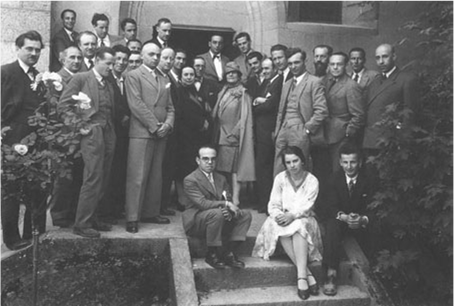
Official Group Photograph CIAM I, La Sarraz, 1928
CIAM (International Congress for Modern Architecture) was an organization comprising architects who pioneered the Modern Movement, including Le Corbusier, Walter Gropius, Sigfried Gideon and Mies van der Rohe, among others. The organization met over eleven architecture and urban planning congresses between 1928 and 1959, influencing architecture and urban planning strategies worldwide.
The organization was founded in 1928 by 24 architects from seven countries dedicated to deriving architectural solutions that addressed the growing city’s housing, circulation and health issues. The group aimed to transform urban development in the nineteenth century by prioritizing collective needs over private interests. Identified as a group of international experts, they were committed to proposing physical solutions based on four functional categories – dwelling, working, recreation and circulation. Their efforts juxtaposed key ideas of city planning with architecture with each congress focused on one specific topic such as the “Minimum Dwelling” at CIAM – II, “Rational Site panning” at CIAM – III, and the “Heart of the” at CIAM VIII. The member architects of CIAM have left their mark through other seminal developments within architecture, painting and sculpture disciplines, including the Bauhaus. Initially composed of European architects, CIAM expanded to collaborate with groups such as the Modern Architectural Research Group in Great Britain. In addition, Eric Mumford’s “Defining Urban Design” illustrates the influence of CIAM’s endeavours in the American context.
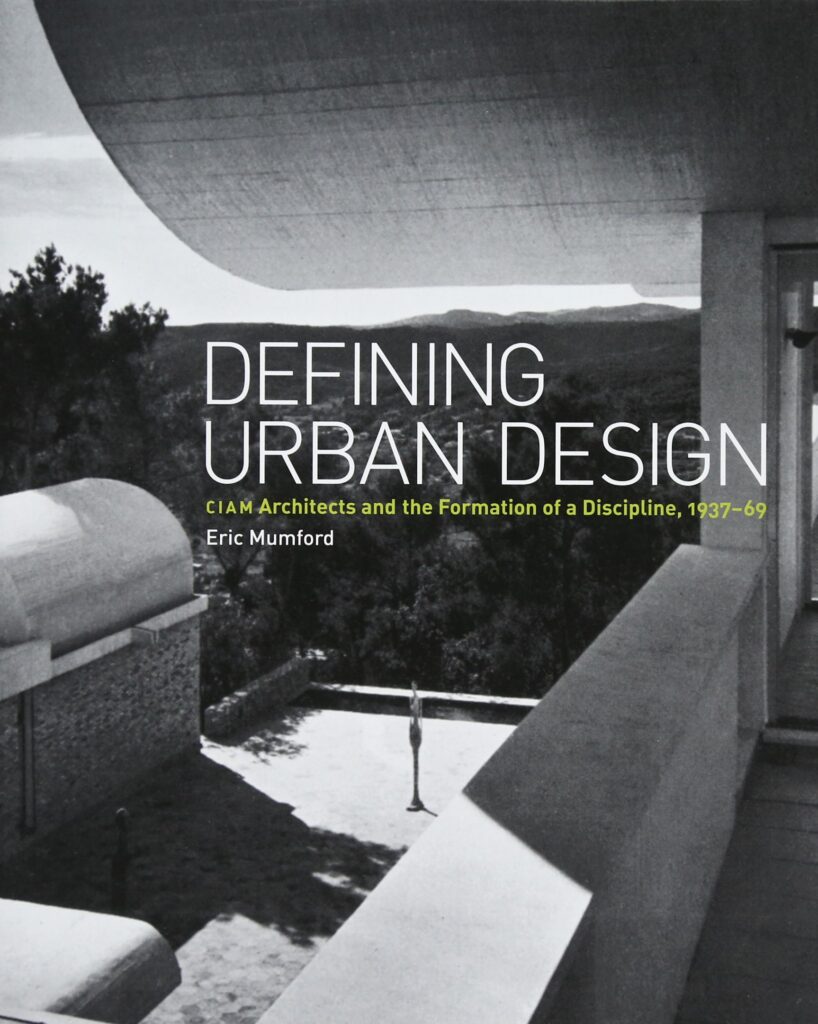
CIAM proposed a new type of architecture, one that drew on strategies of both modern art and engineering to promote efficiency and rational city planning. Lewis Mumford challenges the idea that this modern urbanism only resulted in the clearing of historical neighbourhoods in favour of the public housing which would famously fail. Rather, Mumford argues CIAM goals were instrumental in forming the field of urban design, and it was the rejection of these goals by politicians and bureaucrats, rather than their implementation that led to the now familiar and lamentable results, of urban renewal and metropolitan sprawl.
Source : yalebooks.co.uk
Le Corbusier
Charles – Edouard Jeanneret was born to a watch engraver and a music teacher in the Swiss town of La Chaux-de-Fonds, situated a few kilometres south of the French border. Educated in the decorative arts, his academic and professional pursuits became inclined towards architecture, inspired by his travels across Europe and under the guidance and mentorship of his esteemed tutors. His influences ranged from Classical proportions in the Mediterranean to Renaissance architecture in Venice and Munich and reinforced concrete buildings in France. Succeeding a long apprenticeship, Jeanneret, renamed Le Corbusier, began his professional career. He is known to have established an International Style in collaboration with other noted contemporaries such as Mies Van Der Rohe and Walter Gropius. Corbusier is best remembered for creating an architectural language. His ‘Five Points’ comprised a set of rules which reinterpreted established norms of modernist design, thereby pioneering a building typology surpassing the work of his predecessors.
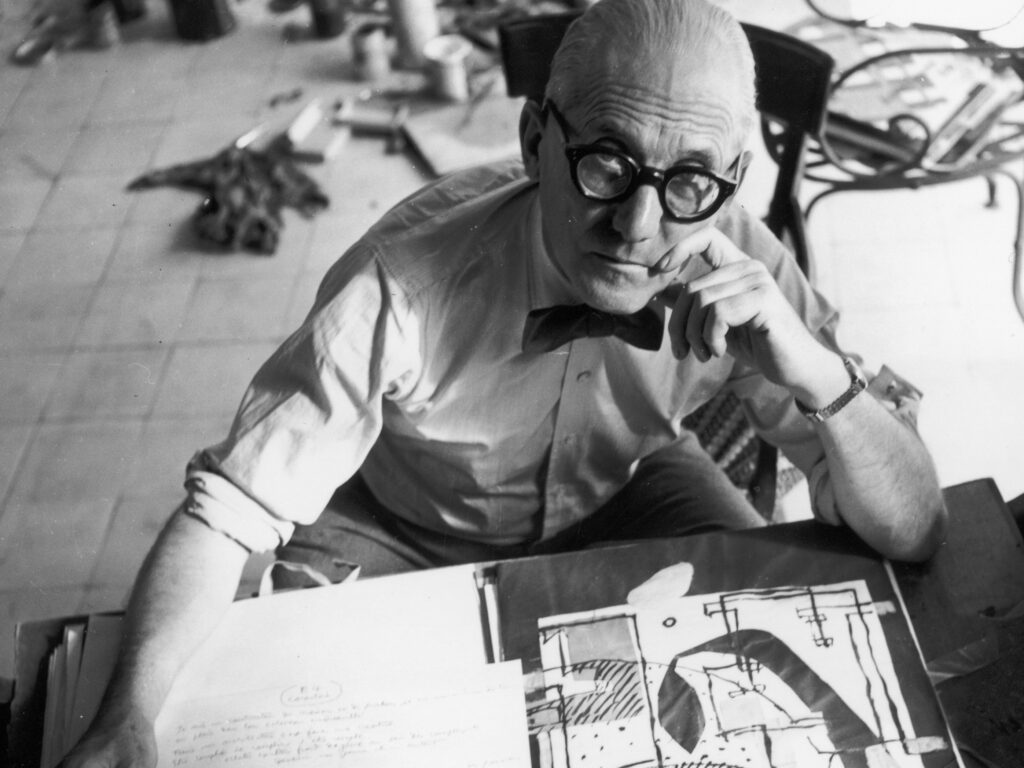
Le Corbusier (Charles Edouard Jeanneret), 1887 – 1965
The architecture of Le Corbusier is a testament to a contradiction in the works of his time. Past principles and building traditions informed the proposal for this contradiction and contributed to creating a coherent architectural message. This departure from conventional building design principles through reinterpretation created a new set of rules which paved the way for a new typology.
In his essay, “On Typology”, the Spanish architect José Rafael Moneo states that Type could be considered the realm which offered the opportunity to produce change. The term defined the framework within which architectural practice evolved and departed from history to look into the future.
Corbusier’s work formed the basis for a new set of rules in architecture. His point of reference was the rule system of the academic tradition[1]. The design principles established in “Five Points of Architecture” are each based on traditional principles of architecture and their subsequent reversal. The rules dictate the structure, form and organization patterns of fenestrations (windows) and the articulation of facades that contradicted previous architectural expressions.
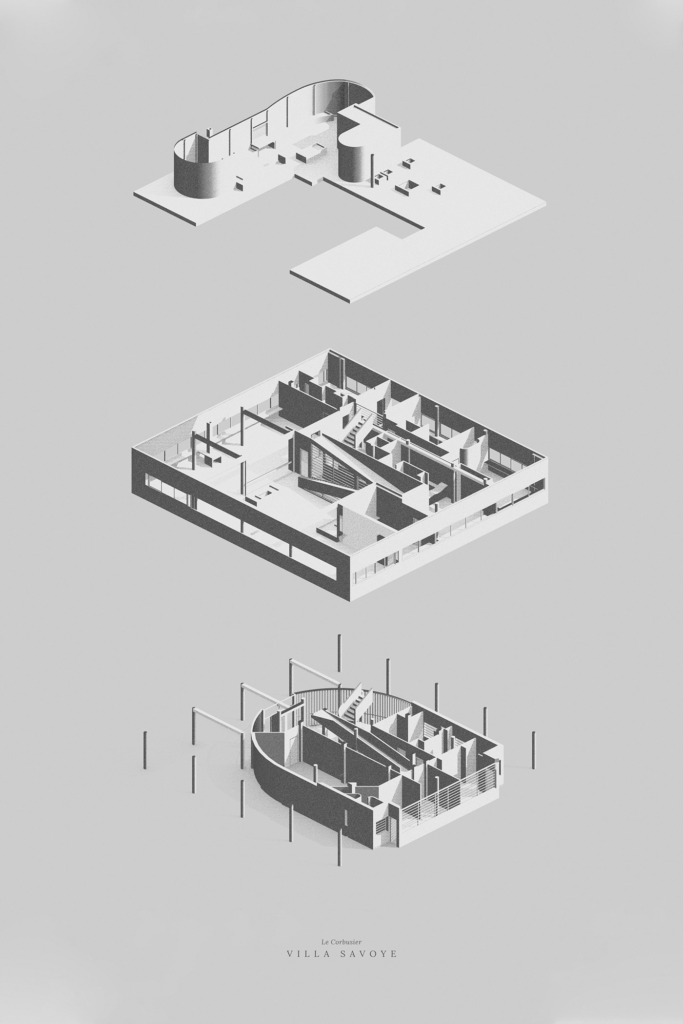
Exploded view of villa Savoye articulating the Corbusian formal vocabulary
Free ground (pilotis)
In Corbusier’s architecture, pilotis were used in place of the classical podium as an element that lifted the superstructure from the ground, replacing the mass with a limitless void. This formal and spatial transformation drastically increased the degree of porosity and transparency to the overall built form.
Curtain Wall
The fenêtre en longueur, or “curtain wall” comprising long continuous windows or quasi-windows generously spread along the façade, is evident in Villa Savoye. The series of windows pronounce the horizontality of the building and transform established notions of the façade. It adds permeability to a surface previously characterized by small repetitive windows punctured.
Terraced roof
The terraced roof with the open-air room in the Pavilion Suisse contradicts the traditional pitched top with the attic storey. (Fig 2) This element formed the topmost layer of the tripartite division placed above the main structure, supported by pilotis.
Free façade and Open plan
The free façade replaced window openings with a freely composed surface. Additionally, spatial organization and divisions resulting from structural walls that transfer loads vertically were replaced by open plans with partitions formed by non-structural walls. This transformation increased flexibility in the plan. The overall effect of Corbusier’s Five Points on the design of the built environment included its deconstruction and freeing of elements to eliminate rigidity and restriction from architectural form.
The work of Le Corbusier differed greatly from that of contemporary architects.
The Pavilion Suisse is a subtle, suggestive interpretation of conventional principles such as the tripartite division, which contrasts the Skyscraper Office Block by Louis Sullivan, a more literal interpretation of the design principle. This manner of reinterpretation assisted in defining the architectural style which formed the crux of the Modern Movement.
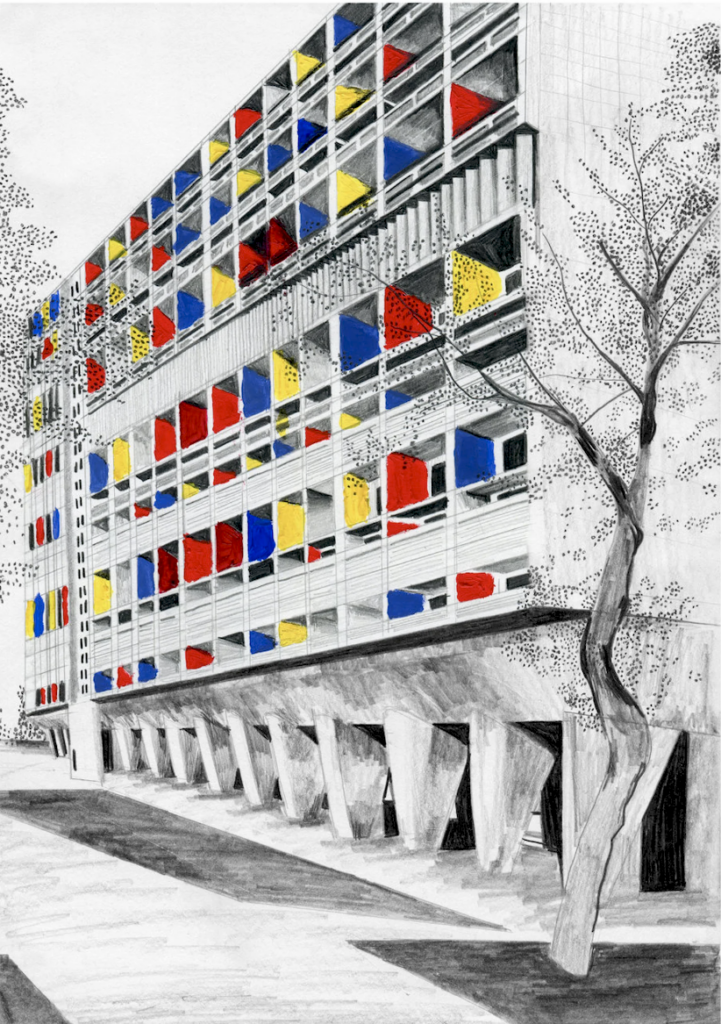
Unite d’habitation, Marseille, 1952
Mies van der Rohe
“Architecture is the will of an epoch, translated into space.”
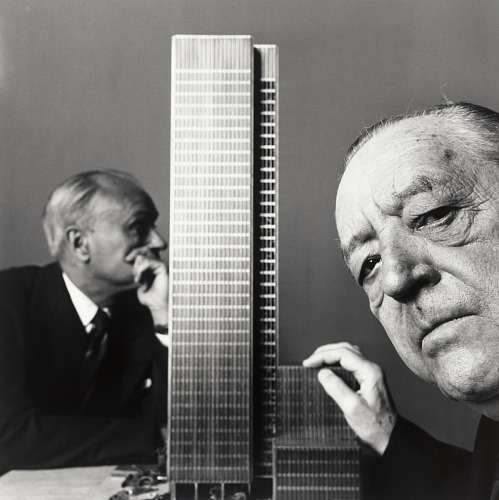
Ludwig Mies van der Rohe, 1886 – 1969
Ludwig Mies van Der Rohe’s work represented stability in post-war America, responsive to the spirit of the times and belief in the possibility of correctness. An innate morality and generosity embedded within his works created following inspiring several architects to imitate his style and incorporate his principles into their practice. In Chicago, there are forty-seven buildings of Mies, with an additional 40 by successive architects. Mies’ work developed to establish new designs and building traditions and norms in America. During this time, architecture served as a vehicle for instilling and preserving the optimism, peace and collective identity that had prevailed against fascism. As conspicuous cultural forms in the urban landscape, the architectural object represented the collective mindset of a generation and reinforced patriotism and cultural affirmation in the aftermath of the Second World War.
Mies’ work in the first half of the 20th century was pivotal in asserting a victorious spirit through his style’s understated elegance and collectivism. The architectural language produced flexibility that could be adjusted internally without external engagement. It embodied an artful rendition of architectural elements that did not compromise the functionality of the space. He is known for pioneering the separation of the structure and the skin, where enclosures and divisions between internal spaces are disjointed from the structural supports. The technique emphasizes the lightness of material and the distinction between the functions of different elements that organize spatial forms. This is evident in the Barcelona Pavilion, where the walls enclose, divide, and alternate between n transparent and opaque surfaces. The cylindrical supports carry structural load isolated from the matrix of planes. Mies’ black box architecture resonates with corporate America and is evident in New York City’s Seagram building. It represents permanence through the choice of material, which includes stainless steel, bronze, hard-coated aluminium, antique marble, travertine and terrazzo. The separation between materials demonstrates a calibrated attention to detail. The building’s separation from its surroundings demonstrates this embodiment of a microcosm on a different scale.
A secondary system significant to Mies’ work is the use of the street system in Chicago based on the Cartesian grid. His buildings in the city produced a building and urban typology configured on the basis of the grid, in parallel and perpendicular juxtapositions of Chicago’s post-1871 plan. The Apartment towers 860 and 880 Lake Shore Drive of 1951 are situated on the grid and imply a missing element in the corner of the site. Mies’ engagement with city grids enabled a three-dimensional interpretation of a skeletal framework for buildings.
While the 1940s represented an era that celebrated the architectural language implicit in Mies’ work supporting cultural cohesion to achieve a platonic permanence, the advent of the 1960s symbolized a period of debate and dialogue that contested these ideals, leading to the end of an epoch and system of manipulating space.
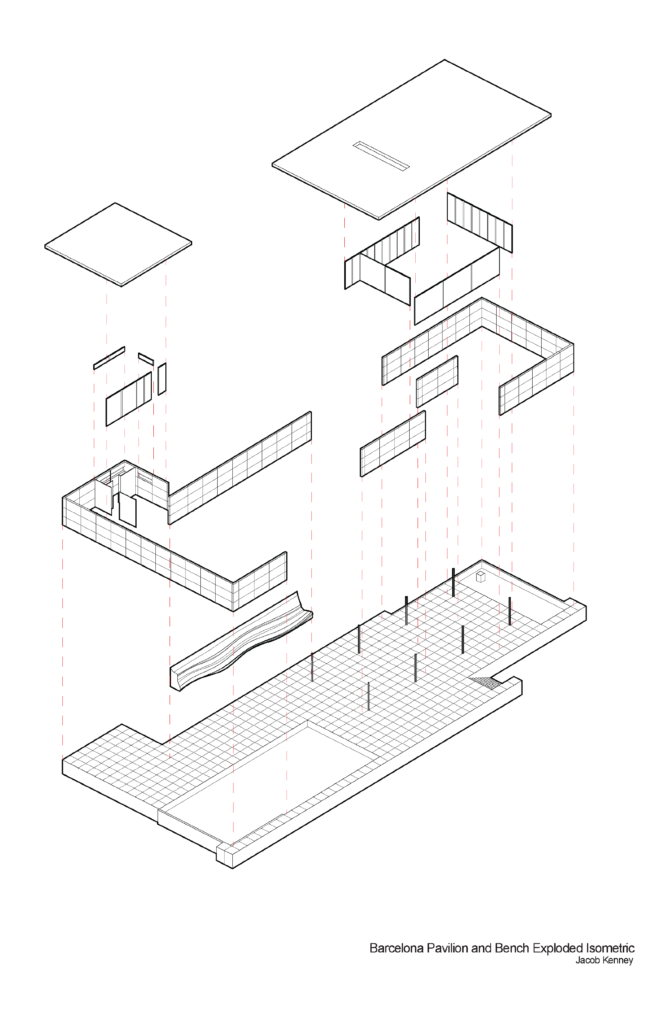
in Barcelona, Spain, Mies van der Rohe
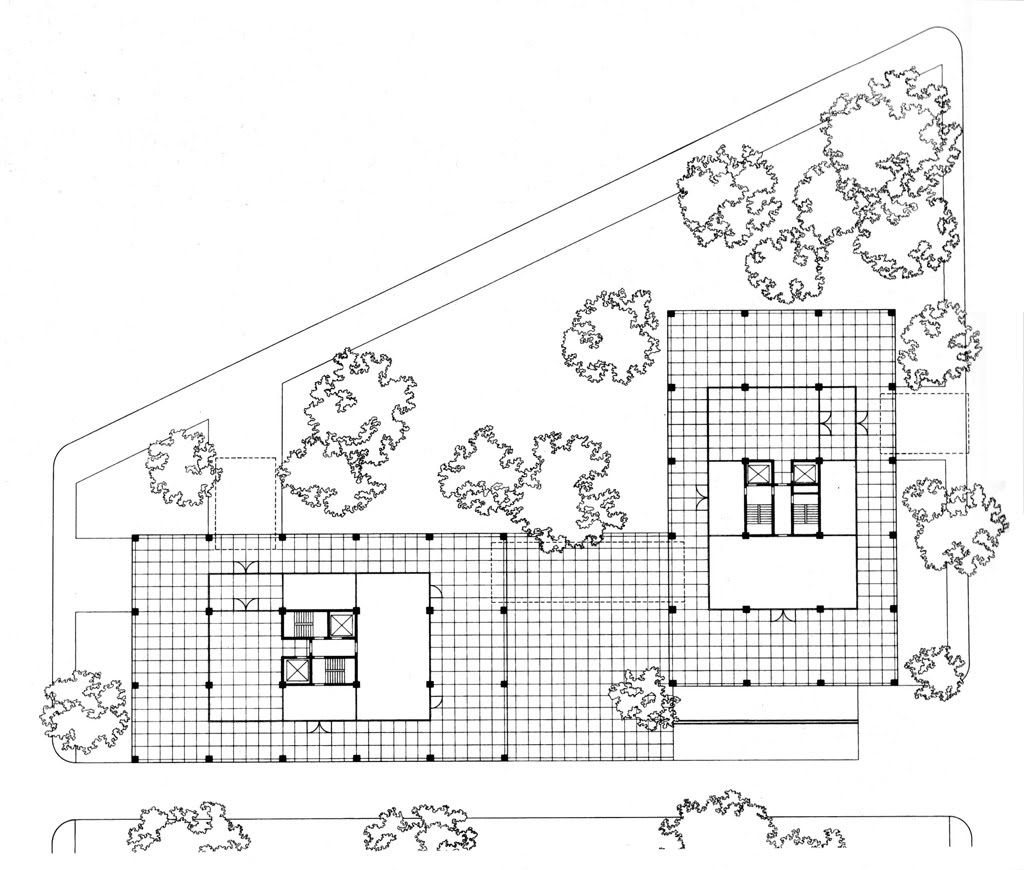
Apartment Towers, 860 and 880 Lake Shore Drive, 1951
Mies van der Rohe
Team X
In the early 1950s, the architects of CIAM deliberated over drafting a “Charter of Habitat”, which would aim to revise previous strategies based on the “four functions” of the Athens Charter. Succeeding the ninth congress at Aix-en-Provence titled “Human Habitat”, which failed to address these needs adequately, the MARS group members Allison and Peter Smithson initiated the founding of Team X. The group aimed to deviate from an increasingly institutionalized collective at risk of losing its avant-garde character. Furthermore, the Independent Group, including Lawrence Alloway, John Mchale, Eduardo Paolozzi, Toni del Renzio, Richard Hamilton and Reyner Banham, influenced the Smithsons’ critique of CIAM. Team X was committed to studying the “Problems of Habitat”, which would inform the creation of a more responsive built environment incorporating the needs of its users.