Modernist impressions across the Middle East
The Architecture of Mohsen Foroughi, Ernst Egli and Hassan Fathy
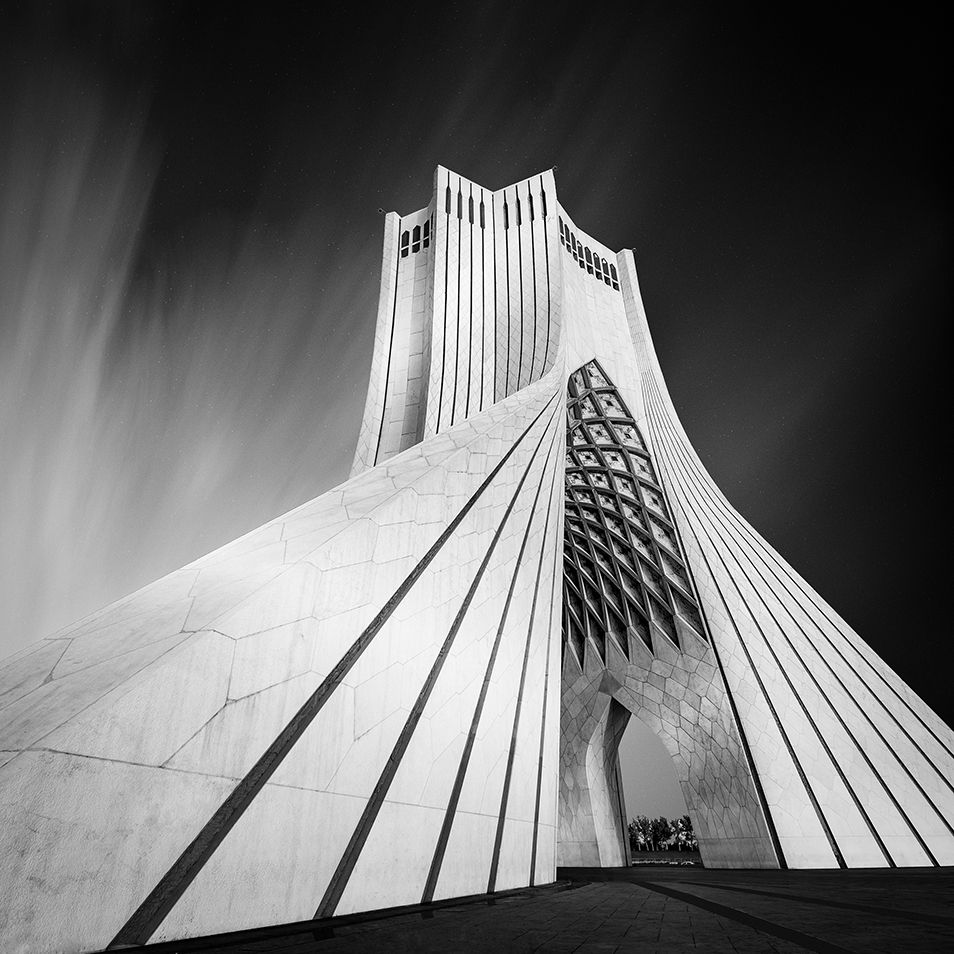
The Azadi Tower or ‘Freedom Tower’ is located in Azadi Square, Tehran Iran. 45 metres in height and clad in cut marble, the tower was designed by Hossein Amanat and commissioned by Mohammad Raza Pahlavi, the last Shah of Iran to mark the 2500 anniversary of the Persian Empire. The tower is an expression of classical and post-classical Iranian architecture and aesthetics, influenced by the ‘White Revolution’, the ‘Shah and people Revolution’ that introduced radical reform in the Middle East.
The dawn of the twenty first century has been characterized by a growing tension between globalizing socio- economic and cultural relationships and subsequent spatial responses, as opposed to an emphasis on maintaining local specificity. In this context, architecture served as the vehicle for change through which particular attitudes relating to a global modernism and regionalism were established. It served as a means for representing cultural and national identity at the local, regional and national scales.[1]
The integration and interdependency of Europe and the Middle East manifested in divergent forms of representation of ideological, architectural and political processes. Local attempts in middle eastern contexts aimed to synthesis disparate approaches to contribute to a globally emerging modern culture through ideological exchange and expansion, industrialized means of production and the growth of urban infrastructure. These expressions went on to establish a cultural identity through material embodiment of value and social cohesion. The effects of industrialization in the middle eastern context has resulted in adverse effects with regards to its built environment. Alternatively, it has ascribed a distinct identity to its architecture, that has bestowed qualities unique and specific to it.
The synthesis of local architecture techniques and a modernist attitude have contributed towards the production of a middle-eastern brand of modernism that both echoes and opposes European mannerisms and stylistic traditions, having been influenced by processes of imperialism and colonization. From governments and development agencies to individual art historians, architects and archaeologists, Europeans have played a pivotal role towards defining western stylistic articulation to facilitate this process of transnational architectural exchange.
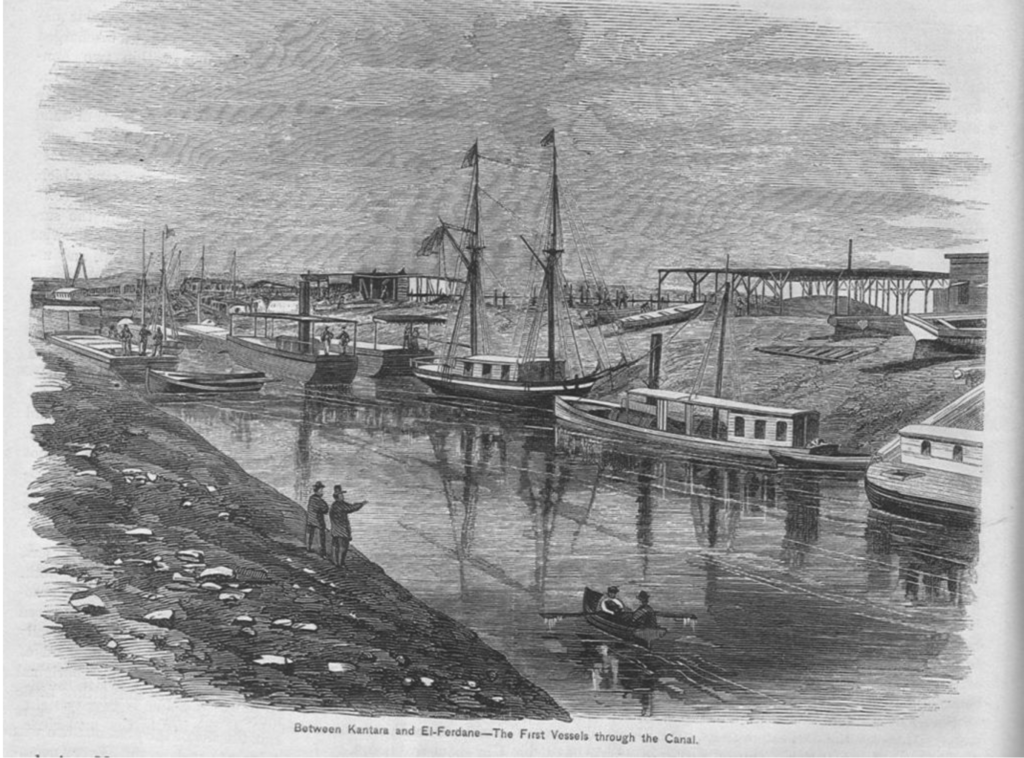
Suez Canal, between Cantara and El- Fedane, 1869
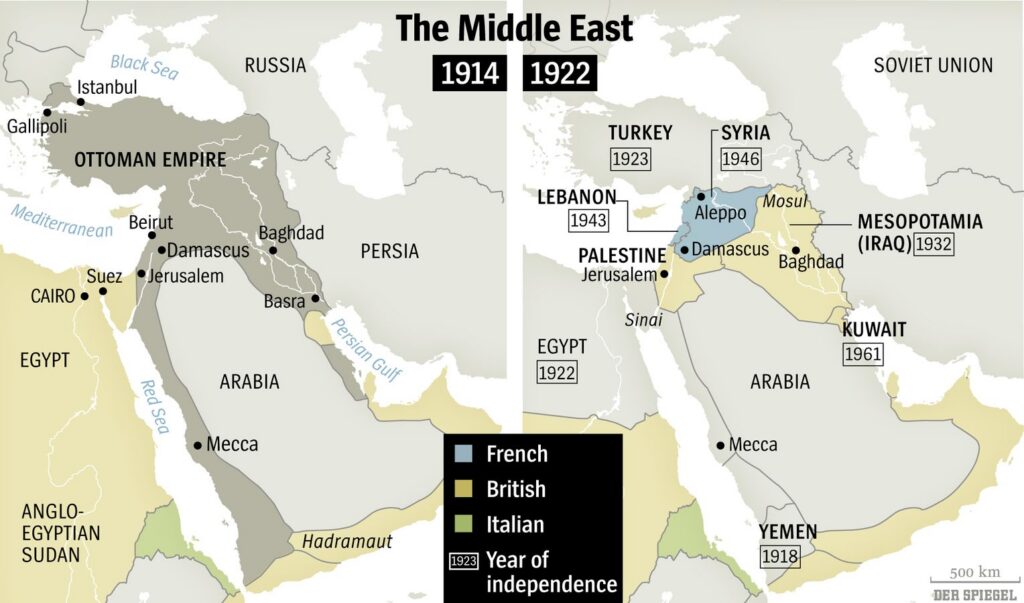
The historical period under investigation extends from the twentieth century characterized by the decline of colonialism and the definition and establishment of nation-states previously under the rule of the Ottoman Empire located in Turkey, North Africa, and Iran. Significant infrastructural development, and the Suez Canal in particular, has been known to disrupt Ottoman rule by means of introducing French and English capital and technology to the Middle East. [2] Towards the end of the World War and Ottoman rule, Middle Eastern land was divided and administered based on the acquired allied control. Syria and Lebanon came under French administration, while Iraq and Palestine was administrated by the British. Despite the politically divisive context and inadequate infrastructural development, cohesive attitudes towards Middle eastern culture and national identity persisted. However, this period also witnessed the rise of local leaders who introduced judicial and educational reforms that reflected European models intended to the creation of an integrated identity on the threshold of tradition and modernity.
Succeeding a period of dynamic political and administrative control, the Middle East emerged as a collection of territories developed and integrated through European colonial interests and imperial regimes. It was being increasingly identified as an international industrial resource for oil, strengthening foreign-policy and trade relations with Europe, America and several other nations. The Middle East functioned as a landscape of international relations between the United States and the Soviet Union that manifested in technical aid, infrastructural projects and cultural exports. Despite internal differences, the image of the region developed conceptually in western mindsets as politically powerful engaging economic interest and opportunities globally. A lack of homogeneity was commonplace. However, through a cohesion of distinct independent identities, Middle Eastern European territories assumed a unique character and status on a global platform. Furthermore, the interdependency between Eastern and Western attitudes was reflected in both contexts, with the need for Eastern expressions and spatial forms emerging in the West. Conversely, Middle Eastern environments were subject to Oriental and European interpretations distinct from local experiences and defined a difference in perception and attitudes.
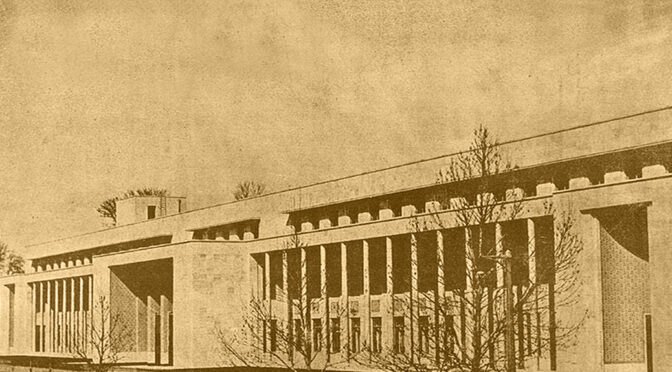
Middle Eastern architectural practices defined through a European influence was evident through the work of Mohsen Foroughi and Maxime Siroux including the Faculty of Technology at Tehran University. His learning reflected traditional principles acquired from the Ecole des Beaux Arts’ with regards to the authenticity of historic form and composition. In addition, his practice developed more abstract forms that demonstrated a departure from the work of his contemporaries. An adoption of reinforced concrete for public buildings indicated a modernist inclination in his architectural vocabulary. The influence of the modern movement had become evident in Turkey in the aftermath of industrialization and processes of urbanization. Through the designs of Ernst Egli, an affinity for abstraction and modular form based purely on programmatic requirement defined the nature of the built environment as a reflection of the political climate and liberation from previous imperialistic regimes. The work inspired an architectural language composed of cubic forms, an elimination of ornamentation and the incorporation of grids to define an emerging tradition of architecture and nation building. The formulation of an international style was attributed to the architects’ expertise of foreign cultural forms and expressions as a consequence of prior international education and experience. This was especially evident in the incorporation of western motifs and techniques such as the adoption of concrete, that reinforced a reigning political intention through built form. Furthermore, these individuals were the means of translating western ideals and stylistic traditions onto local contexts which imparted a global identity to them.
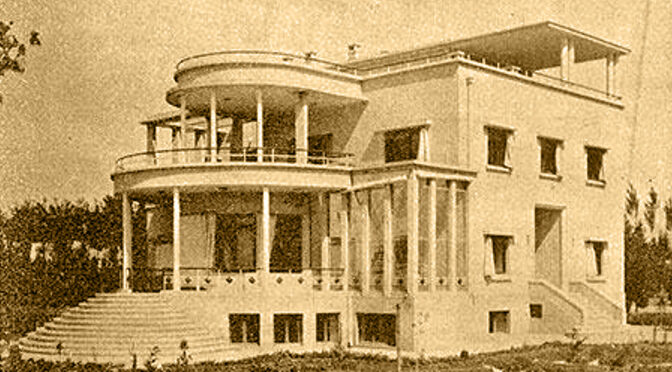
The integration of modern and traditional methods produced two distinct attitudes, the reuse and adaptation of historic built forms, and the experimentation with abstraction as a current practice emerging globally. These approaches collectively represented a national ideology that perceived modernity and cultural heritage as parallel strengths in the definition of a transforming built environment. The modernist response in the Middle east was defined through adaptation of details, material and technological processes. In addition, a core ideal that shaped architectural expression was the focus on climate which in turn reflected an emphasis on technological solutions as opposed to techniques that enhanced the modernist element.
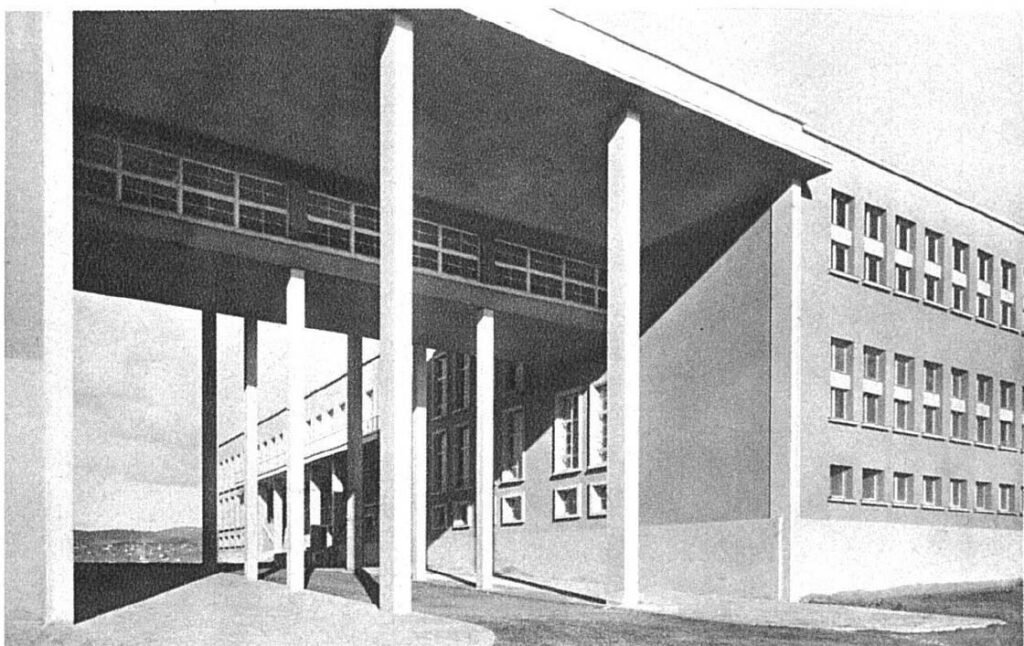
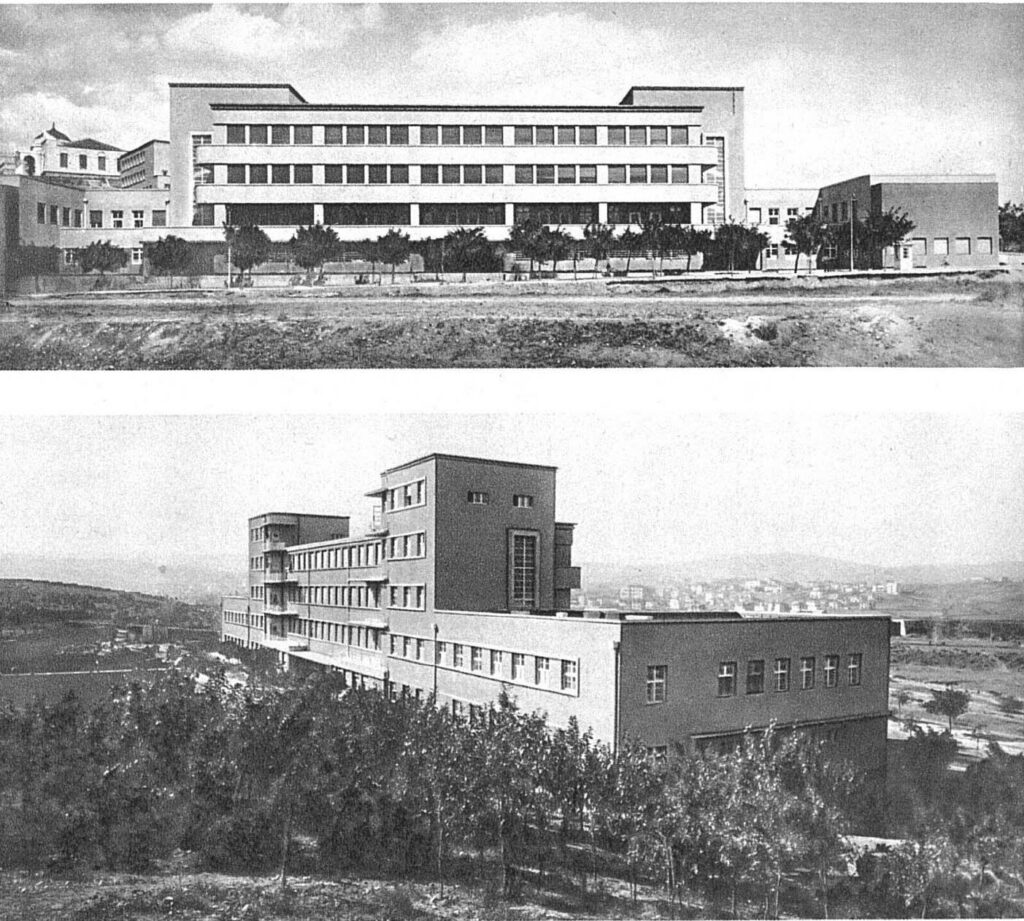
The work of architects such as Hassan Fathy established an architectural language through projects that defined an ambitious and transformative practice for housing socio-economically regressive communities. Elements of the vernacular manifested through his articulation of housing unit and street market and domestic spaces. The use of traditional materials, vernacular building traditions, and climatically controlled and oriented decisions were integral to his designs. The size and orientation of openings, the employment of shading devices like overhangs and covered streets, and pockets of ventilation manifesting in the generous inclusion of courtyards were distinct to his architectural vocabulary. Rifat Chadiraji, an Iraqi architect trained in London concentrated on the preservation of the urban fabric from threats or rapid urbanization post return to the Baghdad. His response to a modernist Middle East manifested in the integration of vernacular motifs with modern materials and a larger scale of modern architecture. Religion defined yet another aspect that was pivotal to the development of an architectural practice that sought to unpack a nationalist and post-colonial identity emerging in the Middle East. This is especially evident in Iran, Turkey and Algeria. It has been transformative with regards to the creation of modern hybrid forms emerging as a global cultural practice and identity. Furthermore, it has contributed to the reinterpretation of traditional building typologies in more intrinsic ways, employing the use of concrete, prefabricated metal and technologically advanced structures such as the space-frame. Religious architectural forms in this regard, were expressions of political agency and state sponsored means of embracing modern methods through traditional, monumental forms. However, their reception wasn’t unanimous. Critics perceived this integration as an inauthentic approach towards toward inculcating modernist practices, rendering them anti-modern. Ironically, those who opposed these processes of translation, were in support of incorporating traditional motifs within modern expressions as exemplified through Jean Nouvel’s 1988 Institut du Monde Arabe founded by Gulf Arabs and the U.N. diplomats. The distinction may have been in the finer details and means of articulation between these attempts at cultural integration. With an increasingly hybrid approach evident in architectural and urban form, as well as social and cultural practices, the temporal dimension remains integral to defining the scope and dynamism that will characterize future trajectories in building practice.
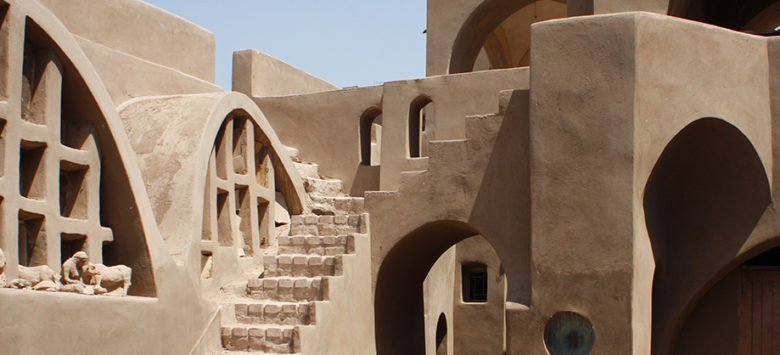
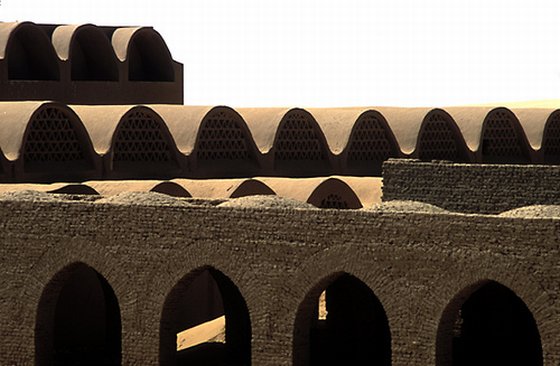
A modern interpretation of religious built form and architectural details is also evident in the rural mass housing project by Fathy. Fathy’s attempt at developing a modernist house type from local materials gained global recognition as a consequence of the response generated by his publication “Architecture for the Poor”[3]. The publication was initially released in 1969 and was titled Gourna, A Tale of Two Villages that provided insight into the housing project proposed to rehouse the residents of the village in New Gourna. Fathy collaborated with local craftsmen to incorporate the use of traditional methods of construction including handmade sun-dried mud bricks to derive an alternative to mass produced concrete housing blocks introduced as a modern solution. The project was funded by the monarchy and incorporated participatory design, a methodology that has increasingly gained acceptance in post-modern times. Designed to cater to a rural community, the project envisioned a future that employed traditions intrinsic to local skills therefore demonstrating a relevance for their craft with the advent of modernity.
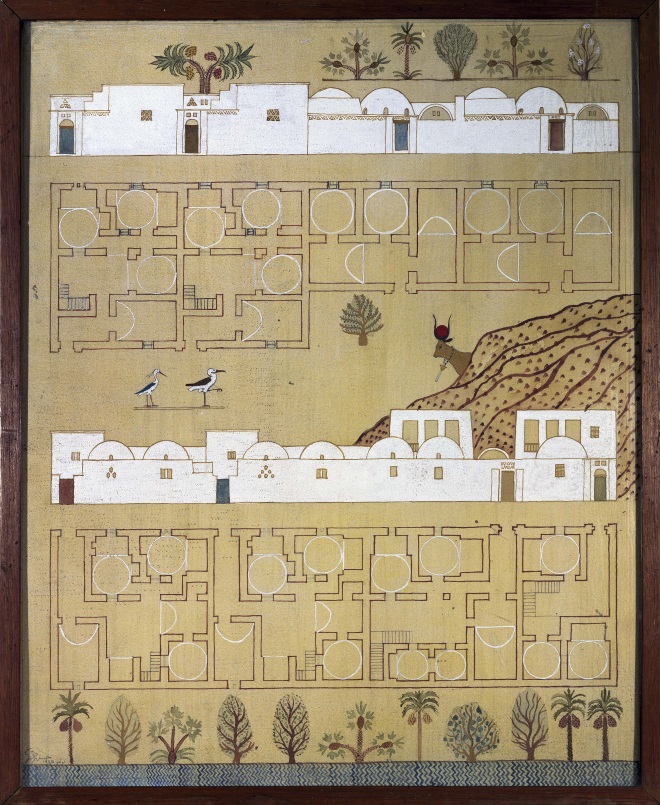
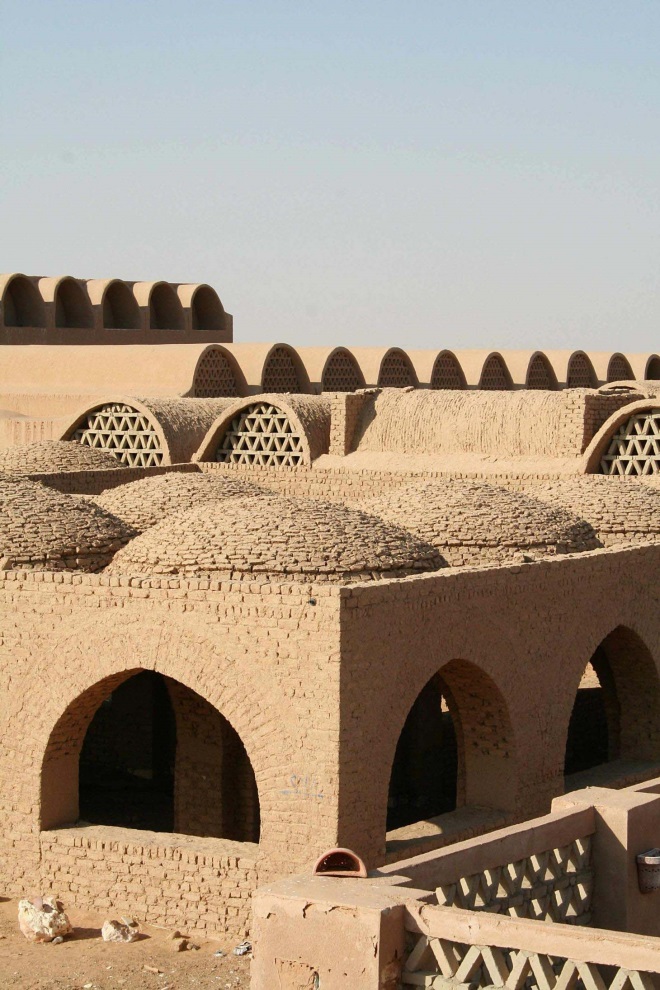
The typology, distinct in the articulation of a modernist influence on local building traditions was however, rejected locally. The form endeavored to create new cultural associations by employing domed enclosures within the domestic space, a spatial entity generally associated with religious architecture. For the locals, the appropriation disrupted deep rooted religious beliefs, the sanctity and sacredness of this unison between dome and base. Furthermore, the use of local construction techniques and materials represented a regressive societal attitude as opposed to the ideology that actively embraced concrete as the material for the economic and socially progressive household. From the residents’ perspective, the proposal represented a disregard to the value of ownership and established familial and communal ties. In addition, New Gourna, with an attempt to introduce national reform, owed its alienation to a reigning political discord in Egypt on issues of land use and occupation. Collectively, these reasons represented the failure of a noble intention based on the architect’s vision and bureaucratic intention that failed to articulate the national and global significance of the project on a local and regional level.
The mass housing project served to articulate the argument on Regionalist interpretations where in an attempt to represent local distinctness, typologies derived as a result leaned towards the generalization of national building traditions, through an amalgamation of several local practices. On close inspection, individual building traditions from Cairo to the Nubian Village of Gharb Aswan are evident. The incorporation of the courtyard as a design element characteristic of the residential architecture of Cairo proved to be radical and controversial in a context defined by high land value. The courtyard, in this region, functioned as a service core, wet area and at times was used for raring animals. It’s interpretation as an aesthetic, environmental and social space represented via Fathy’s rendition reconfigured conventional associations and contributed to a conception of Egyptian traditional architecture as a revolutionary form of modernism emerging from subaltern territory. The spatial quality, form and materiality provided a radical outlook for the modernist dwelling which had until then been defined primarily through a monolithic and monotonous concrete texturing. As a consequence, New Gourna represented a unique and original translation of modernist building practices and ideology, serving as an ideal and exemplar for an international audience.
Notes
[1] Sandy Isenstadt, Rizvi Kishwar. Modernism and the Middle East, Architecture and Politics in the Twentieth Century, Introduction: Modernism and the Middle East, The Burden of Representation. ( United States of America :University of Washington Press. 2008.)
[3] Pyla, Panayiota I. “Hassan Fathy Revisited: Postwar Discourses on Science, Development and Vernacular Architecture” Journal of Architectural Education, Vol. 60. No. 3pp. 28-39. Feb 2007