Reading a House, Reading a Room
The spatial poetics of domesticity
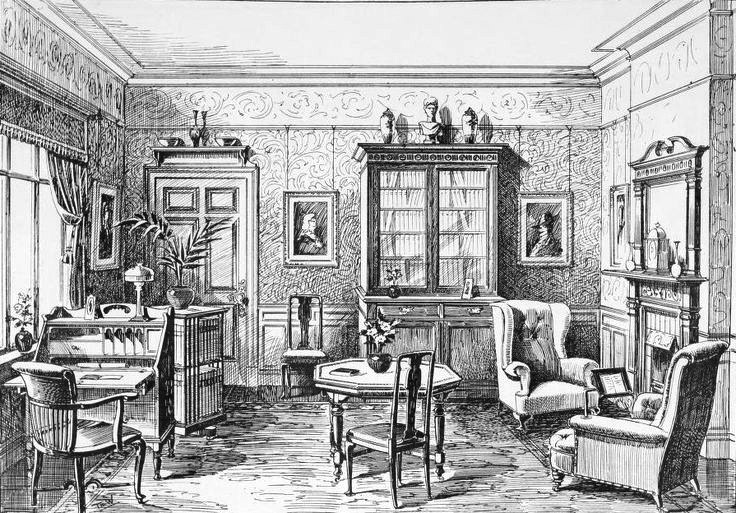
The essay seeks to construct an understanding of the poetic image and review its agency towards reading domestic space through phenomenological, psychological and psychoanalytical means. The idea of lived experience has been explored here, alongside historical associations and memories that create poetic images contained within rooms, and forge a perception of the house as a collection of these images.
The phenomenology of the poetic image
The poetic image determines the nature of spatial configurations relating to the dwelling and the city. The image is independent, self-contained and defined by means of a dynamism characteristic of it. It is not reflective of a past or its cultural contexts. Instead, a distant past reverberates through echoes within this entity. The poetic image is conclusive and determinant by itself, defined by a novelty. It emerges by means of an ontological framework independent of causal relationships. The image in this regard, may contain historical associations and allude to a past culture, but is not however, determined or caused by it. It is representative of a lived reality in the present. Consequently, it is concerned with “being” and its form of existence can be studied by experiencing the reverberations that are emanated by it.
The poetic It serves as an instrument for communication and its “unusual of unprecedented nature”, emerges as a result of an ontological process by means of which it is realized. The image serves to function as a response of the poet to cultural and societal pressures exerted upon him.
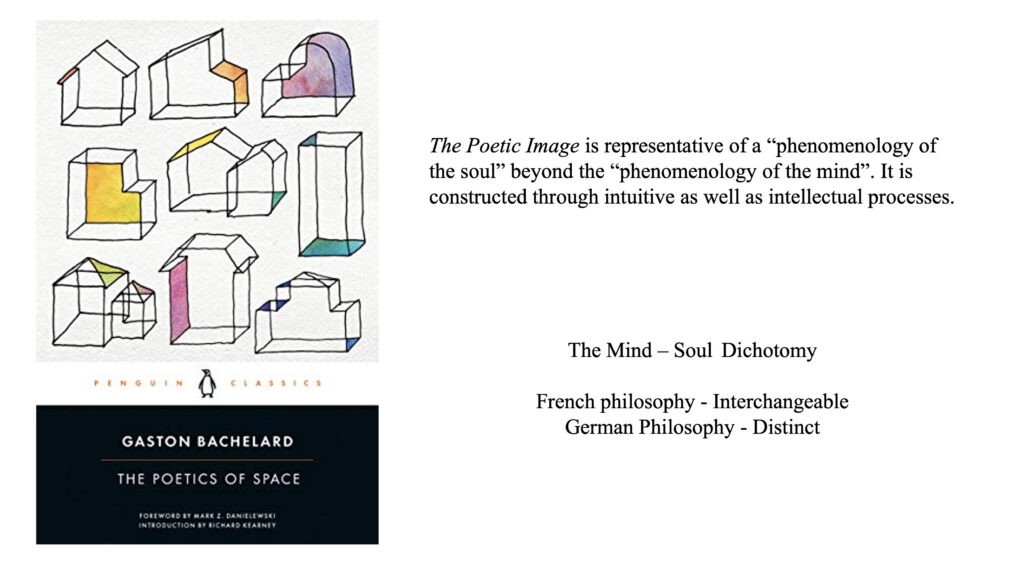
The poetic image created by an architectural space emerges into consciousness through the integration of the human mind, soul and heart. As Gaston Bachelard observes, the poetic image is representative of a “phenomenology of the soul” and does not remain limited to a “phenomenology of the mind.” These distinct interpretations are indicative of psychological and psychoanalytical processes respectively. In this context the ontological framework of the poetic image, or the means by which the image is brought into existence, is significant and distinct with regards to French and German philosophy. In the former, these terms are interchangeable and, in the latter, distinct. This understanding is indicative towards the psychological framework within which the image manifests and the temperament of the poet or artist in the course of artistic production. The poetic image can exist independent of knowledge, as observed by the author. In this regard, it represents the intersection and dialectic tension between the soul and mind, talent and inspiration. Both mind and soul are indispensable with regards to conducting a poetic reading and the psychological influence of a poem can be studied through intellectual and intuitive processes of analysis relating to the mind and soul. The process of interpretation conclude that the poetic imagination is instrumental in bringing about a poetic creation and awakening in the reader through reverberations in singular images. Through repetition, the poetic image is reinforced both in terms of its ontological process as well as the intent of its maker. A linguistic mechanism is created through the creation and repetition of a poetic images. Therefore, a language of a spatial nature is created through the use and repetition of poetic images. These images collectively create an understanding of the space within which the images are realized.
Reading the poetic image
The author observes that an objective evaluation of the image limits its reception, reverberations and resonances. Objectivity in this context, disregards the depths at which the original poetic phenomenon begins.
Bachelard states that a philosophical understanding of the poetic image can be carried out by means of a phenomenological understanding of the imagination. The phenomenon by means of which an image is realized is fundamentally based on a scientific process and agency. However, the author critiques this process stating that the imagination and the metaphysical qualities are inadequately determined through scientific processes alone. He observes that the new image, representative of a present lived reality, of inhabited space is better understood through a phenomenology of the imagination. The impact of the psyche of the author on the new image and alternatively on subsequent images is indicative of the ripple effects created through poetic imagery. In this regard, he observes that the poetic image is “variational” and transformative. Its intersubjective relations are transitional giving form to a state that is essentially identified with change, as opposed to manifesting as a fixed and isolated entity.
The poetic image is received distinctly by the psychologist and the psychoanalyst. The former feels the reverberations more acutely, interpreting the poetic image as a resounding image of the past and present. On the other hand, the psychoanalyst seeks to intellectualize the poetic image. These processes as the author emphasizes are interdependent and often reciprocal.
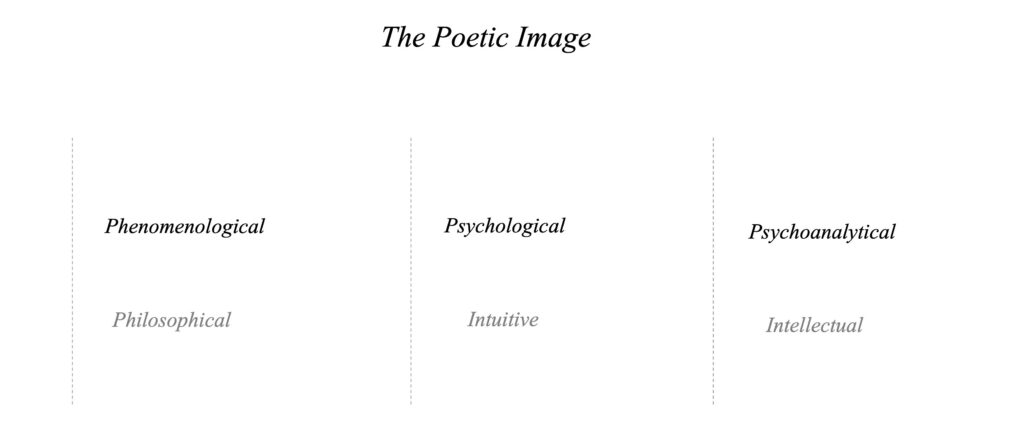
The psychoanalyst associates the object and image with a context. For him, the process of understanding the nuances that constitute its subjectivities cannot be dissociated from the context within which the image emerges. Alternatively, the psychologists interpretation of the poetic image translates and transforms the context from its poetic logos. He emphasizes that the experiential exploration and a qualitative reception of its intersubjectivity forms the foundation of a process of analysis. Through repeated use, which in this context is indicative of an enthusiastic affirmation, the poetic images contribute towards the creation of a poetic language. Furthermore, through repetition from one being to another, the continuation of a linguistic tradition – a tradition of creation of stylistic forms is initiated. In this process, the absence of a causal link between the new image formed with that of a past becomes evident. The author distinguishes both processes of reading on the basis of causal relationships. While the Psychological processes are muted with respect to causal relationships, psychoanalytical processes are defined through a pronounced causation. Ultimately, as the author concludes, the poetic image itself occupies a position superior to any psychological or psychoanalytical inquiry.
The investigation of the poetic image and its ontological emergence, the author surmises, perceives reading and interpretation as inevitably leading to a desire of writing or creation. In this regard, the poetic image and its reading or reception is associated with its creation and in order to influence the work of other writers. The author expresses this sentiment – “the joy of reading appears to be the reflection of a jo\y of writing as though the reader were the writer’s ghost. The writing of the poem is likened to the activation of the language, and as the author states, “poetry puts language in a state of emergence.” In this regard, the poetic images which constitute the poem serve as an emergence of linguistic systems that mobilize the language and instill dynamism within it. In this way, the author correlates writing of the poetic image with experiencing and living through these images and the emergence of a poetic language. The poetic image, as the author concludes exists as an abstraction of the experience of language.
Spatial forms, objects and environments communicate through the images that are created These communicative messages created by means of the poetic images are instrumental in bringing the author and observes closed to the image. This form of communication, however, passive aids contemporary processes ad propose solutions to problems that reflection is unable to solve.
The theoretical framework thus created is employed towards the understanding and interpretation of space and domestic space in particular in this context. By means of a process known as “Topophilia” investigations are initiated which seek to determine and ascribe human value to spaces. Through poetic readings, interpretation and imagery , these spaces have been rendered eulogical. They are defined by their “protective value” or the value ascribed in relation with the strength of the abode to protect and shield its inhabitants from an exterior realm. Secondly, “imagined value” alludes to the space that has been captivated by the imagination and has been inhabited or lived in.
The poetics of the house contributes to the study of images that constitute intimacy or are indicative of an intimate space. Domestic space possess a potential in recalling past culture and experiences. A refuge or a shelter takes residence in our imagination and the image presented through the house represents a psychological integration. The house represents a spatial realm of intimacy or intimate space which can be read through psychological and psychoanalytical means and devices. The house in this context serves as a tool for analysis of the human soul. In the author’s opinion, “by remembering houses and rooms we learn to abide within ourselves.” The rooms of a house serve as a space for habitation and refuge as does the soul for human consciousness. The images conjured within the spaces of the house recall a past by means of which a history, culture and memory abides within our soul. By analysing and conducting a reading of the house and its rooms, the author seeks to explore and unravel the dialectics of small and large, open and closed, and the idea of within and without. The house serves as an instrument for the phenomenological study of intimate and domestic values of interior space. Perceived both in its unity and complexity the house as a spatial entity seeks to integrate distinct images and complex values unified into a one fundamental value. In this regard, the house creates both dispersed images and a body of images at the same time.
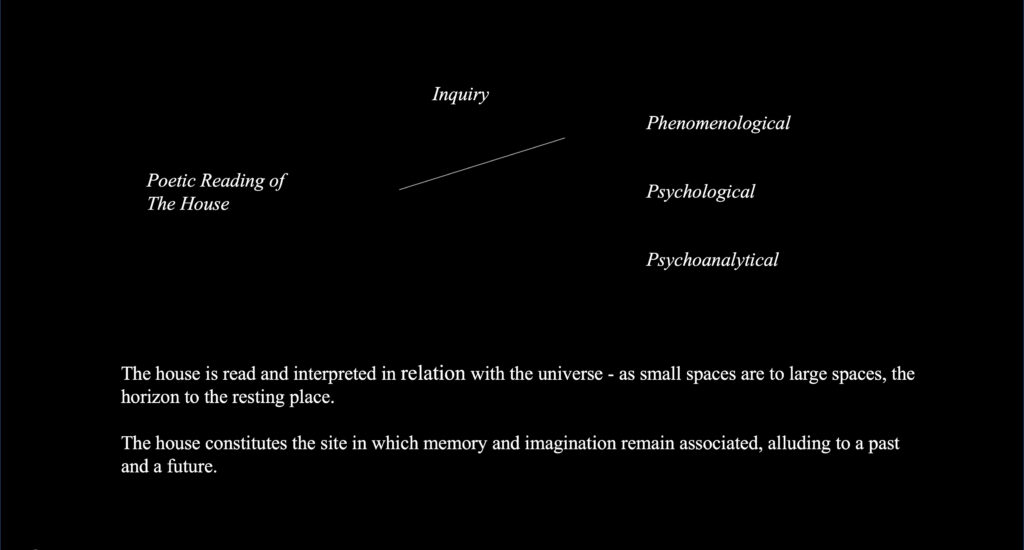
Poetic reading of the house – An inquiry
To conduct a reading of the house, the analysis must reach beyond the idea of the isolated object in order to create a multilayered perception by means of phenomenological psychoanalytical and psychological inquiry.
The house or the dwelling represents the resident both in their manner of spatial and formal articulation and with regards to inhabitation. The dwelling and its primitiveness are indicative of the spatial poetics o f domesticity. The house is read and interpreted in relation with the universe as small spaces to large spaces the horizon to the resting place. Furthermore, the house constitutes the site in which memory and imagination remain associated, alluding to a past and a future.
The experience of the house therefore expands beyond its daily use and inhabitation to encompass a wider time frame. The house provides a space through which both memory and imagination is enriched. Both serve as lenses that realize a depth within that space and this essentially contributes to the poetic dimension of the space.
Through memories and imagination, the poetic image is contained within the cellar, the garret, the nooks, and corridors, that contain and give refuge to specific memories. The psychoanalytical reading therefore is concentrated on the localization of these memories. The process of reading, known as Topoanalysis carries out a systematic study of memories and imagination through distinct spatial elements and entities. These integrate to create a complexity in the house before traversing the realm to interact with an exterior. Space in this context, represents the theater stage or landscape with which time is compressed, withheld or arrested in giving meaning to material form.
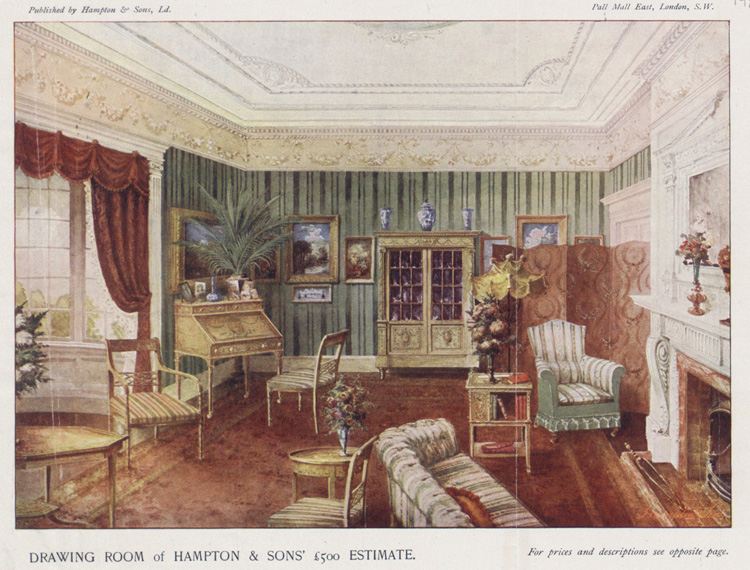
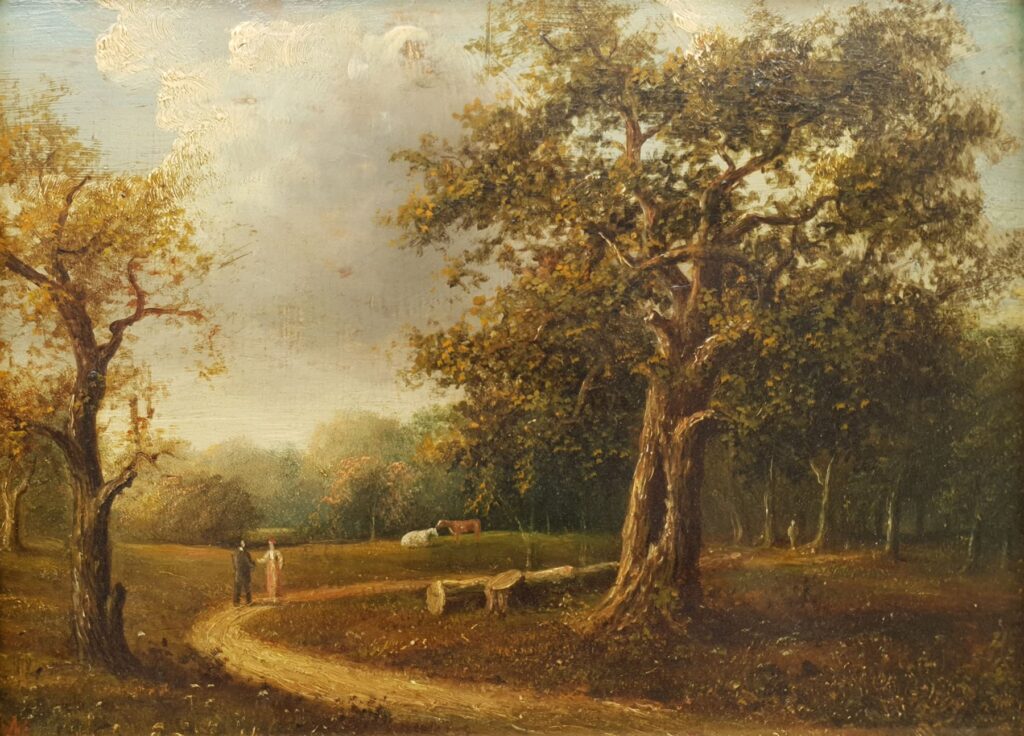
The reading of domestic space is carried out by localizing intimacy and domesticity through thought and action in distinct spaces . These spaces within the house are identified with distinct feelings of solitude and creative energy. These are instrumental towards the creation of images . By contrast, the reading of exterior space is the topo analysis of a realm that has enabled the emergence of the interior into the exterior space. The hill, the landscape and paths represent the abode and environment of exploration of the conscious mind. The road here, creates an image of “an active and varied life.”
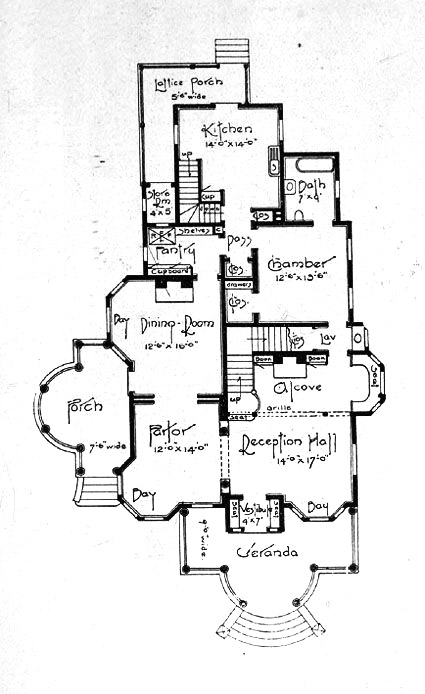
A spatial reading of the house creates diagrams of domesticity and inhabitation that are particular to the object of analysis and the forms of architecture which emerge as a result of its influence. The body of images that a house produces bear evidence to its nature. By identifying these images a psychological reading is enabled.
The house is imagined as a vertical being that rises upward. It is differentiated with regards to its verticality.
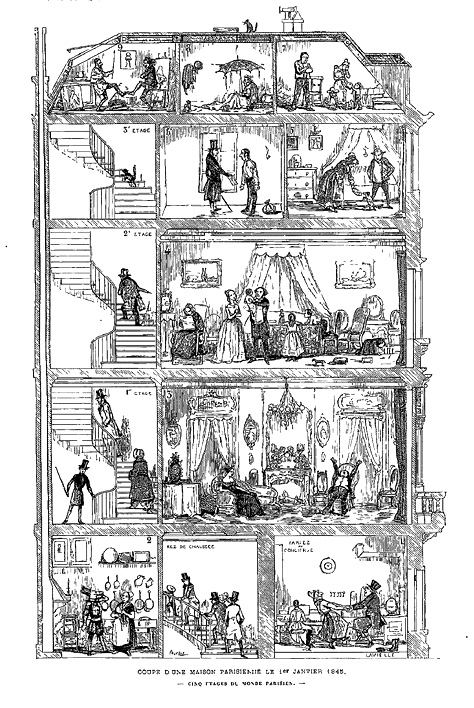
Second, the house is imagined as a concentrated being . It compresses time, history and memory and appeals to our consciousness of centrality.
Verticality is evident in the extent between the cellar and the attic which can be read distinctly and vividly. Each space provides a series of images that creates perspectives for a phenomenology of the imagination. The author observes, that while the roof instantly communicates its intent of creation giving mankind shelter from the environment , it often serves as ana indicator to the climate particular to the context. For instance, a pointed roof averts rain clouds. The spaces are read with regards to their use and connotations. For instance, a cellar is a store for food for long term use and this perception contributed towards a positive reception of the space. Alternatively, the cellar is a dark and misty spatial entity submerged in a subterranean stratum. Therefore, while the cellar is deeply embedded within the earth and concerned with an interiority the roof communicates with the exterior forming a boundary of domestic space. The function of inhabiting is therefore defined by mean of a dual vertical polarity. The cellar here, represents the unconscious and the attic the conscious mind.
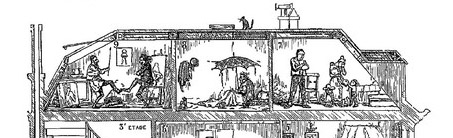
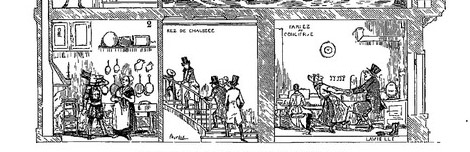
A phenomenological reading is enabled through psychoanalytical image . The cellar as a fearful and dark place and is interpreted and inhabited distinctly as compared to the attic. These interpretations contribute towards a phenomenological reading which is based on exaggeration. A phenomenological reading of the cellar will hear the accursed cat mewing behind the wall. The cat in this image is a symbol of unredeemed guilt. The walls of the cellar are of a single casing with earth behind them. This spatial and material understanding contributes to the creation of a phenomenological reading and the creation of images specific to the cellar. The cellar is understood as a place of food storage, and alternatively as a prison cell and is perceived in relation with other cellars in the context to create an exaggerated reading of this space which dominates others in its vicinity.
The Oeneric Verticality
The house exists as a composition of distinct images which altogether create the poetic image. The cellar, the ground floor, with or without another floor followed by the attic house distinct spatial qualities as it ascends to realize its verticality.
Centrality
The centers of intimacy where interior space and domesticity is contained.
In a house with many rooms, the centers of intimacy are distributed. In this sense it may lack intimacy similar to a palace. The center of the house offers a protective space. It exists as a magnetic zone that draws it inhabitants towards it. Condenses time and insulates its occupants from an exterior. As the author states, “the room and the house are psychological diagrams that guide writers and poets in their analysis of intimacy.
Not unlike the village hut which represents a solitude located within a larger universe, the post-modernist industrial city created alienation and Estrangement. The nineteenth century city is exemplary in this regard that is associated with estrangement of the individual as a consequence of the vastness and the elimination of intimate and private social spaces in urban settings.
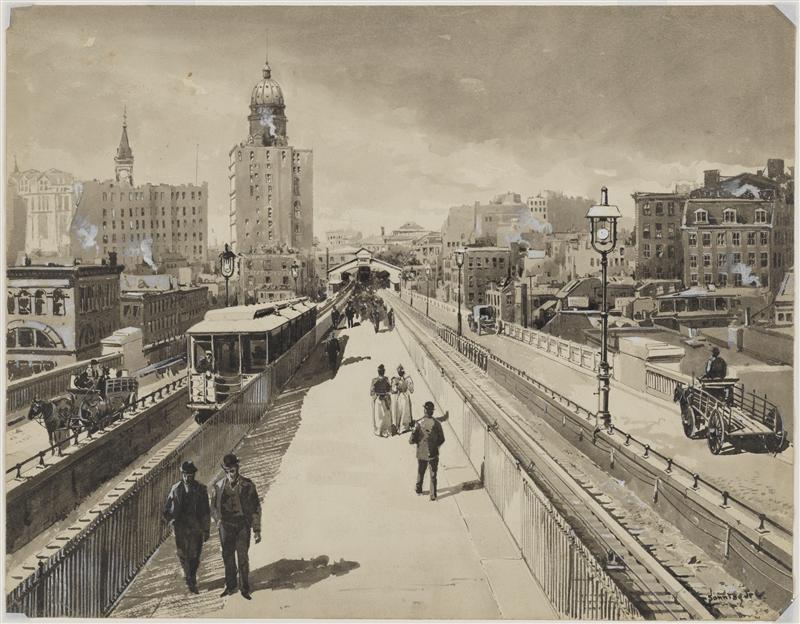
Estrangement can be urban spatial or environmental. Additionally, it can manifest through social segregation between individuals and their work. The concept of estrangement has been investigated by Rousseau, Marx, Baudelair and Benjamin. Baudelair’s disappointment at the recreation of Paris along with Engels who critiqued the renewal of Parisian urban fabric through Haussmannization served as an instrument of structural alienation. Estrangement manifested through loss of familiarity in urban spaces and of isolation from mechanized mass-oriented post-industrial city. The large expansive open space sin the city instilled a sense of isolation in the individual. While creating a space for communal gathering. Spatial form was instrumental in influencing social order.
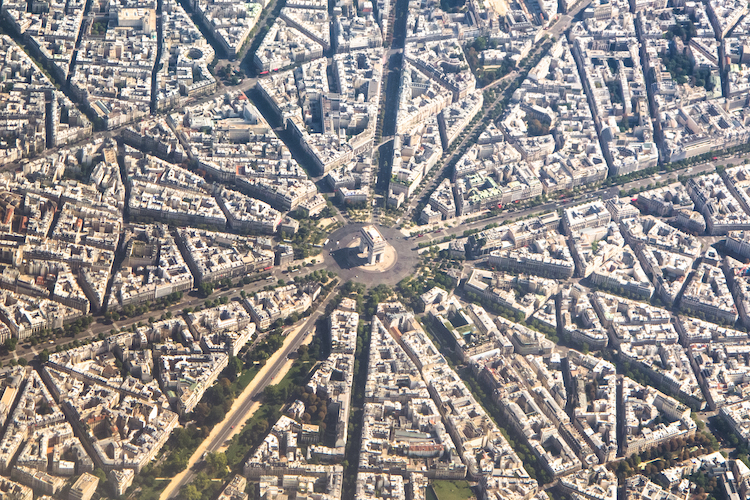
The Haussmannization of Paris and the development of the boulevard represented a first stage in the process of dissolution of the urban fabric and the reconfiguration of city images. The modern project witnessed a transformation of the urban metropolis through processes of claustrophobia, agoraphobia and consumer culture. Furthermore, the notion of the dwelling as a confined and secure abode transformed along with the notion of the 19th century city that was at the brink of transformation.